

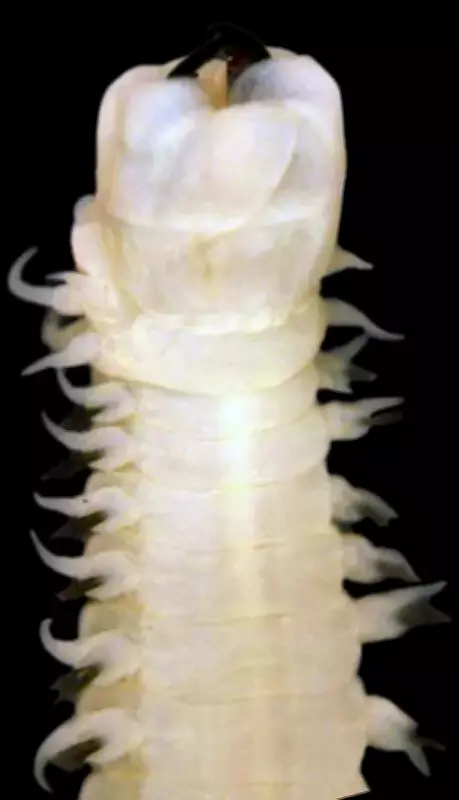
Groundbreaking Discovery: Two New Marine Worm Species Identified Along Bengal Coast
In a significant scientific breakthrough, researchers from the Zoological Survey of India (ZSI), working alongside international experts, have uncovered two new species of marine worms along the Bengal coast. This discovery underscores the region's remarkably rich but fragile marine biodiversity, which remains largely under-explored.
Discovery Locations and Research Details
The findings were made in the coastal waters of Digha and Bankiput in East Midnapore, West Bengal. The study, titled 'Description of 2 new species of nereidids (Annelida: Nereididae) from West Bengal, India, Bay of Bengal', meticulously documents the identification of these new nereidid polychaete species. According to experts, these discoveries are crucial as they add valuable records to India's marine faunal database, particularly in an area that has not been extensively studied.
Meet the New Species: Namalycastis solenotognatha and Nereis dhritiae
The two newly discovered species have been named Namalycastis solenotognatha and Nereis dhritiae. Each species has unique characteristics and habitats:

- Namalycastis solenotognatha: This species derives its name from Greek words meaning 'channelled jaw', referring to its distinctive jaw structure, which features multiple canals emerging from the pulp cavity. It thrives in extreme environments, such as sulphide-rich, foul-smelling mudflats, often associated with decomposing mangrove wood.
- Nereis dhritiae: Named in honor of Dhriti Banerjee, the current and first woman director of the Zoological Survey of India, this species is typically found in wooden dock piles on sandy beaches.
Research Team and Environmental Insights
The research was conducted by a collaborative team including Jyoshna Pradhan, Anil Mohapatra, and Tulio F Villalobos-Guerrero from CICESE, Mexico. Their findings reveal that both species are resilient, thriving in areas significantly impacted by human activity and pollution. This adaptability highlights the complex interplay between marine life and environmental stressors in the Bay of Bengal.
This discovery not only enriches our understanding of marine biodiversity but also emphasizes the need for continued exploration and conservation efforts in India's coastal regions. The identification of these new species serves as a reminder of the hidden biological treasures that await discovery in our oceans, urging for greater protection of these delicate ecosystems.






