

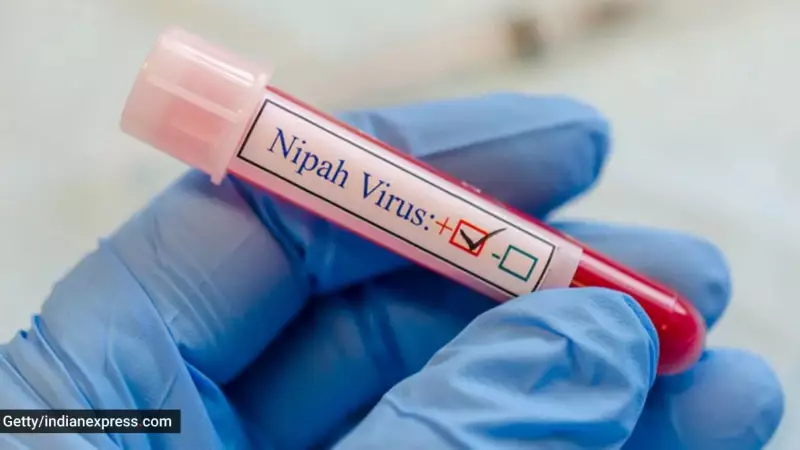
Nipah Virus Returns to West Bengal: Two Nurses Fight for Life
The Nipah virus has made a dangerous return to West Bengal. Health officials confirm two nurses from a private hospital are now in critical condition. Both patients require ventilator support after testing positive in preliminary screenings.
State Government Sounds Alarm Across Healthcare Facilities
The West Bengal government has issued a statewide alert to all healthcare facilities. Health Secretary Narayan Swaroop Nigam assures the public about the state's preparedness. "We are fully prepared with testing facilities and established protocols," Nigam states firmly. "Hospitals must follow treatment and isolation guidelines. We remain alert and active."
This marks the third Nipah outbreak in the state. Previous incidents occurred in Siliguri during 2001 and Tehatta in 2007.

Critical Patients and Rapid Contact Tracing
The infected nurses, both aged between 24 and 25 years, face severe complications. They suffer from lung infections and encephalitis, which is brain inflammation. Medical teams placed both individuals on ventilators immediately.
Authorities have launched extensive contact tracing operations. They aim to identify everyone who interacted with the nurses recently. The female nurse attended a family wedding in Nadia on December 15 and 17. She visited several locations afterward, including Shantiniketan. The male nurse worked night shifts with her on December 20 and 21.
Both nurses reside as paying guests in separate houses. One comes from East Burdwan while the other hails from East Midnapore.
Medical Detection and Expert Response
Dr. Sayantan Bandyopadhyay leads the infectious diseases department at AIIMS Kalyani. His team reviewed MRI reports and suspected unusual patterns. Initial Nipah kit tests returned positive results. Samples then traveled to the National Institute of Virology in Pune for confirmation.
Chief Minister Mamata Banerjee personally monitors the developing situation. Health department officials work around the clock to contain potential spread.
Hospitals Activate Emergency Protocols
All government and private healthcare units received specific instructions. They must report any patients showing Nipah symptoms immediately. These symptoms include:
- High-grade fever
- Acute respiratory distress
- Encephalitis signs
Private hospitals have activated dedicated isolation wards. Major facilities like CMRI and Manipal Hospital conduct mock drills. They implement specialized personal protective equipment protocols.
Sombrata Roy serves as Unit Head at C K Birla Hospitals. "We stand fully prepared with state-of-the-art isolation protocols," Roy explains. "Our NABH-accredited team conducted recent mock drills following ICMR and state guidelines. We ensure rapid containment and maximum patient safety."
Understanding the Nipah Threat
Dr. Tanmay Banerjee heads critical care at Manipal Hospital. He describes Nipah as a highly fatal zoonotic infection. Fruit bats serve as natural reservoirs while pigs act as intermediate hosts.
Transmission occurs through multiple pathways:
- Consuming contaminated fruits or date palm sap
- Direct human-to-human contact
Patients typically present initial symptoms like fever and encephalitis. Some develop acute respiratory distress syndrome.
"We maintain a dedicated isolation ward for suspected cases," Dr. Banerjee notes. "Suspected patients receive immediate isolation with strict infection controls. We use full PPE and send samples to accredited laboratories."
Two known Nipah strains exist: NiV-Malaysia and NiV-Bangladesh. The Kerala strain shows characteristics between both variants. West Bengal's exact strain remains unidentified currently.
The virus demonstrates extreme contagiousness with mortality rates exceeding 50%. Early identification and prompt isolation prove absolutely critical.
Public Health Advisory and Central Support
Dr. Prabhas Prasun Giri represents the West Bengal Doctors Forum. He urges citizens to avoid raw date palm sap completely. People should seek immediate medical care if fever accompanies confusion or altered behavior.

"Nipah virus is serious and often deadly," Dr. Giri emphasizes. "It spreads from animals to humans and between people. Fruit bats contaminate fruits or sap with saliva or urine. No specific cure exists, but early treatment saves lives."
The Union Health Ministry deploys the National Joint Outbreak Response Team. This high-level team assists state authorities directly. Dr. Manas Kumar Kundu directs the All India Institute of Hygiene and Public Health. He leads experts from NIV Pune and AIIMS Bhubaneswar.
Emergency Helplines Established
West Bengal launches three 24/7 helplines for public queries:
- 033-23330140
- 9874708458
- 9836046212
Health authorities continue monitoring the situation closely. They coordinate response efforts across all levels of government and healthcare institutions.
