

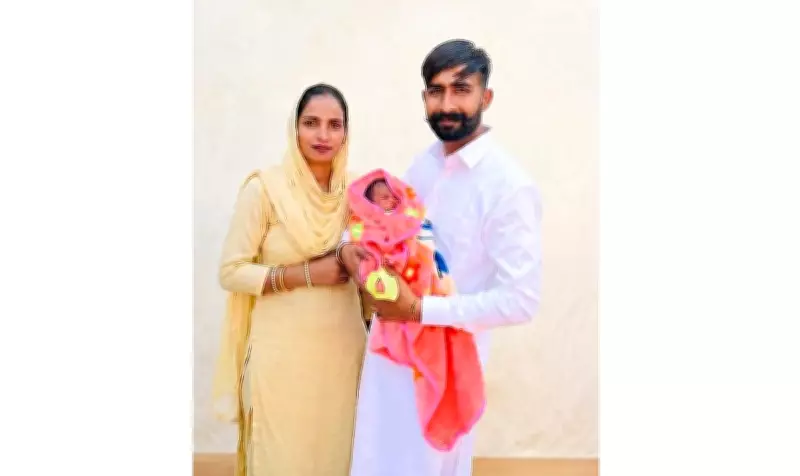
Punjab's Health Scheme Provides Lifesaving Care for Infant
In a heartening development from Punjab, the Mukh Mantri Sehat Yojna has come to the rescue of a four-month-old baby named Diljot, covering his entire medical treatment cost of ₹2.77 lakh. This case underscores the critical role of government health initiatives in providing timely and affordable healthcare to vulnerable populations, particularly newborns and their mothers.
Diljot's Story: A Father's Relief
The infant, Diljot, required extensive medical care shortly after birth, placing a significant financial burden on his family. However, under the Mukh Mantri Sehat Yojna, his treatment was fully covered, bringing immense relief to his father and highlighting the scheme's effectiveness in real-world scenarios. This incident is not isolated; it reflects a broader success story of the program's implementation across the state.
Scheme's Impact: Over 6,000 Newborns Treated
Recent data reveals that more than 6,000 newborns have received medical treatment under the Mukh Mantri Sehat Yojna in just the past three months. This rapid uptake demonstrates the scheme's accessibility and the urgent need for such healthcare support in Punjab. The program's focus on maternal and child health is proving to be a game-changer in reducing infant mortality and improving overall health outcomes.

Key Features of the Mukh Mantri Sehat Yojna:
- Provides a cashless cover of up to ₹10 lakh per family per year.
- Ensures critical care for mothers and newborns from the first hours of life.
- Covers a wide range of medical treatments and procedures.
- Aims to reduce out-of-pocket healthcare expenses for low-income families.
Ensuring Critical Care from Birth
The scheme's provision of ₹10 lakh cashless cover is particularly significant, as it guarantees that mothers and newborns receive essential medical attention without delay. By covering costs from the initial hours post-birth, the program addresses one of the most critical periods for infant health, potentially saving countless lives and preventing long-term complications.
This initiative aligns with broader public health goals in India, emphasizing the importance of robust healthcare infrastructure and financial protection for families. As more success stories like Diljot's emerge, the Mukh Mantri Sehat Yojna serves as a model for other states to emulate in enhancing maternal and child welfare.






