

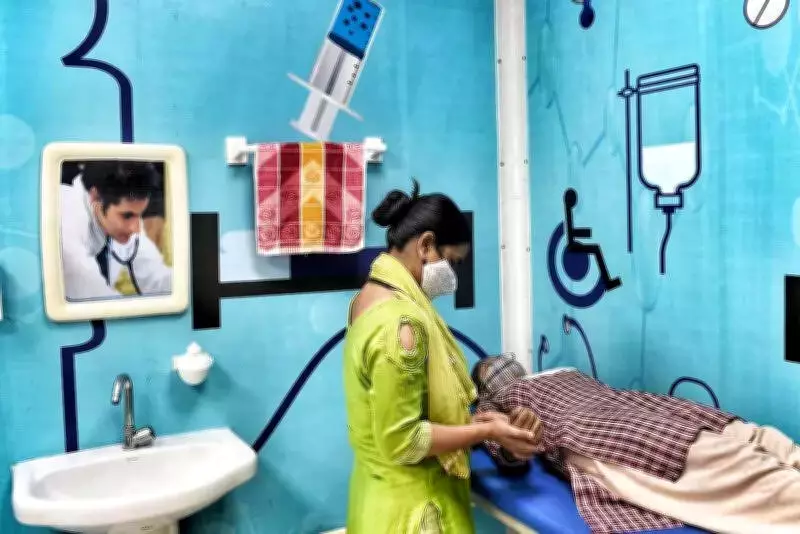
Punjab Government Approves Major Expansion of Aam Aadmi Clinics Network
In a significant move to enhance public healthcare infrastructure, the Punjab government has decided to expand the network of Aam Aadmi Clinics across the state. The administration plans to strengthen 308 existing subsidiary health centers under the Department of Rural Development and Panchayat by converting them into fully functional Aam Aadmi Clinics.
Decentralized Implementation Across 20 Districts
The strengthening exercise will be undertaken through a decentralized model via district health societies spanning 20 districts. These districts include Amritsar, Barnala, Fatehgarh Sahib, Bathinda, Fazilka, Gurdaspur, Ferozepur, Hoshiarpur, Jalandhar, Kapurthala, Ludhiana, Moga, Malerkotla, Pathankot, Patiala, Rupnagar, Sangrur, Mohali, Muktsar, and Tarn Taran.
Each district health society will be chaired by the concerned Deputy Commissioner, with the civil surgeon serving as the chief executive officer. This structure ensures local oversight and accountability in the implementation process.

Standardized Transformation Process
The conversion will follow the same pattern established earlier for Aam Aadmi Clinics, including standardized human resources, infrastructure, and branding. Each facility will receive provision of essential drugs and diagnostics as part of the comprehensive upgrade.
Currently, Punjab operates approximately 500 rural dispensaries, each serving around 10,000 residents. About 500 rural medical officers are posted at these facilities across the state, providing the foundation for this expansion initiative.
Infrastructure Strengthening Guidelines
According to the issued guidelines, district health societies will define the scope of work and monitor the execution of infrastructure strengthening for each identified subsidiary health center within their jurisdiction. The societies retain authority to change the site if an identified center is found to be unsafe, beyond repair, or unsuitable for other documented reasons.
Infrastructure strengthening will encompass civil work, repair, renovation, addition, alteration, branding of the facility, and provision of furniture in accordance with the standardized plan already finalized by the state for Aam Aadmi Clinics.
Execution and Monitoring Framework
District health societies are advised to prefer the Executive Engineer, Panchayati Raj, as the executing agency for the works. However, they may identify alternative executing agencies including the Department of Public Works (B&R), Mandi Board, the engineering wing of municipal corporations or committees, or the engineering wing of improvement trusts.
The executing agency will prepare estimates in association with the concerned rural medical officer posted at each facility, taking into account the specific needs of the respective center. After identifying the executing agency and allocating administrative units, district health societies will ensure preparation of rough cost estimates for each center as per the standard plan.
The guidelines explicitly specify that no estimate should include departmental, contingency, or other administrative charges. Societies must ensure estimates strictly follow the standard plan and that sanctioned limits are used exclusively for approved works, not for operation or maintenance of existing or non-identified facilities.
Oversight and Accountability Measures
Supervision or monitoring committees will be constituted under the concerned Sub-Divisional Magistrate for periodic inspection of the works. The society is directed to ensure that no work remains incomplete or untaken, and that there is no uncovered liability beyond the amount sanctioned for an individual center.
Weekly progress reports in prescribed formats are to be submitted by the chief executive officer and convener to the chairman, as well as to the state programme officer for Aam Aadmi Clinics. The guidelines emphasize that infrastructure strengthening of all identified Subsidiary Health Centers must be completed district-wise at the earliest possible timeframe.

Existing Success and Patient Satisfaction
The health department has already established 881 Aam Aadmi Clinics across Punjab. According to government assessments, these clinics have significantly strengthened access to healthcare services and contributed to reducing out-of-pocket expenditure for residents.
A patient feedback state report card based on interviews with 18,256 patients across Punjab revealed overwhelmingly positive results:
- 96% expressed satisfaction with treatment provided at the clinics
- 92% reported receiving all prescribed drugs
- 94% stated that prescribed investigation tests were conducted at the clinics free of cost
- 99% confirmed availability of adequate seating
- 97% reported access to drinking water
- 95% stated that toilets were clean
This expansion initiative builds upon this demonstrated success, aiming to bring quality healthcare services to more rural communities throughout Punjab.





