Rabies Spreads to Wildlife Near Bengaluru: Sloth Bear Tests Positive
In a concerning development, the recent surge in rabies cases across Karnataka has extended into wildlife populations, with a sloth bear rescued near Bengaluru testing positive for the disease. This incident highlights a serious zoonotic threat, as rabies, commonly associated with stray dogs, has now infiltrated the wild.
Details of the Incident
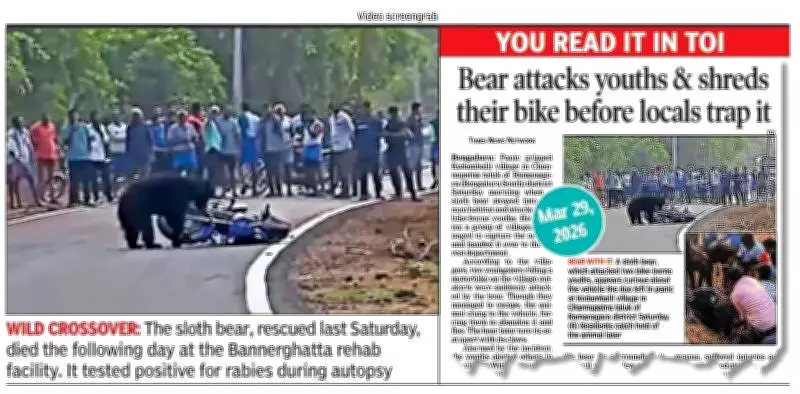
Last week, a sloth bear was rescued by villagers and forest staff near Channapatna in the Bengaluru South district. The bear exhibited signs of restlessness and rabid behavior while in captivity and died the following day at a rehabilitation facility in Bannerghatta. An autopsy confirmed rabies infection, according to sources in the Bengaluru Forest Circle.
Forest officials have cautioned injured villagers and staffers to undergo anti-rabies vaccination. Kumar Pushkar, principal chief conservator of forests (wildlife), stated, "The bear was frequently visiting human habitations and may have been bitten by stray dogs. Hence, all three injured persons have been vaccinated against rabies." He added that containing rabies outbreaks in the wild will be challenging due to the impossibility of isolating wild populations, but the situation will be addressed on a case-by-case basis with expert consultation.

Expert Warnings and Rare Occurrence
Veterinarians and conservation scientists have termed this incident a "potential threat" requiring immediate intervention. Braj Kishore Singh, former chief wildlife warden of Karnataka, noted that while stray rabies cases have been reported in central and north India, this is the first known instance in sloth bears in Karnataka. "If the virus has entered the wild population, it is indeed an alarming situation and calls for major field action in collaboration with the animal husbandry department," he said.
Dr. Sumanth M Bedre, a veterinary surgeon, explained that dog bites account for 99% of rabies infections. "This incident, though very rare, indicates possible frequent interactions between stray dogs and wildlife, which is very dangerous," he warned. Such exposure could lead to aggressive behavior in wild animals and trigger conflict situations along forest fringes. He recommended immediate ring vaccination of stray dogs and complete sterilization to prevent further spread.
Broader Implications and Conservation Concerns
Sanjay Gubbi, a conservation scientist from the Holematthi Nature Foundation, emphasized the increasing risk of disease transmission from pets and livestock to wildlife in conflict areas. "Feral dogs are known to hunt and kill a wide range of wildlife. As a result, some carnivores tend to avoid areas heavily used by domestic dogs, leading to spatial displacement and altered habitat use," he said. Additionally, feral dogs interbreeding with wild relatives like jackals and wolves can cause genetic introgression and loss of genetic integrity.
Gubbi urged the forest department to establish standard operating procedures to manage feral dogs in and around protected and forest areas. This proactive approach is crucial to mitigate the zoonotic threat and protect both human and wildlife populations.
The positive rabies test in the sloth bear serves as a stark reminder of the interconnectedness of human and animal health. With rabies cases on the rise, coordinated efforts between forest officials, veterinarians, and conservationists are essential to address this emerging crisis and prevent further outbreaks in Karnataka's wildlife.