Dr. Abdullah Al Rabeeah: The Surgeon Behind Saudi Arabia's Global Conjoined Twins Program
When families of conjoined twins receive the hopeful news that separation might be feasible, their gaze often turns toward Riyadh, Saudi Arabia. At the heart of these transformative medical procedures stands Dr. Abdullah Abdulaziz Al Rabeeah, a distinguished Saudi pediatric surgeon who has spearheaded one of the world's most enduring and specialized conjoined twins separation initiatives.
Early Education and Specialized Training
Born on February 23, 1955, Dr. Al Rabeeah embarked on his medical journey at King Saud University in Riyadh, where he earned his Bachelor of Medicine and Bachelor of Surgery degree in 1979. Seeking advanced expertise, he relocated to Canada for further specialization. In 1986, he completed a Fellowship in General Surgery at the University of Alberta in Edmonton, followed by a Fellowship in Pediatric Surgery in 1987 from IWK Children's Hospital at Dalhousie University in Halifax, Nova Scotia. This intensive training in pediatric surgery laid the foundation for his illustrious career.
Launch and Evolution of the Saudi Conjoined Twins Programme
The Saudi Conjoined Twins Programme was inaugurated in 1990 under the patronage of King Fahd bin Abdulaziz Al Saud and has continued under successive monarchs, King Abdullah bin Abdulaziz Al Saud and King Salman bin Abdulaziz Al Saud. Since its inception, Dr. Al Rabeeah has led the surgical and multidisciplinary team responsible for executing separation procedures.

As of 2026, the program has achieved the successful separation of 67 sets of conjoined twins hailing from 28 different countries. The majority of these intricate surgeries have been conducted at the Ministry of National Guard Health Affairs, King Abdulaziz Medical City in Riyadh.
The Government of Saudi Arabia assumes all expenses associated with transportation, medical treatment, housing, and other necessities for the twins and their accompanying family members. Since 2015, the Custodian of the Two Holy Mosques King Salman bin Abdulaziz and Crown Prince Mohammed bin Salman have provided full support for the treatment of each pair of twins deemed suitable candidates for separation by the surgical team.
Dr. Al Rabeeah has consistently emphasized that the program's criteria are strictly medical, devoid of political considerations. In a 2019 interview with ABC News, he stated, "We pay for the travel and expenses. It has nothing to do with geography, religion or politics. It's based on science and humanity."
Medical Complexity and Surgical Precision
Conjoined twins represent a rare medical condition, with each case presenting unique anatomical challenges. The feasibility of separation hinges on how the twins are connected and whether they share vital organs such as the heart, liver, or brain structures. Each case necessitates extensive imaging, detailed anatomical mapping, and months of meticulous planning before surgery is even contemplated.
Operations typically involve large multidisciplinary teams comprising pediatric surgeons, anesthesiologists, neurosurgeons, plastic surgeons, and intensive care specialists. These procedures can extend for several hours, demanding precise coordination at every stage to ensure successful outcomes.
Landmark Surgeries and Global Recognition
Several operations under Dr. Al Rabeeah's leadership have garnered international acclaim as defining milestones in pediatric surgery.

- In 2002, Malaysian twins Ahmed and Mohammed underwent a 23-hour, multi-phase separation ordered by King Abdullah. This surgery required complex reconstruction of the skull and brain coverings, emerging as one of the most widely cited medical achievements in Saudi Arabia.
- In 2012, Saudi twins Abdullah and Salman were separated in Riyadh while Dr. Al Rabeeah served as Minister of Health, a position he held until 2014. The Health Ministry declared the outcome successful, highlighting the Kingdom's advancing pediatric surgery capabilities.
- In 2019, Libyan twins Ahmed and Muhammed were separated in Dr. Al Rabeeah's 48th conjoined twins surgery. This procedure received international coverage, including on Good Morning America, showcasing the program's outreach to families from conflict-affected and low-income regions.
- In 2023, Syrian twins Bassam and Ihsan underwent a six-phase separation in Riyadh lasting approximately 7.5 hours. The operation involved 26 specialized Saudi doctors and was extensively covered in Arab media as a symbol of advanced regional surgical expertise and humanitarian solidarity.
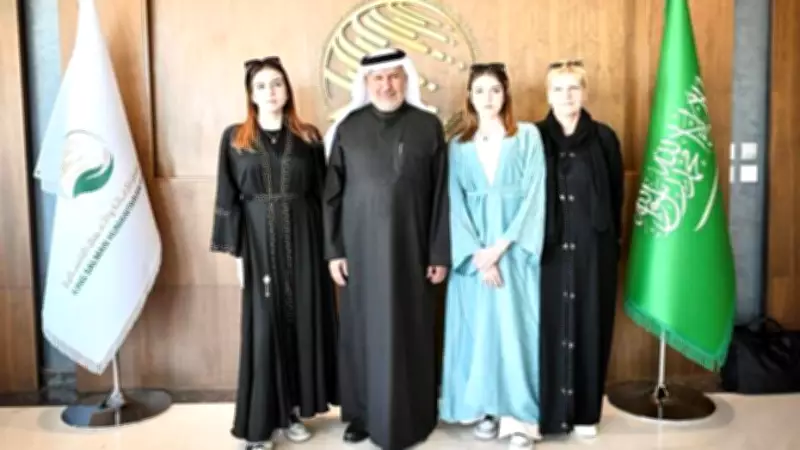
- A long-term success story dates to 2004, when Polish twins Olga and Daria were separated in a 15-hour surgery led by Dr. Al Rabeeah. In 2026, the twins reunited with him in Riyadh, sharing images of their meeting that renewed attention to the lasting impact of these procedures.
Roles Beyond Surgical Leadership
In addition to directing complex separation surgeries, Dr. Al Rabeeah serves as an advisor at the Saudi Royal Court and as General Supervisor of the King Salman Humanitarian Aid and Relief Centre. His tenure as Saudi Arabia's Minister of Health until 2014 further underscores his multifaceted contributions to healthcare and humanitarian efforts.
More than three decades after the program's launch in 1990, he continues to oversee its surgical direction and international outreach. From operating rooms in Riyadh to humanitarian coordination at the national level, his role has evolved from specialist surgeon to institutional leader behind one of the most sustained conjoined twins initiatives globally.