

West Bengal Health Department Builds Remdesivir Stockpile for Nipah Virus Response
The West Bengal health department has initiated a strategic stockpiling of intravenous Remdesivir injections. This antiviral medication plays a critical role in treating infections caused by the Nipah virus. Officials confirm the action is a proactive measure to enhance the state's readiness.
Current Situation and Immediate Actions
Currently, West Bengal reports only two confirmed Nipah cases. Both affected individuals are young nurses receiving treatment at Barasat hospital. Despite the low case count, health authorities emphasize the necessity of revamping medical supplies.
"We have already dispatched Remdesivir vials to Barasat hospital for the patients," stated a senior health department official. "A fresh consignment of this drug has arrived. We are prepared to procure more if the situation demands."

The newly acquired stock is securely stored at the Central Medical Store. From this central hub, the government will distribute supplies to various public health units across the state.
Expanding Access and Treatment Protocol
The health department has clarified its distribution policy. Government facilities will receive priority, but private hospitals will not be excluded. If private institutions encounter suspected Nipah cases requiring Remdesivir, the state will provide the medication.
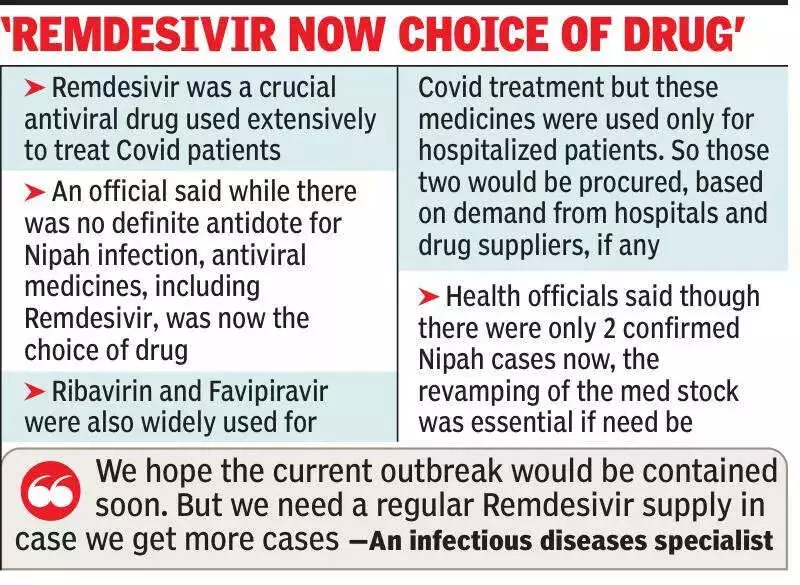
Medical experts note a significant point about Nipah treatment. While no definitive antidote exists for the virus, antiviral medicines like Remdesivir have become the preferred therapeutic choice. This procurement decision followed a high-level meeting on Tuesday. Senior health officials convened with reputable carrying and forwarding agents to discuss comprehensive preparedness strategies.
Learning from the Pandemic: Drug Procurement Strategy
Remdesivir gained immense prominence during the COVID-19 pandemic. It served as a crucial antiviral for treating coronavirus patients. Other antivirals, such as Ribavirin and Favipiravir, were also widely used during that period. However, their application was typically restricted to hospitalized patients.
An official explained the current procurement rationale for these secondary drugs. "We will base the acquisition of Ribavirin and Favipiravir on specific demand from hospitals and drug suppliers," he said. Much of the existing stock from the COVID-19 era has expired over the last two years due to a sharp decline in demand.
Expert Opinions and Supply Chain Assurance
Infectious disease specialists express cautious optimism. "We hope this Nipah outbreak remains contained with limited spread," said one specialist. "Nevertheless, maintaining a regular supply of Remdesivir is essential. We must be ready for any potential increase in suspected cases."
To ensure a steady supply, the health department has identified a reliable manufacturer. They placed an order with a Goa-based company that continues to produce Remdesivir. This move aims to maintain sufficient reserves within the state.
Prithwi Bose, General Secretary of the Bengal Chemists' and Druggists' Association, offered reassurance to the public. "These drugs are not commonly sold in retail medicine shops. There is no significant surge in demand at present," he stated. "Citizens need not panic. The state government is actively managing the situation."
The health department's actions demonstrate a focused, forward-looking approach. By securing essential antiviral stocks, West Bengal aims to strengthen its medical response capability against the Nipah virus threat.

