

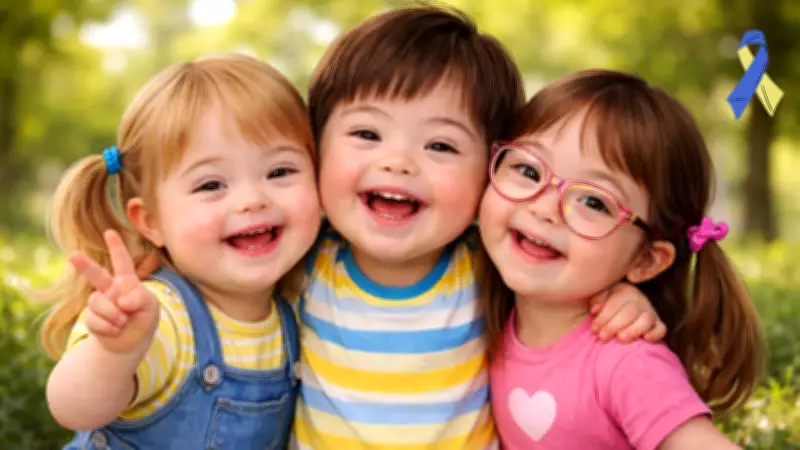
World Down Syndrome Day: A Global Observance Rooted in Genetics
Every year on March 21, the international community comes together to observe World Down Syndrome Day, a date that holds profound genetic significance. The symbolism of 3/21 directly references the presence of three copies of chromosome 21, the defining characteristic of this chromosomal condition that impacts millions of lives worldwide.
Understanding Down Syndrome: The Genetic Foundation
Down syndrome, clinically known as Trisomy 21, stands as the most prevalent chromosomal condition globally. This condition occurs when an individual possesses an extra copy of chromosome 21, resulting in 47 chromosomes per cell instead of the typical 46. This genetic variation influences physical growth patterns, cognitive development trajectories, and aspects of social skill acquisition. Importantly, Down syndrome is present from conception and occurs sporadically in most cases, meaning it is not caused by parental actions during or before pregnancy. Only approximately 1% of cases are hereditary, typically resulting from translocation where genetic material is passed from a parent to child.
According to comprehensive data from the Down Syndrome Federation of India, this condition affects approximately one in every 800 to 1,000 live births across the country. This translates to nearly 30,000 children born with Down syndrome in India each year, highlighting the significant scale of this genetic variation within the population.

The Three Forms of Down Syndrome: Beyond Simple Genetics
While the biology of Down syndrome is increasingly well understood, the condition manifests in three distinct genetic forms, each with unique characteristics:
- Trisomy 21 (Nondisjunction): Accounting for nearly 95% of all cases, this form occurs when chromosome 21 fails to separate properly during egg or sperm formation, resulting in a fertilized egg with three copies instead of two.
- Mosaic Down Syndrome: This less common form develops when the nondisjunction event happens after fertilization during early cell division. Consequently, only a proportion of cells carry the extra chromosome, often resulting in less pronounced physical and cognitive traits compared to full trisomy.
- Translocation Down Syndrome: In this rare form, an extra copy of chromosome 21 attaches to another chromosome, frequently chromosome 14. Unlike other forms, translocation Down syndrome can sometimes be inherited from a parent who carries a balanced translocation without exhibiting symptoms.
Early Recognition and Diagnostic Procedures
During infancy, early indicators of Down syndrome often present as developmental delays or distinctive physical characteristics. "Early signs of Down syndrome in infants may include certain physical features and developmental delays, such as slower head control or delayed response to stimuli," explains Dr. Manish Mittal, senior consultant-paediatrician.
However, these signs can overlap with typical developmental variations, making clinical observation insufficient for definitive diagnosis. "A definitive diagnosis cannot rely on observation alone. Genetic testing is essential to confirm the condition," Dr. Mittal emphasizes.
Medical professionals typically confirm Down syndrome through karyotype testing, a comprehensive chromosomal analysis performed on blood samples. During pregnancy, screening methods including ultrasound markers and maternal blood tests can indicate likelihood, followed by confirmatory procedures like amniocentesis or chorionic villus sampling (CVS). "Early screening, along with timely medical evaluation and intervention, plays a crucial role in ensuring better health and developmental outcomes," Dr. Mittal adds.
Physical Characteristics and Developmental Considerations
Down syndrome is associated with a spectrum of physical characteristics, though individual presentation varies significantly. Common features may include:

- Flat facial profile and small head
- Upward-slanting eyes and flat nasal bridge
- Small mouth with relatively larger tongue
- Low muscle tone (hypotonia)
- Smaller, low-set ears and short stature
- Broad hands with single palmar crease
- Curved fifth finger and noticeable toe gaps
- Increased joint flexibility
Alongside these physical traits, developmental delays are common, typically manifesting as mild to moderate intellectual disability. "Children with Down syndrome are delayed in achieving their motor and cognitive milestones," notes Dr. Ratna Dua Puri, chairperson of the Institute of Medical Genetics and Genomics at Sir Ganga Ram Hospital.
However, Dr. Puri emphasizes that these delays should not be misinterpreted as limitations. "Children with Down syndrome are capable of achieving all major life milestones and are increasingly participating in a wide range of activities. They will walk, they can go to school, and now they are doing various activities." This perspective highlights the importance of recognizing developmental differences without imposing artificial ceilings on potential.
The Critical Importance of Early Intervention
Early intervention represents a cornerstone of optimal outcomes for individuals with Down syndrome. "This involves helping them with their muscle tone so that they can sit, stand and hold their heads," explains Dr. Puri. "It is also important for assisting them in developing language and communication."
Therapeutic approaches including occupational therapy, physical therapy, and speech therapy form the foundation of this support system, often delivered through specialized child development centers offering multidisciplinary care. However, structured sessions represent only part of the equation. "These are just one-hour sessions. Parents need to incorporate what they learn into their daily interactions with the child, in a fun and engaging way. That is what leads to the best outcomes," Dr. Puri advises.
She further emphasizes reducing passive screen exposure while encouraging direct engagement through talking, playing, and sensory stimulation. The United Nations reinforces this approach, highlighting that access to adequate healthcare, early intervention programs, inclusive education, and appropriate research remains vital for growth and development.
Health Considerations Across the Lifespan
Individuals with Down syndrome may experience various associated health conditions requiring careful monitoring:
- Congenital heart defects: Among the most common concerns, often requiring medical or surgical management in infancy
- Thyroid disorders: Particularly hypothyroidism, frequently observed
- Sensory impairments: Hearing and vision challenges that can influence development
- Recurrent infections and persistent low muscle tone
As individuals age, the risk profile evolves to include higher likelihood of obesity, diabetes, metabolic syndrome, cataracts, and other visual problems. Mental health concerns including depression may emerge during life transitions, while increased risk of early-onset dementia with Alzheimer's-like symptoms requires close observation for subtle behavioral changes.
Interestingly, individuals with Down syndrome demonstrate reduced susceptibility to certain conditions common in the general population, including atherosclerosis and some solid tumor cancers. With consistent medical care and monitoring, life expectancy now extends to approximately 60 years and beyond.
Education, Transition, and Adult Life
The educational landscape continues evolving positively for individuals with Down syndrome. Increasing inclusion in mainstream classrooms—whether partially or fully—reflects growing recognition of individual abilities. Many complete school education, pursue vocational training, and some engage in post-secondary education.
Transition to adulthood presents both challenges and opportunities, with some individuals moving into supported or independent living arrangements, securing employment, and building meaningful social relationships. These outcomes depend not merely on ability but significantly on access to early support and inclusive environments.
The Path Toward True Inclusion
The conversation surrounding Down syndrome is progressively shifting from care-focused approaches to genuine inclusion. Children increasingly participate in classrooms, playgrounds, and communities, while adults enter workplaces, contribute across sectors, and build independent lives.
Yet true inclusion extends beyond mere access to encompass societal perception. Ritika, a special educator, observes that many societal beliefs continue underestimating capabilities. "If the world could see my students the way I do, we would shift our focus from their limitations to their incredible strengths. We would celebrate their resilience, creativity, and infectious enthusiasm," she reflects.
"Inclusion would no longer be an obligation, but a natural choice, because they are valuable contributors to society. My students would be asked about their dreams, their ideas, and their passions, not just their condition. We would learn from their unique ways of problem-solving, their ability to find joy in simple moments, and their deep capacity for empathy and love. Ultimately, we'd realise that inclusion isn't a favour; it's a mutual enrichment."
As conversations around Down syndrome continue evolving, the necessary shift extends beyond awareness to encompass action and acceptance. Inclusion must transcend policy to become everyday practice in education, healthcare, workplaces, and communities. The fundamental question becomes not what individuals with Down syndrome can achieve, but whether society will create supportive conditions enabling them to reach their full potential while being genuinely accepted as they are.





