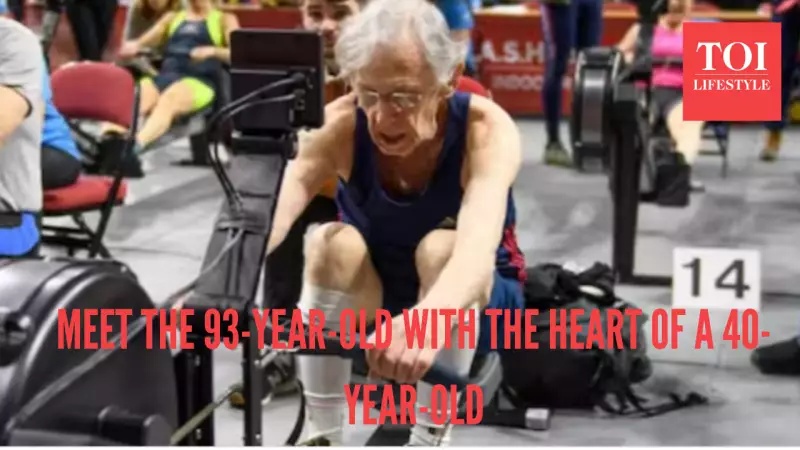
In an extraordinary story that redefines the limits of human aging, a 93-year-old former coal miner from Ireland is showcasing a level of fitness that would put people half his age to shame. Richard Morgan, who only began competitive rowing at the age of 72, now possesses the heart, muscles, and vitality of a man decades younger, according to medical assessments.
From Miner to Champion: A Late Start to Peak Fitness
Morgan's journey is a powerful testament that it is never too late to begin. He took up the sport of rowing seriously at 72, an age when many are winding down their physical activities. Defying conventional wisdom, he built himself into a world-class athlete, winning an impressive four world championship titles after turning 80. His current regimen is rigorous, involving daily rowing sessions that total around 20 kilometers per week, complemented by intense weightlifting.
Medical evaluations reveal the stunning results of his dedication. His body fat percentage is a mere 15%, while his lean muscle mass stands at an incredible 80%. Most remarkably, tests show that his cardiovascular health is equivalent to that of a 40-year-old athlete. During exercise tests, his heart rate can reach 153 beats per minute, a level of intensity far beyond what is typical for nonagenarians and comparable to vigorous exercise for a much younger person.

The Science Behind His Superhuman Health
Morgan's case is not just an anomaly; it is supported by scientific research on exercise and aging. A comprehensive analysis of 41 clinical trials involving over 2000 elderly participants found that endurance training can increase VO2 max—a key measure of heart and lung fitness—by approximately 3.5 ml/kg/min. This improvement significantly reduces the risk of heart disease and enhances daily functioning.
Specifically, rowing is a potent tool for seniors. Studies indicate it can boost aerobic capacity by 22% in the elderly within six months, even without weight loss. As a full-body, low-impact cardio exercise, rowing engages all major muscle groups simultaneously. Research on elite older rowers shows their VO2 max values range from 31 to 49 ml/kg/min, which surpasses the range for sedentary individuals (19-37 ml/kg/min). This effectively slows their biological aging process, protecting against conditions like metabolic syndrome and sarcopenia (age-related muscle loss).
The Dual Power of Rowing and Weight Training
Morgan's secret weapon is his combination of cardiovascular and strength training. While rowing builds his exceptional heart health and endurance, his dedicated weightlifting regimen is crucial for preserving muscle. Sarcopenia, the loss of muscle mass and strength, typically begins around age 30 and progresses at 3-5% per decade. Morgan combats this by lifting weights to muscle failure, a practice that maintains his extraordinary 80% lean muscle mass.
Scientific evidence supports this combined approach. Seniors who perform strength exercises before aerobic workouts achieve better peak VO2 results, lower blood pressure, and greater muscle strength than those who only do cardio. For Morgan, this synergy helps maintain optimal carotid artery health and keeps his body composition in the athletic range.
Fueling for Performance: Diet as Strategic Energy
Morgan treats his diet with the same strategic focus as his training. To support muscle repair and growth, he consumes a high amount of protein, specifically 2.3 grams per kilogram of his lean body weight every day. He views food as clean fuel for performance. This purposeful eating, combined with his exercise, supports low inflammation levels, aids recovery, and sustains the lean mass that protects his joints and heart. Research aligns with this method, showing that intentional nutrition and physical activity together lower mortality risk in older adults.

Richard Morgan's story offers profound lessons. He defines aging not as a decline but as an ongoing, active process. His daily discipline of targeted exercise and smart nutrition demonstrates that people of all ages can develop powerful heart function, efficient oxygen delivery, and strong muscles through consistent effort. Rowing, in particular, emerges as an ideal senior exercise, offering full-body benefits, cognitive improvements, joint health, and positive mental changes.
Disclaimer: This article is for informational purposes only and is not a substitute for professional medical advice.