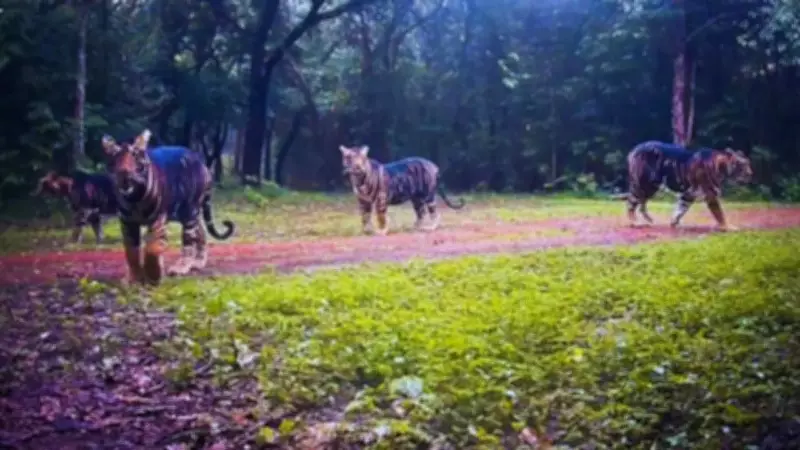
A remarkable wildlife photograph from Odisha's Similipal Tiger Reserve has captured widespread attention, showcasing an exceptionally rare sight: a melanistic tigress accompanied by her three melanistic cubs moving through the forest. Shared by @rameshpandeyifs on the social media platform X, the image is extraordinary not only because black tigers are among the rarest big cats globally but also because it documents four of them in a single frame. Wildlife experts note that even within Similipal, spotting these dark tigers is quite uncommon, making the sighting of a tigress with her three cubs truly astonishing.
Similipal's Unique Black Tigers
The latest picture highlights the special status of Similipal Tiger Reserve, a protected area in Odisha's Mayurbhanj district renowned for its black tigers. These felines are not a distinct species; rather, they are Bengal tigers with a remarkable genetic characteristic that gives them an unusual appearance. Scientists describe these animals as "pseudo-melanistic" tigers, a condition resulting from a recessive mutation in the Taqpep gene. This mutation causes their stripes to be wider and more numerous, blending together to cover much of their orange fur. From a distance or in dim light, the tigers can appear nearly black, though their orange base color remains visible beneath the dark striping, unlike in true melanism.
Significance of the Sighting
Similipal stands out as the only known place on Earth where these striking black tigers with the unique genetic trait are commonly found. For wildlife enthusiasts, the photograph offers a glimpse into one of India's most fascinating conservation stories. Over the years, camera traps installed across the reserve have documented several black tigers, aiding scientists in understanding their behavior, movement patterns, and population dynamics. However, photographs featuring multiple melanistic individuals together remain exceptionally uncommon. The image of a melanistic tigress with her three cubs is a testament to successful breeding and is considered a positive sign for conservation efforts in the region.

Similipal Tiger Reserve: A Biodiversity Hotspot
Beyond its famous felines, Similipal is a vast wilderness and a treasure trove of eastern India's natural heritage. This large, biodiverse reserve spans over 2,700 square kilometers and is part of the larger Similipal Biosphere Reserve. With dense forests, rolling hills, meadows, and waterfalls, it provides an excellent habitat for a wide array of wildlife. The landscape supports elephants, leopards, gaur, sambar, wild dogs, and hundreds of bird species, in addition to its tiger population. Similipal's rugged terrain and lower tourist numbers compared to other major tiger reserves in India help maintain its wild character. Attractions like the Barehipani Falls and Joranda Falls add to the reserve's appeal, especially after the monsoon when the vegetation is lush and green.
Impact on Wildlife Tourism and Conservation
The recent photograph of a black tiger is expected to boost interest from wildlife seekers and photographers. While spotting a black tiger remains extremely rare, Similipal is regarded as the only place where one might have a chance to see them, making it a popular destination for nature tours. Experts emphasize that the image signifies more than just aesthetic beauty; it demonstrates successful breeding by a melanistic tigress with her three cubs, which is encouraging for conservation initiatives in the area. This sighting underscores the importance of preserving Similipal's unique ecosystem and the genetic diversity of its tiger population.