

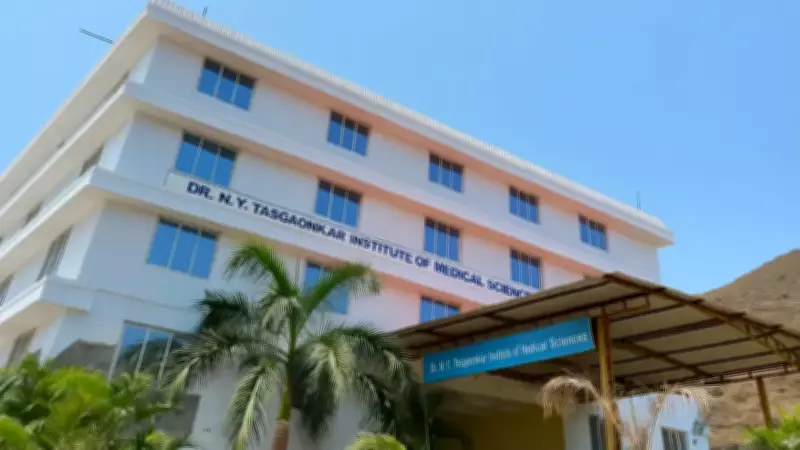
DMER Committee Exonerates Karjat Medical College in Admission Cancellation Inquiry
The committee appointed by the Directorate of Medical Education and Research (DMER) to investigate the unusual mass cancellation of 18 admissions under the institutional and NRI quotas at NY Tasgaonkar Institute of Medical Science in Karjat has given the college a clean chit, concluding the state-level inquiry into a case that had sparked significant scrutiny over the simultaneous withdrawal of all candidates from these higher-fee categories.
Committee Findings and Methodology
According to sources within the state government, the committee reported that it contacted all 18 candidates, who informed the panel that they had voluntarily withdrawn their admissions. However, sources familiar with the inquiry process have raised concerns, noting that the panel relied on phone numbers provided by the college itself, which compiled the list of candidates presented to the committee. This reliance on college-supplied information has led to skepticism about the thoroughness of the investigation.
Potential for Further Investigation
In response to the committee's findings, some parents are reportedly preparing to approach the Central Bureau of Investigation (CBI) with supporting documents, seeking a detailed probe into the entire admission process and the manner in which the inquiry was conducted. This move underscores ongoing doubts about the transparency and fairness of the proceedings.

Vacancy Disclosure and Admission Practices
On Saturday, around 3 PM, the college published its vacancy position, revealing that 12 institutional quota seats, three NRI quota seats, and one state merit seat were vacant. This disclosure came just a day after the college had, on Friday evening, selected 12 candidates under the institutional quota from a special list prepared internally and submitted earlier to the Bombay High Court. Dr. Pravin Shingare, former head of DMER, expressed astonishment at the situation, stating that in his decade-long tenure overseeing postgraduate admissions, he had never encountered such a mass cancellation of institutional and NRI quota admissions.
"And even if such a situation had arisen," Dr. Shingare questioned, "what prevented the CET Cell from preparing a fresh list of meritorious candidates willing to take admission in this college under the institutional and NRI quotas?" His remarks highlight potential procedural lapses in handling the vacancies.
Penalty Rules and Ongoing Oversight
When asked whether the panel sought details from the college on penalties levied on students who cancelled their admissions after submitting retention forms, a source indicated there would be no penalty since the seats had not lapsed. However, this contradicts the rules governing private medical colleges, which stipulate that "any candidate resigning a seat from an unaided private or minority medical college after the prescribed date will have to pay three years' fees as a penalty." A senior official mentioned they would review the report's details on Monday to clarify this discrepancy.
In a move to ensure transparency, the state CET Cell has posted an observer at the college campus, as confirmed by a senior officer from the CET cell. This step aims to monitor future admission processes and prevent similar incidents, reflecting ongoing efforts to uphold integrity in medical education admissions amidst the controversy.






