India's First State-Funded BSL-4 Lab Takes Shape in Gujarat
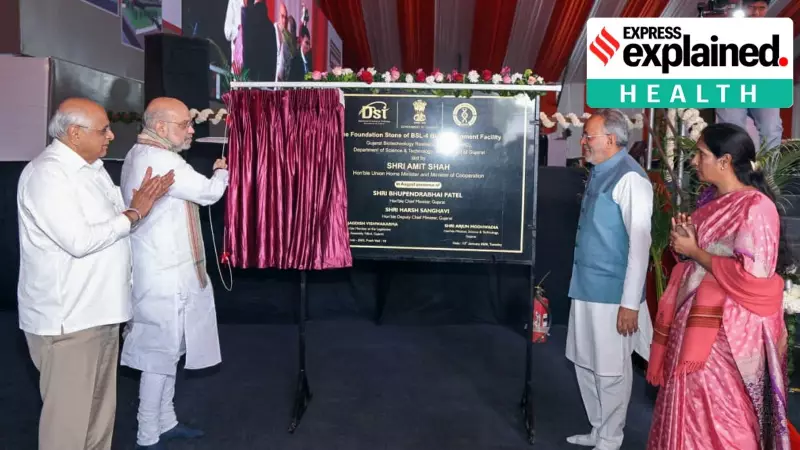
Union Home Minister Amit Shah laid the foundation stone for a groundbreaking Bio-Safety Level 4 containment facility in Gandhinagar on Tuesday. This marks a significant milestone for India's health security infrastructure.
A New Health Shield for the Nation
Amit Shah described the facility as a "health shield" for India. He emphasized that this project heralds a new era of biotechnology and health security for the entire country. The ceremony took place in his Lok Sabha constituency of Gandhinagar.
Planning for this advanced laboratory began in mid-2022. The foundation stone was laid more than three years later, on January 13, 2026. This demonstrates the careful preparation behind this crucial national asset.

What Makes BSL-4 Labs So Critical?
Bio-Safety Level 4 represents the highest level of biological containment available. These specialized laboratories handle the world's most dangerous pathogens. Scientists work with viruses that are highly infectious and often lack effective treatments or vaccines.
The Gandhinagar facility will enable research on several deadly pathogens including:
- Ebola virus
- Marburg virus
- Crimean-Congo Hemorrhagic Fever virus
- Kyasanur Forest Disease virus
- Nipah virus
Researchers will conduct advanced studies under extremely controlled conditions. They will develop diagnostics, vaccines, and therapeutics while investigating outbreaks rapidly.
Gujarat's Pioneering Facility
This BSL-4 laboratory will be constructed in Sector-28 of Gandhinagar. The project spans 11,000 square meters with a budget of ₹362 crore. It represents the second civilian BSL-4 facility in India and the first to be fully funded and controlled by a state government.
The Gujarat Biotechnology Research Centre will operate the facility. This center already made history by decoding the whole genome sequence of the SARS-CoV-2 coronavirus during the Covid pandemic.
The complex will include multiple laboratory modules:
- BSL-4 containment facilities
- BSL-3 laboratories
- BSL-2 laboratories
- ABSL-4 animal biosafety labs
- ABSL-3 animal research facilities
Advanced utilities and supporting infrastructure will complement these specialized spaces.
International Standards and National Importance
Development follows strict guidelines from multiple authorities. These include the US Centers for Disease Control and Prevention, the US National Institutes of Health, India's Department of Biotechnology, and the Indian Council of Medical Research.
A senior official from Gujarat's Department of Science and Technology explained the facility's significance. "This facility will be constructed according to stringent international standards," the official stated. "Our scientists will be able to conduct research on deadly pathogens that currently face bottlenecks due to limited BSL-4 facilities."
The Department of Biotechnology has signed a memorandum of understanding declaring this upcoming lab a national facility. This ensures guidance from expert institutions across India.
Animal Disease Research Capabilities
The Animal Bio-Safety Level 4 component addresses a critical need. Previously, animal disease samples required transportation to the National Institute of High Security Animal Diseases in Bhopal. The new facility will handle such research locally.
"We will have two components," the official elaborated. "One will test samples, and the second will produce vaccines from antibodies in animals."
India's Existing Biosafety Infrastructure
Currently, India has only one operational civilian BSL-4 laboratory at the National Institute of Virology in Pune. The Defence Research and Development Organisation established another BSL-4 facility in Gwalior during late 2024.
Globally, 69 BSL-4 laboratories are either operational or under development according to officials involved in the Gujarat project.
India's biosafety network includes numerous facilities at different levels:

- 154 BSL-2 laboratories approved under the Virus Research and Diagnostic Laboratories network
- 11 BSL-3 level labs within the same network
- 21 additional biosafety laboratories at Indian Council of Medical Research institutes
- Multiple facilities under various scientific departments and councils
The Gujarat facility represents a significant expansion of India's capacity to handle biological threats. It positions the state at the forefront of pandemic preparedness and advanced medical research.