

Haryana Accelerates Maternal Healthcare with FRU Expansion Target
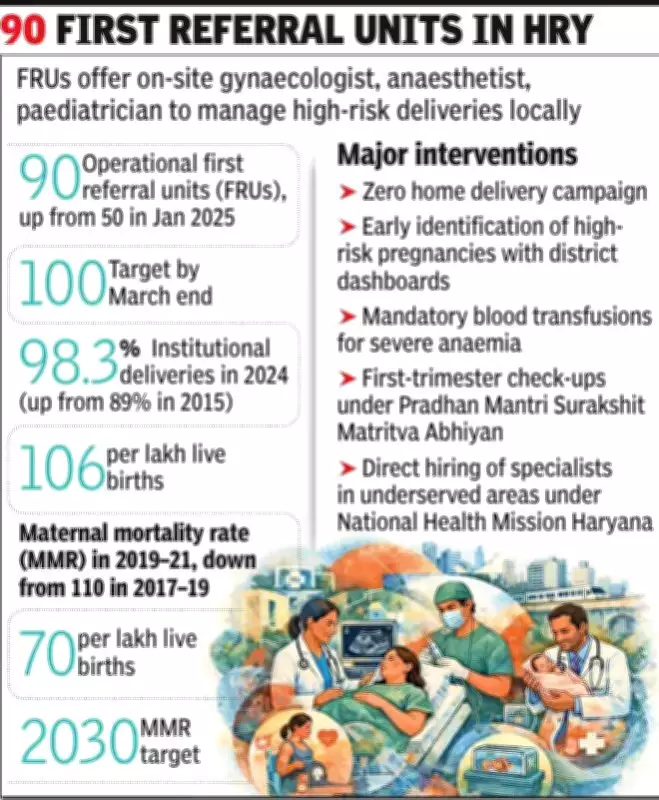
Haryana, a state witnessing a significant shift towards institutional childbirth, is setting ambitious targets to strengthen its maternal healthcare infrastructure. Government data reveals that 98.3% of deliveries in 2024 occurred in medical facilities, marking a substantial increase from 89% recorded in 2015. This progressive trend underscores the state's commitment to ensuring safer childbirth experiences for women across the region.
Strategic Expansion of First Referral Units
The state government is now focusing on expanding its network of First Referral Units (FRUs) to reach 100 operational units by the end of March. Currently, Haryana boasts 90 FRUs, a notable rise from just 50 in January 2025. These units are strategically located in civil hospitals, sub-divisional hospitals, and community health centers, bringing advanced maternal care closer to rural and urban communities alike.
Each FRU is equipped with essential medical specialists, including a gynaecologist, anaesthetist, and paediatrician, available on hand. This comprehensive setup enables the management of high-risk pregnancies and delivery complications locally, reducing the need for emergency transfers to distant tertiary care hospitals. Officials have highlighted that this expansion represents the next big milestone in the continuum of reforms, anticipated to significantly enhance maternal health indicators in the coming years.

Declining Maternal Mortality Rates and Global Targets
The rise in institutional deliveries is identified as one of the biggest drivers behind safer childbirth and a reduced maternal mortality rate (MMR) in Haryana. Maternal mortality, which refers to deaths during pregnancy, childbirth, or within six weeks post-delivery, has shown a promising decline. According to the Special Bulletin on Maternal Mortality in India released this month, Haryana's MMR decreased from 110 per lakh live births in 2017-19 to 106 in 2019-21.
The state aims to align with global health targets by striving to reduce the MMR to 70 per lakh live births by 2030. This goal is supported by multiple initiatives under the National Health Mission (NHM) and other state-led programs.
Comprehensive Initiatives Driving Improvement
The health department attributes the improvement in maternal health outcomes to a series of targeted schemes and campaigns. Key initiatives include:
- Zero Home Delivery Campaign: Promotes childbirth in medical facilities with trained healthcare professionals.
- Pradhan Mantri Surakshit Matritva Abhiyan (PMSMA): Ensures early check-ups for pregnant women during conception stages.
- Janani Surakshit Maah Campaign: Provides additional attention and resources for managing high-risk pregnancies.
- Janani Suraksha Yojana: Offers financial assistance for institutional delivery to women from economically disadvantaged backgrounds.
- Janani Shishu Suraksha Karyakram: Eliminates out-of-pocket expenses by providing free medicines, diagnostics, diet, blood transfusions, and referral transport services.
Mission director of the Haryana chapter of NHM, Ripu Daman Singh Dhillon, emphasized that all labour rooms across the state have been upgraded with essential drugs, equipment, and logistics. These advancements aim to ensure that every childbirth is safe, dignified, and well-supported. The state focuses on early identification of high-risk pregnancies to intervene proactively before complications arise.
Data-Driven Approaches and Systemic Reviews
NHM Haryana director Virender Yadav highlighted the implementation of a maternal death review system, conducting one-to-one reviews at the state level. This data-driven approach helps identify systemic gaps and implement corrective measures promptly, fostering continuous improvement in maternal care protocols. Additionally, the blanket sanction policy under NHM allows districts to directly hire doctors and specialists in understaffed regions, addressing critical staffing shortages.

Districts are instructed to enhance antenatal care, maintain dashboards of high-risk pregnancy cases at all government health centers, and ensure mandatory blood transfusions for women with severe anaemia. These multifaceted efforts collectively contribute to Haryana's journey towards achieving exemplary maternal healthcare standards and reducing maternal mortality rates across the state.





