Jaipur's Advanced Toxicology Lab Stalled Over Funding Dispute, Patients Suffer
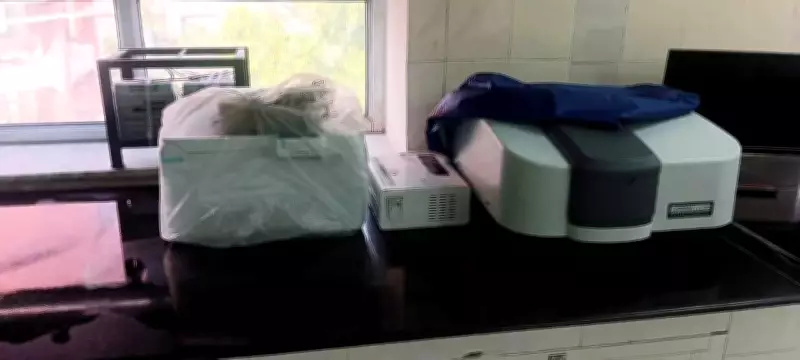
In a concerning development for emergency medical care in Rajasthan, the state-of-the-art toxicology and drug level laboratory at Sawai Man Singh (SMS) Hospital in Jaipur has remained completely non-functional for nearly three months following its inauguration in January 2026. Despite being established at a substantial cost of Rs 1 crore, this critical diagnostic facility has yet to process a single patient sample, leaving numerous critically ill individuals without access to vital testing services.
Funding Impasse Halts Operations
The primary obstacle preventing the laboratory from commencing operations stems from an unresolved bureaucratic decision regarding payment structures. The Rajasthan state government has failed to determine whether patients should bear the costs of toxicology tests or if these services should be covered under public funding schemes. This administrative paralysis has effectively paralyzed the facility's ability to provide life-saving diagnostic support.
"We have formally written to the Rajasthan Medicare Relief Society seeking clear guidance on the payment mechanism, but without their directive, we cannot proceed with testing," explained Dr. DK Sharma, the designated in-charge of the laboratory. "This delay is directly impacting patient care outcomes."

Critical Diagnostic Capabilities Remain Untapped
The idle laboratory represents a significant wasted investment in advanced medical technology. Equipped to detect and precisely measure drugs, poisons, and various chemical substances across multiple sample types including blood, urine, saliva, hair, and tissue, the facility boasts sophisticated analytical capabilities through:
- Immunoassay technology for rapid screening
- Gas chromatography for separating complex mixtures
- Liquid chromatography for detailed analysis
- Mass spectrometry for precise identification of substances
These technologies collectively enable faster and more accurate treatment decisions in emergency medicine scenarios, particularly for time-sensitive poisoning cases.
Patient Care Compromised by Diagnostic Void
The operational delay has severe implications for patients presenting with various toxicological emergencies. Medical professionals at SMS Hospital routinely encounter cases involving:
- Insecticide and pesticide exposures
- Drug overdoses and pharmaceutical toxicity
- Snake bite envenomations
- Industrial chemical accidents
- Mosquito repellent and household chemical poisonings
In the absence of laboratory confirmation, physicians are currently forced to rely on clinical symptoms and standardized antidote protocols rather than precise identification of specific toxins or their concentrations in patients' systems.
"Presently, doctors administer antidotes and provide symptomatic treatment without clear knowledge about the exact poison type or its blood concentration levels," revealed a senior SMS Hospital official who requested anonymity. "A definitive laboratory report identifying the poison and quantifying its presence would significantly enhance recovery prospects and potentially save lives through targeted interventions."
Broader Implications for Emergency Medicine
The non-functional status of this advanced diagnostic facility represents more than just bureaucratic inefficiency—it signifies a critical gap in Rajasthan's emergency medical infrastructure. Poisoning cases require rapid, precise identification of toxic substances to guide appropriate treatment decisions, and the current reliance on symptomatic management rather than evidence-based toxicology results in suboptimal patient outcomes.
As the funding dispute continues unresolved, patients across Jaipur and surrounding regions remain vulnerable to delayed or inadequate treatment for toxicological emergencies. The Rs 1 crore investment in cutting-edge diagnostic technology sits idle while medical professionals struggle to provide optimal care without the laboratory support that could dramatically improve treatment precision and patient survival rates.