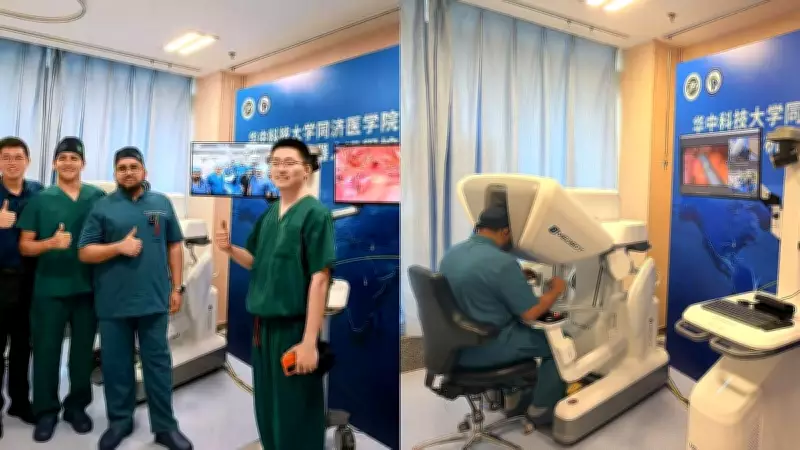
A groundbreaking medical procedure has demonstrated the potential of 5G technology in healthcare. A surgeon based in China successfully performed a long-distance surgery on a patient located in Hyderabad, India, approximately 3,900 kilometers away. The operation was conducted using advanced robotic arms controlled remotely via a high-speed 5G network.
Details of the Surgery
The procedure involved a complex operation where the surgeon, located in China, manipulated robotic instruments in real-time to operate on the patient in Hyderabad. The 5G network ensured minimal latency, allowing for precise movements and immediate feedback. The patient, who required specialized surgery, was successfully treated without the surgeon being physically present in the operating room.
Technological Breakthrough
This achievement highlights the transformative potential of 5G in medicine. The high bandwidth and low latency of 5G networks enable real-time control of robotic systems over vast distances. Such technology could revolutionize access to specialized surgical care, especially in remote or underserved areas where expert surgeons are scarce.

Implications for Healthcare
Long-distance surgery could reduce the need for patients to travel for complex procedures, saving time and costs. It also opens up possibilities for international collaboration, where surgeons from different parts of the world can perform surgeries in regions lacking local expertise. However, challenges such as network reliability, cybersecurity, and regulatory hurdles must be addressed for widespread adoption.
Future Prospects
Experts believe that with further advancements, remote surgery could become commonplace. The success of this procedure in India and China, both countries with vast populations and uneven healthcare distribution, underscores the potential to bridge healthcare gaps. As 5G networks expand globally, more such surgeries are expected, paving the way for a new era in telemedicine.