Nagpur's Premier Medical Institutions Grapple with Severe Water Shortage
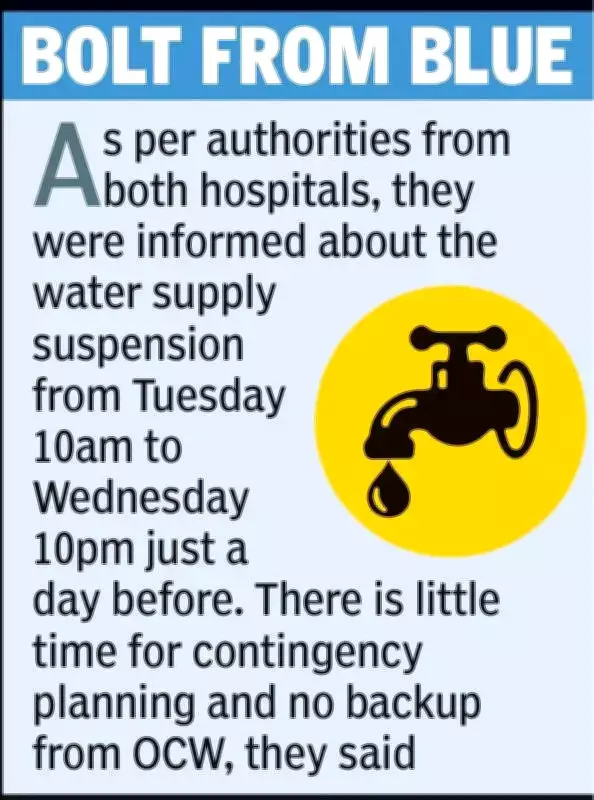
Two of Nagpur's most critical healthcare facilities, the Indira Gandhi Government Medical College and Hospital (IGGMCH, commonly known as Mayo Hospital) and the Government Medical College and Hospital (GMCH), are confronting an acute water crisis. This emergency stems from a 36-hour water supply shutdown announced by Orange City Water Private Limited (OCW), scheduled to commence on Tuesday at 10 AM and extend until Wednesday at 10 PM.
Inadequate Notice and Summer Peak Exacerbate Challenges
Hospital authorities have expressed significant concern over the timing and notification of this disruption. Both tertiary care centers received information merely one day in advance, providing minimal opportunity for comprehensive contingency planning. This short notice is particularly problematic given the current peak summer season, which naturally escalates water demand for medical, sanitation, and daily operational needs.
The impact is expected to be widespread and severe. Thousands of patients who travel from the Vidarbha region and neighboring states for treatment, along with their accompanying relatives, will face considerable hardships. The crisis also directly affects the large communities residing within the hospital complexes.

Vulnerable Populations and Essential Services at Risk
These hospitals are not just treatment centers but also residential hubs. They host hostels for MBBS students, postgraduate scholars, nursing trainees, and paramedical students. Furthermore, they operate essential in-house services that are heavily water-dependent, including large-scale kitchens that prepare meals for patients and staff, and laundry facilities for hospital linens and uniforms.
With Orange City Water Private Limited failing to provide a clear or assured backup plan, the hospital administrations have been forced into emergency mode, scrambling to mitigate the impending shortage.
Emergency Measures and Long-Term Demands
In response to the crisis, Dr. Nitin Shende, the Medical Superintendent of IGGMCH, has initiated urgent measures. The hospital has placed orders for 25 water tankers to bridge the supply gap and is prepared to arrange for additional tankers if the situation demands. This stop-gap solution aims to prevent a complete breakdown of services.
Simultaneously, calls for a permanent resolution are growing. Dr. Avinash Gawande, the Medical Superintendent of GMCH, has formally written to Orange City Water Private Limited. His communication demands the establishment of a dedicated water pipeline for the hospital to prevent such disruptive and recurring water supply failures in the future.
Potential Impact on Healthcare Delivery
Authorities warn that the confluence of a sudden, prolonged water shutdown and the region's intense summer heat is a recipe for operational disaster. The shortage is likely to severely compromise patient care standards, hygiene protocols, and the smooth daily functioning of these vital medical institutions. The situation underscores the critical need for reliable infrastructure to support essential public health services.