

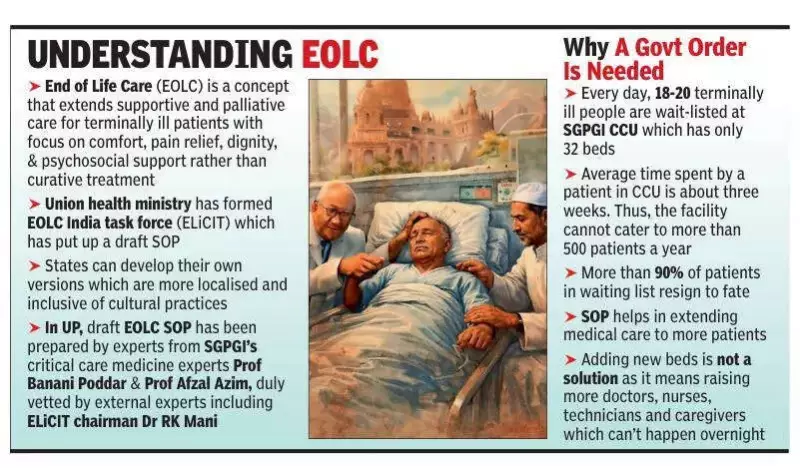
SGPGI Drafts End-of-Life Care SOP to Ensure Dignified Departure in Uttar Pradesh
The right to life includes the right to depart with dignity. This principle has guided the creation of an end-of-life care standard operating procedure in Uttar Pradesh. The critical care medicine department at SGPGI has developed a state-specific draft for this purpose.
External Experts Vet the Document
Embracing the mission to provide care and comfort at life's end, this EOLC SOP has undergone review by external experts. Dr RK Mani, chairman of the ELiCIT task force, contributed to the vetting process. The document aims to translate compassionate care into actionable guidelines.
Awaiting Government Implementation
However, this draft serves little practical purpose until the state medical education department issues a formal government order. Such an order would turn thoughtful guidelines into real-world practice. The need for this SOP in society was discussed at a recent SGPGI program.

Officials and Experts Share Perspectives
Additional Chief Secretary Amit Kumar Ghosh attended the brainstorming session. He noted that facing a loved one's approaching death proves painful and shaking. Both doctors and attendants recognize there can be a point of no return. Prolonging the wait not only increases family agony but also denies the departing soul their right to a dignified exit.
Dean Prof Shaleen Kumar explained that the journey from life to death can become long and complicated. Chronic diseases, organ failures, and fatal injuries often diminish recovery chances. Waiting for nature to end the story frequently pushes families into medical poverty. It robs attending relatives of their assets and dignity. An EOLC mechanism could save families, ensure dignified departure, and allow doctors to focus on salvageable cases.
Drafting Process and Protocol Details
Earlier, CCM head Prof Banani Poddar and colleague Prof Afzal Azim elaborated on the document. Both served as members of the ELiCIT taskforce and helped draft the SGPGI SOP. Prof Azim stated that the procedure requires consensus from the tending physician and two other experts within the organization. This consensus paves the way for considering the withdrawal of life-sustaining treatment.
Prof Poddar described an additional verification board. This board includes external doctors and experts who review the primary board's decision on medical futility. Once both boards agree, a formal decision emerges regarding withholding or withdrawing life support. Such support might include ventilators or high-grade antibiotics. Communication with the family follows this decision. Subsequent procedures involve death declaration, brain death protocols, and after-death protocols.
The draft represents a significant step toward humane medical practice. It balances ethical considerations with practical healthcare needs. Implementation now depends on state government action to make these guidelines operational across Uttar Pradesh.






