

Telangana's Medical College Expansion Creates Critical Safety Crisis for Students
Hyderabad: The rapid expansion of government medical colleges in Telangana has exposed alarming gaps in student safety, with infrastructure development failing to keep pace with institutional growth. Since 2023, the state has added at least 18 new government medical colleges, bringing the total to 36 institutions. However, this ambitious expansion has come at a significant cost to student welfare, with hostels, transportation systems, and basic facilities struggling to match the accelerated pace of development.
Recent Accident Highlights Systemic Transport Failures
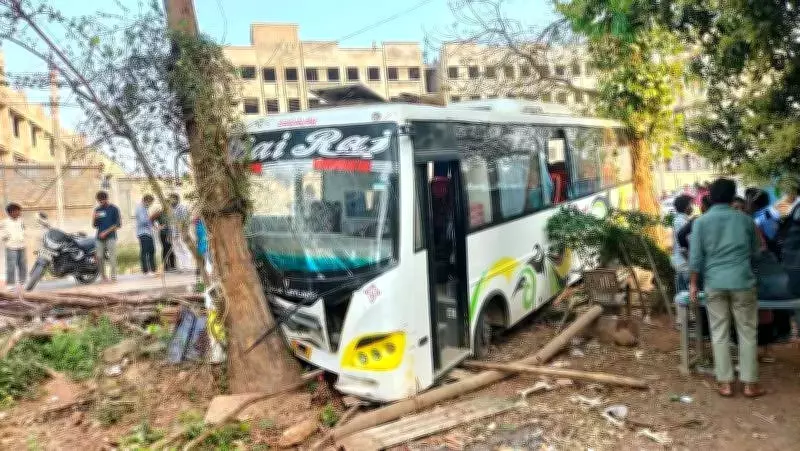
The risks became tragically apparent on Saturday when a private bus transporting 40 students from Government Medical College (GMC) Bhadradri Kothagudem to their hostel approximately 6 kilometers away was involved in a serious accident. At least 10 students sustained injuries in the incident, though all were subsequently discharged from medical care. This event has brought into sharp focus the daily dangers faced by medical students across Telangana, who routinely travel long distances in poorly regulated private vehicles or using their own transportation.
This incident represents a disturbing pattern rather than an isolated occurrence. Last year, five third-year MBBS students from the same college suffered injuries including fractures, muscle tears, and head trauma in a similar accident while returning to their hostel. These repeated incidents underscore systemic failures in student transportation safety protocols.

National Medical Commission Flags Widespread Deficiencies
The transportation crisis has gained renewed urgency following recent inspections by the National Medical Commission (NMC), which identified significant infrastructural deficiencies in 26 of Telangana's 36 government medical colleges. Students from institutions across Medak, Narayanpet, Mahabubabad, Jogulamba Gadwal, and other districts report that their colleges, hostels, and teaching hospitals are frequently separated by distances ranging from 2 to 12 kilometers.
Many students must rely on overcrowded auto-rickshaws or expensive private transportation arranged by their colleges, creating both safety concerns and financial burdens. A final-year MBBS student from GMC Bhadradri Kothagudem revealed that while their college commenced operations in 2021 and hostel construction began in 2022, the residential buildings remain incomplete to this day.
"Students are scattered across rented accommodations located far from campus, often living in cramped conditions. Private buses are hired for transportation, but there is absolutely no clarity regarding vehicle fitness checks or safety protocols," the student explained.Transportation Shortages Plague Multiple Institutions
The transportation crisis manifests differently across various medical colleges but creates universal challenges for students. At GMC Narayanpet, which opened in 2023, approximately 100 MBBS students receive no bus transportation whatsoever despite their hostel being located 8 kilometers from campus.
"Some students use auto-rickshaws, while others rely on their personal vehicles. I spend approximately Rs 1,500 monthly from my own pocket just for transportation," disclosed a second-year student from the institution.Similar shortages affect numerous other colleges:
- GMC Karimnagar provides a single bus for approximately 160 students
- GMC Ramagundam operates just two buses for 300 students
- GMC Nagarkurnool utilizes one 50-seater bus to transport 450 students across a 5-kilometer distance
A third-year student from GMC Nagarkurnool described the logistical nightmare: "It requires three complete trips to move everyone between campus and hostel, creating significant delays and disruptions to academic schedules."

Regulatory Violations and Financial Burdens on Students
Despite the National Medical Commission's 2022 MBBS regulations mandating either nearby hostel accommodations or free, reliable transportation services, several institutions are reportedly charging students additional fees for bus services. A student from GMC Maheshwaram revealed that while temporary buses were arranged for January and February, the college is now collecting Rs 4,800 per student for transportation from March through May.
Similar concerns have been raised by students at GMC Asifabad, indicating that financial burdens disproportionately affect students from low-income backgrounds who are already grappling with the substantial costs of medical education.
Expert Analysis and Systemic Recommendations
Dr. Srinath, president of the Telangana State Resident Doctors Association (TSRDA), attributed the safety crisis to the rapid rollout of medical colleges without corresponding infrastructure development. "The accelerated expansion of medical education institutions has created serious infrastructure gaps that directly compromise student safety and academic quality," he stated.
Dr. Srinath emphasized that college-operated bus services must become mandatory wherever campuses are geographically separated. "Without safe, reliable, and affordable transportation, students lose valuable academic time and face additional financial strain. This negatively impacts both theoretical learning and essential clinical training components of medical education," he explained.
The current situation represents a critical challenge for Telangana's healthcare education system, requiring immediate intervention to ensure student safety aligns with the state's ambitious medical college expansion goals.





