

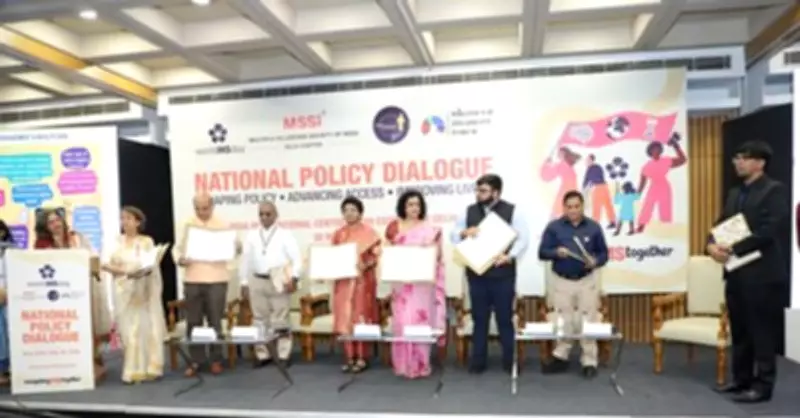
A national policy dialogue held on World Multiple Sclerosis Day has adopted a landmark 10-point declaration, urging the Indian government and society to strengthen recognition and support for individuals with invisible disabilities. The declaration, which emerged from a high-level consultation involving policymakers, healthcare professionals, patient advocates, and disability rights experts, aims to address the systemic gaps that leave millions of people with conditions like multiple sclerosis (MS) without adequate care, employment opportunities, or social inclusion.
Key Highlights of the Declaration
The 10-point declaration calls for several transformative measures. First, it demands the inclusion of invisible disabilities under the Rights of Persons with Disabilities Act, 2016, with specific provisions for neurological conditions. Second, it emphasizes the need for a national registry to track prevalence and outcomes. Third, it advocates for workplace accommodations and anti-discrimination policies. Fourth, it calls for accessible healthcare, including early diagnosis and affordable treatment. Fifth, it stresses mental health support for patients and caregivers. Sixth, it recommends awareness campaigns to combat stigma. Seventh, it proposes financial assistance and insurance coverage. Eighth, it urges research funding. Ninth, it calls for inclusive education. Tenth, it demands community-based rehabilitation programs.
Impact on Multiple Sclerosis Patients
Multiple sclerosis, a chronic autoimmune disease affecting the central nervous system, often leads to symptoms like fatigue, mobility issues, and cognitive impairment, which are not immediately visible. Patients frequently face skepticism from employers, insurers, and even healthcare providers. The declaration specifically addresses these challenges by pushing for objective diagnostic criteria, telemedicine services, and specialized MS clinics in every state.

Experts at the dialogue highlighted that India has an estimated 200,000 MS patients, but many remain undiagnosed or untreated due to lack of awareness. The declaration aims to change this by integrating MS care into primary health systems and training community health workers.
Government and Stakeholder Reactions
Union Health Ministry officials present at the event acknowledged the need for policy reforms and assured that the declaration would be forwarded to relevant departments for action. Disability rights groups praised the initiative but cautioned that implementation remains a challenge. They called for a time-bound action plan and monitoring mechanism.
The dialogue also saw participation from international organizations, including the World Health Organization, which shared global best practices for invisible disability inclusion.
Way Forward
The declaration is expected to serve as a blueprint for state-level policies and corporate diversity programs. Organizers plan to follow up with regional consultations and a national campaign to build public support. The ultimate goal is to ensure that no person with an invisible disability is left behind in India's development journey.

