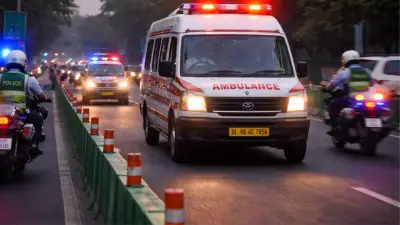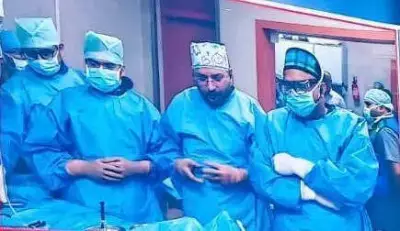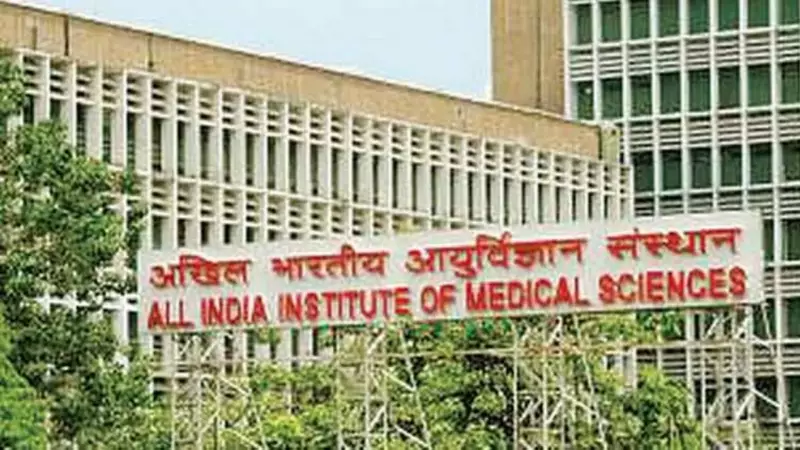
In a significant move to tackle diagnostic delays, the All India Institute of Medical Sciences (AIIMS) in New Delhi has integrated an artificial intelligence (AI) tool to read chest X-rays. The system generates provisional reports within five to ten minutes, aiming to streamline a process that previously could take a day or two due to overwhelming patient volume.
Addressing a Massive Diagnostic Load
Chest X-rays are among the most frequently prescribed diagnostic tests at AIIMS Delhi, used for conditions ranging from chest pain and breathlessness to trauma and severe lung infections. The hospital's radiology department handles a staggering nearly 1,000 such scans every day. This high volume often created backlogs, delaying critical reports from reaching treating physicians promptly.
The newly implemented AI software, sourced from a Mumbai-based health-tech startup and approved by the U.S. Food and Drug Administration (FDA), uses deep learning algorithms. These algorithms analyze patterns in vast datasets to detect nodules and early signs of abnormalities in chest radiographs.

AI as a Support, Not a Replacement
Senior doctors at AIIMS emphasize that the technology is a powerful assistant designed to augment, not replace, human expertise. Dr. Raju Sharma, professor and head of the radiology department, stated that the AI dramatically speeds up initial assessment, allowing clinicians to spot potential issues sooner. However, he clarified, "The bottom line is that it might work 24/7, but the decision is that of a radiologist."
Every AI-generated provisional report undergoes a detailed review by a team of radiologists and clinicians before any treatment commences. Dr. Devasenathipathy K, professor of radio diagnosis, highlighted the rigorous oversight, mentioning weekly joint conferences to review and discuss all AI-assisted findings. "There is strong oversight, and these findings are never used in isolation," he assured.
Transforming Triage and Emergency Care
One of the most critical applications of the AI tool is in triaging patients. By analyzing findings related to the lungs, heart, bones, and diaphragm, the software helps prioritize cases based on urgency. Dr. Sharma noted the tool has a sensitivity of 99.7%, meaning it detects nearly all abnormalities.
This capability is particularly valuable during night shifts and emergencies when junior doctors may be managing patients without immediate senior supervision. "Without quick initial results, it can be difficult to identify which patients need urgent attention first," Dr. Sharma explained. The AI provides crucial support in these scenarios, reducing missed findings and accelerating the initiation of treatment.
For patients, the change translates to tangible benefits. Now, after getting an X-ray, they can receive a preliminary report to discuss with their doctor during the same consultation, significantly cutting down the turnaround time.
The Road Ahead: Developing an In-House AI System
While the current FDA-approved tool is already operational after a customized pilot phase, AIIMS has broader ambitions. The institute aims to develop its own proprietary AI system in the near future. The ongoing experiment is proving successful in easing workload pressure on the limited number of radiologists, enhancing diagnostic accuracy, and ultimately speeding up patient care.
With the radiology OPD seeing roughly 1,000 patients daily and only four to five radiologists handling routine chest X-rays during daytime hours, the AI intervention is a strategic step towards managing India's immense public healthcare demand efficiently and effectively.