

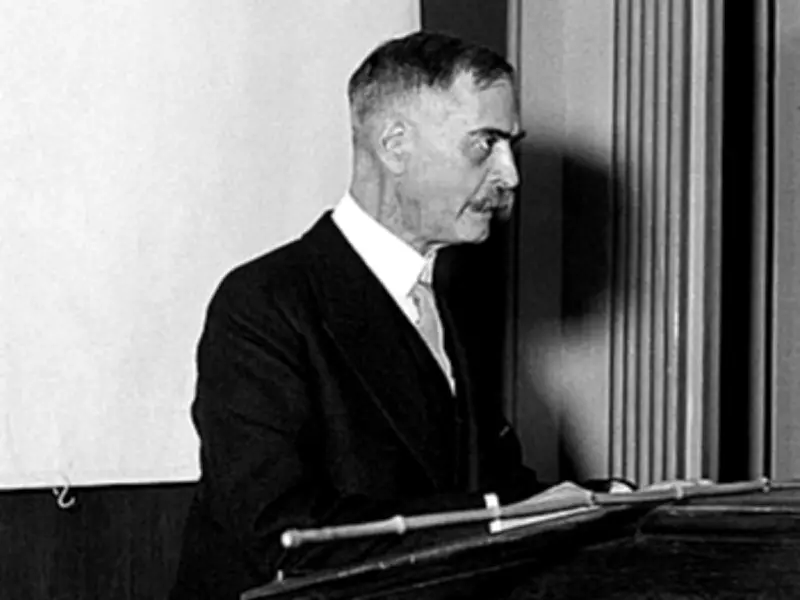
In 1901, in Vienna, a seemingly innocent laboratory experiment brought about an irreversible shift in contemporary medicine. Austrian physician-scientist Karl Landsteiner observed that when he combined blood samples from different people, some mixtures caused red blood cells to float freely, while others caused them to clump together. This visual clue led to the discovery of blood groups in humans. Until then, blood transfusion between donors and recipients carried significant risks, often resulting in death. Thus, a routine observation transformed a hazardous practice into a predictable science that has saved countless lives.
A Simple Laboratory Test with a Huge Impact
Landsteiner's discovery stemmed from curiosity about the interactions between different people's blood. As described in a historical paper by the Iranian Journal of Public Health, some blood combinations caused agglutination (clumping), while others did not. To understand why, he isolated red blood cells from the liquid part of blood (serum) for each individual. He then tested the red blood cells of one person with the serum of another, revealing a clear pattern. Blood was different for every person, even though it looked the same under a microscope. Based on these tests, Landsteiner classified human blood into types, which he originally called A, B, and C.
Why Were Blood Transfusions So Dangerous Before?
Before Landsteiner's findings, it was unknown why one transfusion worked perfectly for one person but was deadly for another. Medical professionals often attributed failures to poor surgical techniques or excessive blood loss. In reality, the problem lay with the human immune system. If a person received mismatched blood, their body recognized it as a foreign substance and mounted an aggressive immune response, leading to dangerous reactions that could be lethal. Landsteiner's lab tests clarified why incompatible blood was dangerous: agglutination resulted from immunological activity, where antibodies in one person's serum attacked the red blood cells of another. Thus, he revealed the rules of blood compatibility.

Blood Groups: From Laboratory Tests to Safe Transfusions
The identification of blood groups allowed medical practitioners to apply this knowledge practically. By recognizing blood types, they could ensure no aggressive immune response occurred, making transfusions safe. The time from scientific discovery to practical implementation was remarkably short. According to a historical account in the Journal of Anaesthesiology Clinical Pharmacology, while the ABO system was classified around the turn of the century, the first cross-match test before transfusion in a hospital was performed in 1907—a span of just seven years. This demonstrates that the invention was not left forgotten in academic publications. Cross-matching became the solution to a life-and-death medical issue, enabling physicians to ask a critical question: Do these blood samples match?
An Invaluable Legacy Born of Meticulous Observation
Medical marvels are often attributed to lucky coincidences or flashes of genius, but the history of blood type discovery tells a different story. Landsteiner simply observed carefully what others overlooked, and he checked and rechecked his observations numerous times. Over a century later, his pioneering knowledge is fundamental to emergency medicine, surgery, and blood donation. He may not have unraveled all the mysteries of blood, but he provided modern medicine with a solid foundation. Thanks to his years of meticulous lab work, blood is no longer seen as a simple fluid.

