

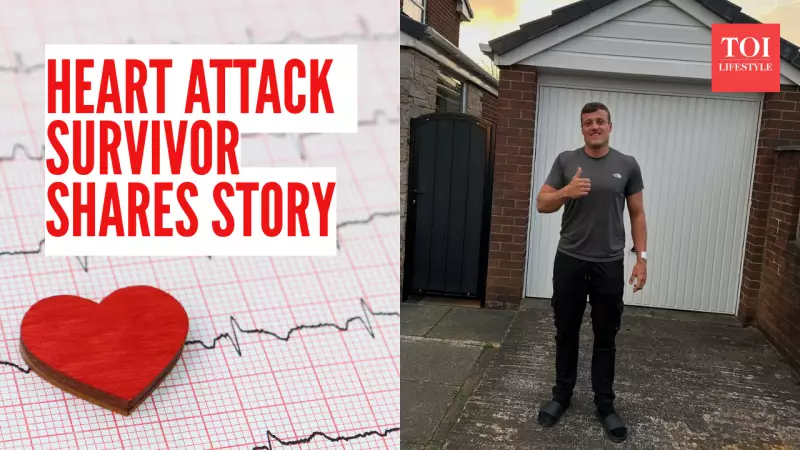
A Manchester-born chef and dedicated fitness enthusiast, Ryan Mickleburg, has shared a harrowing story of survival after suffering not one, but two life-threatening 'widowmaker' heart attacks. The 33-year-old, known for participating in marathons and fitness competitions, was left fighting for his life in a shocking turn of events that highlights that extreme fitness does not guarantee immunity from cardiac issues.
The Terrifying Gym Incident
In March, Ryan Mickleburg was in the middle of a gym class, training for the first of four planned marathons and lifting 100kg weights, when disaster struck. He suffered a double heart attack, a medical emergency so severe he was "scared he was dying". His mother, Patricia, rushed him to the hospital immediately. Upon arrival, his heart rate skyrocketed to a dangerous 225 beats per minute while medical staff worked frantically to stabilize him.
Symptoms Ignored Before the Attack
In a sobering revelation, Mickleburg admitted he had been ignoring warning signs for months before the catastrophic event. He experienced consistent numbness and pain but dismissed them as minor issues. "It was happening consistently for two to three months before, I kept getting numbness in the left side of my body, but I thought it was just a trapped nerve. I put it down to the gym", he recalled. This highlights a critical lesson about listening to one's body, regardless of fitness level.

What is a 'Widowmaker' Heart Attack?
According to the Cleveland Clinic, a 'widowmaker' heart attack is an immediately life-threatening event caused by a full blockage in the heart's biggest artery, the left anterior descending (LAD) artery. This artery supplies 50% of the heart muscle's blood. When blocked, blood flow stops, and the heart muscle can begin to die rapidly. The nickname stems from the attack's high fatality rate; only about 10% of victims survive such an event.
Recognising the Warning Signs
The Cleveland Clinic lists key symptoms of a widowmaker heart attack that everyone should know. These include:
- Chest pain or discomfort
- Shortness of breath
- Dizziness or lightheadedness
- Upset stomach or nausea
- Unusual tiredness or fatigue
- Pain radiating to the arms, shoulders, neck, jaw, or back
Road to Recovery and Prognosis
Surviving such an attack is only the first battle. The recovery journey is long and requires patience. Medical experts from the Cleveland Clinic indicate that recovery from a widowmaker heart attack typically takes about eight weeks. While some individuals may return to work within two weeks, others might need up to three months to fully recuperate, depending on the damage sustained and individual health factors. Ryan Mickleburg's story serves as a powerful testament to survival and the importance of post-event cardiac rehabilitation.
Disclaimer: This article is for informational purposes only and should not be considered professional medical advice or a substitute for diagnosis. Always consult a qualified healthcare provider for any health concerns.






