

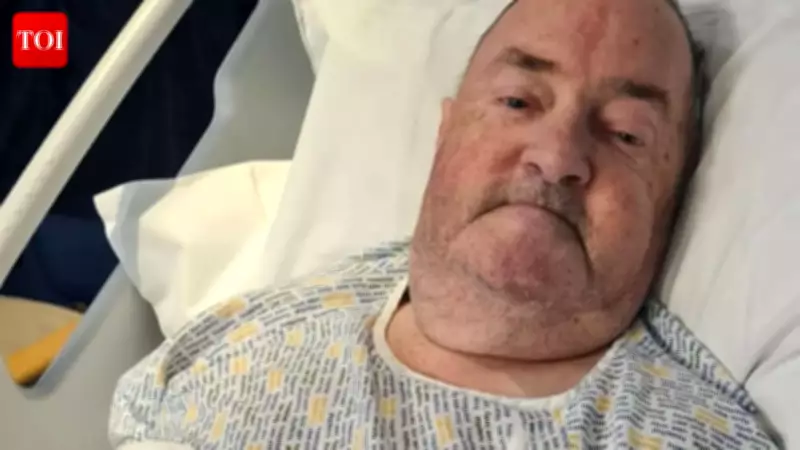
A Welsh family's worst fears about dementia took a devastating turn when doctors revealed the true cause of their father's symptoms: an incurable, aggressive brain tumor. Jimmy Glendinning, 68, from Flintshire, began experiencing memory problems, confusion, and personality changes in April 2024. His family initially suspected Alzheimer's disease, as his mother had suffered from it. However, after a sudden loss of feeling in his legs, he was rushed to the hospital, where scans showed a glioblastoma, the most aggressive form of brain cancer.
Jimmy Glendinning's Story
According to Wales Online, Jimmy, a retired man who loved walking, music, nature, and his family, first showed signs of trouble in April 2024. His daughter Naomi, 38, recalled a phone call from her father while he was at Sainsbury's, unable to remember why he was there. Initially, the family thought it might be a mini-stroke, but as months passed, his condition worsened. He became forgetful, struggled to find words, and grew withdrawn and irritable. By October, he suffered severe headaches and took increasing amounts of painkillers. On one occasion, he tried to make soup in a plastic jug on the hob, unable to understand the danger. Eventually, he agreed to see a doctor, but before tests could be completed, his condition deteriorated.
On November 20, 2024, Jimmy lost feeling in his legs and was taken to Glan Clwyd Hospital. Naomi described receiving a call from her mother and immediately knowing something was serious. The diagnosis of a brain tumor left the family shattered. They had been preparing for dementia, not an incurable cancer.

What Is Glioblastoma?
Glioblastoma, previously known as glioblastoma multiforme or GBM, is the most common and aggressive primary brain cancer in adults. It originates from astrocytes, glial cells that support nerve cells in the brain and spinal cord. Classified as a Grade IV tumor, it grows rapidly and infiltrates surrounding brain tissue. The exact cause is often unknown, but it develops when DNA mutations cause brain cells to grow uncontrollably. Prognosis is poor, with a median survival of 12-18 months and a five-year survival rate of about 5%. The tumor almost always recurs despite treatment.
Fighting the Incurable Condition
Jimmy chose to fight. He underwent surgery on December 10 to remove as much of the tumor as possible. He made it through Christmas but developed a major infection that required emergency surgery to remove part of his skull. After seven weeks in the hospital and months of rehab, he now uses a walker and has lost much of his independence. Despite this, his daughter Naomi says he retains his dry sense of humor and determination. His wife and daughter Helga share his daily care, and his grandchildren give him reasons to keep fighting.
The family has raised over £3,000 for Brain Tumour Research, driven by the shock of discovering how little funding this cancer receives compared to others. Their goal is to support research, push for better tests, and give families better odds. Letty Greenfield of Brain Tumour Research emphasized that Jimmy's story proves these tumors can happen to anyone and that more awareness and funding are needed.
Why Brain Tumors Get Mistaken for Dementia
Doctors note that brain tumors can mimic dementia when they develop in areas controlling memory, mood, and behavior. Symptoms like forgetfulness, confusion, personality shifts, and difficulty with daily tasks are often attributed to aging or Alzheimer's, delaying the correct diagnosis. Meanwhile, the tumor continues to grow. Jimmy's case highlights the overlap and the danger of misdiagnosis.
Lessons Learned
Jimmy's story serves as a warning to never ignore neurological symptoms. Sudden memory loss, personality changes, confusion, or rapid deterioration warrant thorough medical evaluation. It may not be dementia; it could be a tumor, stroke, vitamin deficiency, medication reaction, or another treatable condition. For the Glendinnings, a suspected Alzheimer's diagnosis led to a completely different, deadly discovery. Their message is clear: neurological symptoms deserve urgent, comprehensive attention.






