

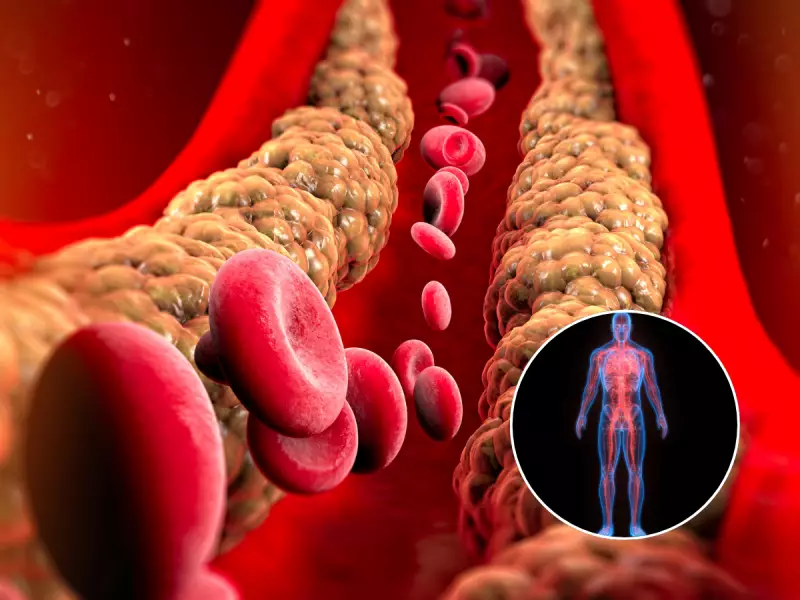
For decades, cholesterol has been vilified as the silent clogger of arteries and the culprit behind alarming blood test reports. However, within the intricate world of our cells, this molecule plays a far more nuanced and critical role. Its proper movement is essential for cellular health, and when it gets stuck, the consequences, especially in the brain, can be catastrophic.
The Cellular Cholesterol Highway and Its Traffic Jams
A landmark study published in the prestigious journal Proceedings of the National Academy of Sciences (PNAS) has unveiled a previously hidden cellular transport system. This system quietly decides whether cholesterol is efficiently recycled or becomes trapped, setting off a chain reaction that mirrors some of the most severe neurodegenerative disorders known to science.
At the heart of this discovery is a protein named NPC1. The research reveals that how this protein travels inside the cell may be just as vital as its function. Every mammalian cell, including those in our brain, acquires cholesterol through LDL particles, often labeled "bad cholesterol." Once inside, LDL is sent to compartments called late endosomes and lysosomes, where cholesterol is released for reuse.

This crucial handoff depends on two proteins working in tandem: NPC1 and NPC2. They act as escorts, moving cholesterol out of the lysosome so it can be used to build cell membranes, hormones, and vital brain tissue. When this escort service fails, cholesterol accumulates inside lysosomes. This buildup is the hallmark of Niemann-Pick type C disease, a rare but devastating neurodegenerative condition that primarily affects children, leading to a gradual loss of motor function, cognition, and coordination.
Unveiling the Fast-Track Delivery Route for NPC1
While scientists knew NPC1 had to reach the lysosome to work, its journey there was poorly understood. This new PNAS study has brought a hidden cellular highway into sharp focus. Researchers identified a direct and efficient trafficking route that delivers NPC1 from the Golgi apparatus straight to lysosomes, bypassing older, slower pathways.
This express route relies on tiny transport vesicles known as LAMP carriers. These carriers are fast, precise, and critically dependent on another protein called VPS41. Using genetically engineered human cells that glow when NPC1 moves, scientists tracked its journey in real-time. They made a striking observation: NPC1 travels inside these LAMP carriers, and without VPS41 to guide the process, NPC1 never properly reaches its destination.
When Delivery Fails: Cellular Chaos and Misguided Signals
The consequences of this delivery failure are profound. When researchers removed VPS41 from cells, a paradoxical situation unfolded. The levels of NPC1 protein increased, yet cholesterol still piled up inside lysosomes. The problem was not a lack of NPC1, but its misplacement.
The NPC1 proteins were being produced but became stranded. Instead of reaching functional lysosomes, they accumulated in small vesicles nearby, unable to fuse and unload their crucial cargo. This cholesterol blockade tricked the cell into thinking there was a shortage. In response, the cell activated emergency pathways, ramping up internal cholesterol production via SREBP signaling, even though cholesterol was already abundant—just trapped in the wrong place. It's a perfect example of a cellular traffic jam with serious health implications.
Why does this matter for the wider population? While Niemann-Pick type C is rare, the underlying biology is not. Lysosomal dysfunction and cholesterol mismanagement are increasingly implicated in common neurodegenerative conditions like Alzheimer's and Parkinson's disease. The brain, more than any other organ, relies on exquisitely balanced cholesterol handling.

This study suggests that disease can be driven by faulty intracellular logistics, not just by broken proteins. Intriguingly, many NPC1 mutations don't destroy the protein's function; they simply prevent it from reaching the right location. This opens a new frontier for therapy. If scientists can learn how to reroute NPC1 correctly or stabilize the VPS41-LAMP carrier pathway, entirely new treatment strategies could emerge for a range of brain disorders.
This research fundamentally reframes our understanding of cellular health. It reminds us that disease doesn't always begin with a simple absence or excess of a substance. Sometimes, it begins with a misdelivery. Cells are like bustling cities, proteins are the workers, and vesicles are the transport trucks. When traffic control fails, even the most capable worker cannot do its job.
By identifying NPC1 as cargo on the VPS41-dependent LAMP carrier pathway, this PNAS study adds a crucial missing chapter to the story of cholesterol biology. This discovery has the potential to ripple outward, transforming how we understand brain health, metabolism, and genetic diseases for years to come.
Disclaimer: The information in this article is for educational purposes only and is not intended as medical advice. Always consult a qualified healthcare professional before starting any new medication, treatment, or making changes to your diet or supplement regimen.





