

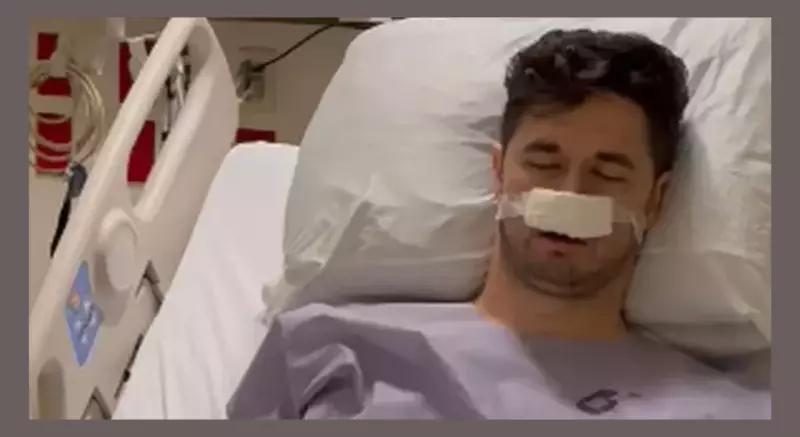
A man from the United States has reported an astonishing medical mystery: he repeatedly wakes up from surgery speaking fluent Spanish, despite having only a basic grasp of the language in his conscious state. This baffling phenomenon, which doctors attribute to an extremely rare neurological condition, has occurred multiple times over more than a decade.
The First Shocking Episode After Knee Surgery
Stephen Chase, who lives near Salt Lake City in Utah, first experienced this sudden language switch at the age of 19. It happened after he underwent surgery on his right knee for an injury related to football. According to his account, he woke up conversing seamlessly in Spanish with the nurses for approximately 20 minutes before his speech returned to English.
Chase, now 33, recalls that his knowledge of Spanish before that first operation was extremely limited. He had taken only beginner-level classes in high school and could manage just a few basic phrases and count to ten. "The very first time it happened, when I woke up I was speaking in Spanish to the nurses checking on me," Chase said. He added that he does not clearly remember speaking Spanish, only the confusion of people asking him to switch to English.

A Predictable Pattern Emerges
What seemed like a one-time strange event turned into a recurring pattern. Chase states that the same language switch has happened after multiple surgical procedures in the following years. These included operations for other sports injuries and, more recently, a septoplasty.
"The nurses say they ask me questions like ‘how are you feeling?’ and ‘am I in pain?’ after waking up, and I answer the questions in Spanish," Chase explained. "In my head, I’m just speaking and can’t understand why they don’t understand me." He noted that this state of complete fluency typically lasts for less than an hour before subsiding. Because these episodes have become predictable, Chase now warns his medical teams in advance so they are not caught off guard.
Understanding Foreign Language Syndrome
Medical professionals identify Chase's experience as a potential case of Foreign Language Syndrome (FLS). According to the US National Library of Medicine, FLS is a rare neurological condition where a person involuntarily switches from their native language to a second language for a limited period. It is different from Foreign Accent Syndrome, where the language stays the same but the accent changes.
FLS has been documented in medical literature following events such as:
- Head injuries
- Stroke
- Brain tumours
- Bleeding in the brain
- Psychological stress
- General anaesthesia
The exact cause remains unclear. Some researchers debate whether FLS is a distinct condition or a variation of emergence delirium linked to anaesthetic drugs affecting the brain. Crucially, the condition is considered temporary, with patients usually making a full recovery without long-term issues.
Roots of Hidden Fluency
Chase does not consider himself bilingual. However, he believes his childhood exposure to Spanish played a key role. "I had grown up around lots of Hispanic people and frequently heard the language around me," he said. He spent considerable time at his best friend's house where the parents always spoke Spanish. "I never knew what anyone was saying, but I heard it all the time."
After the first episode, Chase spent two years in Chile on a church mission, which significantly improved his Spanish skills. Yet, he insists the post-surgery fluency is on another level. "I’m a pretty good second-language speaker, but it became native fluency level," he observed. "It’s interesting what the brain has stored up that we’re not able to tap into."
Why is this case particularly notable? Foreign Language Syndrome is exceptionally rare, with fewer than a dozen confirmed cases documented worldwide. Most involve male patients who were not raised bilingually and who switch to a language learned later in life. Chase's case stands out because it has happened repeatedly after different surgeries over more than ten years, rather than being a single, isolated incident.






