

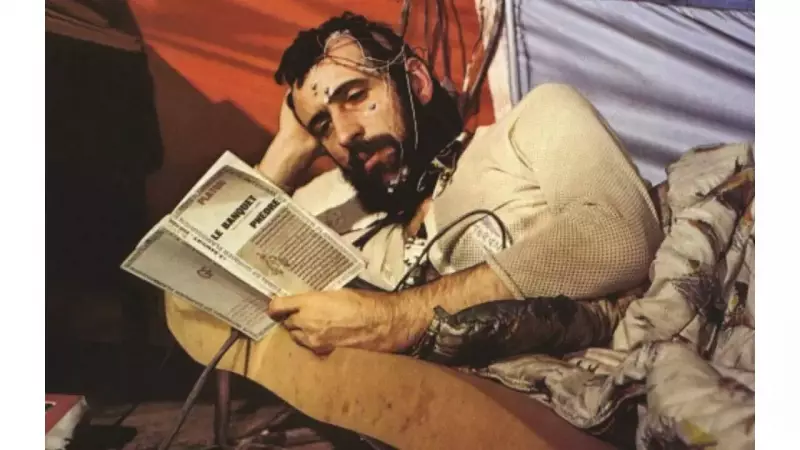
In the year 1962, a French geologist named Michel Siffre embarked on a daring and unprecedented scientific journey. He chose to isolate himself deep within a glacial cave in the French Alps, severing all connections to the outside world's markers of time. His mission was radical: to discover how the human mind and body perceive time when stripped of sunlight, clocks, calendars, and human interaction.
The Underground Laboratory: Life Without Time
Michel Siffre was not a biologist but a geologist. His initial plan was a two-week study of a glacier. However, he soon realised a shorter stay would be insufficient. He extended his isolation to two months, turning himself into the primary subject of the experiment. He descended roughly 130 metres below the surface into an environment of complete darkness, freezing temperatures often below zero, and stifling 98 percent humidity.
His living conditions were stark and challenging. With basic equipment and frequently wet feet, his body temperature sometimes plummeted to a dangerous 34 degrees Celsius. His only link to the surface was a simple telephone line, used solely to signal when he woke up. No one ever told him the time. He slept, ate, and worked solely based on his internal urges, with no imposed schedule.

The Unravelling of Time and Mind
As weeks turned into months underground, Siffre's perception of reality began to warp dramatically. When he believed only 34 days had passed, he was shocked to learn he had actually been in the cave for 60 days. His psychological sense of time had slowed to a crawl.
More crucially, his internal circadian rhythm completely detached from the 24-hour cycle. In later experiments, his sleep-wake cycle sometimes stretched to nearly 48 hours. He experienced severe mood swings, memory lapses, and profound mental strain. Emerging from the cave wearing dark goggles, he felt like a "half-crazed, disjointed marionette," struggling to piece his thoughts together.
A Legacy That Shaped Modern Science
Siffre repeated this experiment several times, including a gruelling six-month isolation in 1972. Other volunteers followed, with one famously sleeping for over 33 hours straight. These studies proved a fundamental truth: the human body has its own intrinsic biological clock, operating independently of the sun.
This groundbreaking work laid the foundation for the field of chronobiology, the science of biological timekeeping. Decades later, Nobel Prize-winning research on circadian rhythms would build upon the principles Siffre helped uncover. His findings attracted immediate practical interest from NASA and the French military, informing protocols for astronauts and submariners in extreme, timeless environments.
Michel Siffre passed away in 2022 at the age of 83, but his legacy endures. In our modern world, governed by relentless alarms, deadlines, and digital notifications, his story poses a powerful, haunting question. It challenges us to consider how much of our lives are dictated by artificial clocks versus our innate biology. The tension between these two forces is precisely why his voluntary disappearance into the dark remains so profoundly fascinating today.






