

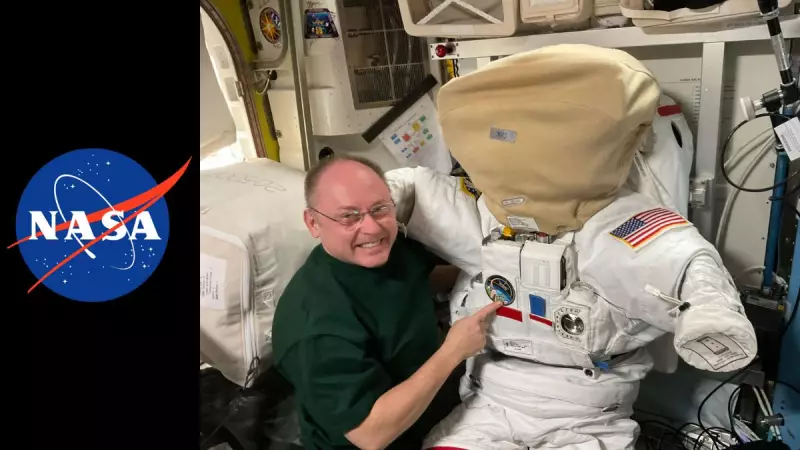
In an unprecedented move, NASA has ordered the first-ever medical evacuation from the International Space Station (ISS). The Crew-11 mission, which includes an astronaut of Indian origin, will now make an early return to Earth, targeting a splashdown on January 14, 2026.
Unprecedented Decision for Crew Safety
The decision was made after a crew member aboard the orbiting laboratory required medical attention for a condition that, while not immediately life-threatening, necessitated a return to Earth for proper care. NASA, in close coordination with its international partners and SpaceX, determined that the safest and fastest course of action was to bring the entire Crew-11 mission home ahead of schedule. This marks a historic first for the ISS program, which has operated for over two decades without needing to execute such an evacuation.
The affected crew member's identity has not been publicly disclosed, respecting medical privacy. However, NASA has confirmed that the individual is in stable condition and that the early return is a precautionary measure. The crew has been in orbit since their launch in late 2025.

The Crew-11 Mission and Its Early Return
The Crew-11 mission is a significant one, featuring a diverse team of astronauts. Among them is a NASA astronaut of Indian heritage, whose presence has been closely followed by the space community in India. The crew was originally slated for a longer-duration stay to conduct various scientific experiments and station maintenance tasks.
Their ride home will be the SpaceX Crew Dragon spacecraft, named "Endurance," which is currently docked at the ISS. NASA and SpaceX teams are actively working on the undocking and return timeline. The current plan is for the spacecraft to undock from the station and begin its journey back to Earth, culminating in a parachute-assisted splashdown off the coast of Florida on January 14. Recovery teams will be on standby to retrieve the crew and spacecraft immediately.
Implications and Future of ISS Operations
This emergency medical evacuation raises important considerations for the future of long-duration spaceflight, especially as missions to the Moon and Mars are planned. It highlights the critical need for robust in-orbit medical capabilities and swift return protocols. NASA has extensive contingency plans for such scenarios, and this event serves as a real-world test of those procedures.
Despite the early return, NASA officials have stated that the highest-priority science conducted by Crew-11 has been completed or can be managed by the remaining Expedition crew on the ISS. The agency emphasized that crew health and safety are always the top priority, and this decision underscores that commitment. The successful execution of this evacuation will provide valuable data for planning future deep-space missions where rapid return to Earth is not an option.
The space community worldwide will be watching closely as this historic operation unfolds, hoping for a safe and smooth return for the Crew-11 astronauts.

