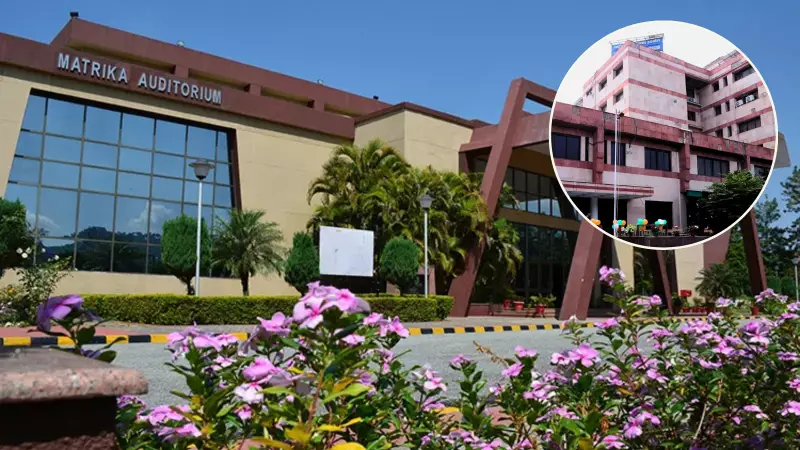
In a significant regulatory action, the National Medical Commission (NMC) has revoked the permission granted to the Shri Mata Vaishno Devi Institute of Medical Excellence (SMVDIME) in Jammu & Kashmir to run its MBBS course. The decision, taken on Tuesday, effectively cancels the Letter of Permission (LoP) for the academic session 2025–26 and the intake of 50 MBBS seats.
Why Did the NMC Take This Drastic Step?
The withdrawal followed a surprise assessment that uncovered serious and widespread deficiencies at the institute located in Reasi district. The NMC found the college non-compliant with the mandatory Minimum Standard Requirements (MSR) for medical education, which are still enforced based on old Medical Council of India norms.
The inspection report highlighted critical gaps. There was a 39% shortage in teaching faculty and a staggering 65% deficit in tutors, demonstrators, and senior residents. Clinical performance metrics were alarmingly low: outpatient attendance was less than half the required 400 patients per day, and overall bed occupancy stood at just 45%, far below the 80% mandate.

Infrastructure was also found lacking. The assessment noted the absence of practical labs in some departments, lecture theatres failing to meet standards, and a library with only half the required books and a mere two journals against a norm of 15. Essential hospital facilities like an ART centre and separate gender wards were missing or inadequate.
The Stringent Rules Medical Colleges Must Follow
The NMC's action is rooted in strict regulations that all new medical colleges must adhere to. For a college with 50 MBBS seats, the rules are unequivocal.
Infrastructure and Hospital Mandates: The institution must have a fully functional teaching hospital with at least 220 beds, either on campus or within a 30-minute travel distance. This hospital must demonstrate an average daily outpatient load of 400 and 80% bed occupancy. Academic infrastructure requires a minimum of four large lecture theatres, a central library with 1,500 books and 15 journals, and a dedicated skills lab of 600 square metres.
Faculty Requirements are Equally Rigorous: As per Schedule II of the MSR, a 50-seat college must maintain a sanctioned faculty strength of 14 Professors, 20 Associate Professors, 25 Assistant Professors, 15 Tutors, and 23 Senior Residents across various departments. The NMC also mandates 100% implementation of the Aadhaar-Enabled Biometric Attendance System (AEBAS) with live CCTV streaming to its central server.
Financial Penalty and Safeguards for Students
The regulatory fallout is severe. The NMC has ordered the immediate encashment of the institute's performance bank guarantee of Rs 15 crore. This guarantee, mandated for a six-year period for new 50-seat colleges, is a financial safeguard that the Commission can invoke in cases of non-compliance.
Importantly, the NMC's cancellation notice includes specific measures to protect the interests of students. All 50 MBBS students admitted for the 2025–26 session through NEET merit will be relocated to other recognised government medical colleges within Jammu and Kashmir. They will be accommodated in supernumerary seats created over and above the regular intake of the receiving colleges to ensure their academic progression is not disrupted.
Institute officials contested the findings, claiming there were no infrastructural deficiencies and attributing the poor assessment to a surprise inspection conducted during winter vacations when nearly half the faculty was on leave. However, the NMC's Medical Assessment and Rating Board (MARB) had clearly warned in its original permission letter that any false declaration or lapse could lead to immediate cancellation.
This case underscores the NMC's tightening grip on medical education standards in India, emphasizing that permission is contingent on continuous compliance, not just initial promises.