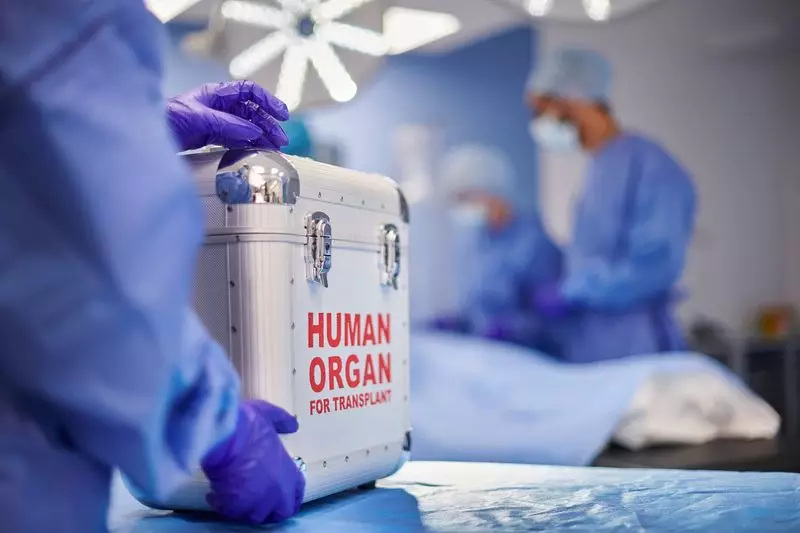
In a landmark achievement for healthcare in the region, the Punjab Institute of Liver and Biliary Sciences (PILBS) in Mohali has successfully performed its first-ever liver transplant surgery. This historic procedure marks a significant leap forward for the state's medical infrastructure, offering a new lease of life to patients who previously had to travel far for such complex treatments.
A Milestone for Medical Infrastructure in Punjab
The successful surgery was conducted recently, establishing PILBS as a centre of excellence for hepatobiliary sciences. The institute, which falls under the Department of Medical Education and Research, Government of Punjab, was specifically envisioned to provide advanced care for liver and biliary diseases. This first transplant turns that vision into a tangible reality, positioning Mohali on the map for high-end surgical care.
Prior to this development, patients from Punjab and surrounding areas in need of a liver transplant were forced to seek treatment in private hospitals in other states or at central government institutions like the Post Graduate Institute of Medical Education and Research (PGIMER) in Chandigarh. The establishment of this facility at PILBS is expected to significantly reduce the financial and logistical burden on countless families.
Expert Team and Advanced Facilities
The complex surgery was led by a dedicated team of specialists, including transplant surgeons, hepatologists, anesthetists, and intensive care experts. The team was headed by Dr. K.S. Soin, a renowned liver transplant surgeon who has joined PILBS to lead its transplant program. His expertise and experience were instrumental in navigating the intricacies of the procedure.
The operation required state-of-the-art infrastructure, which PILBS has been equipped with to handle such critical cases. The institute boasts advanced operation theatres, dedicated liver intensive care units (ICUs), and sophisticated laboratory support essential for pre-and post-transplant management. The success of this first surgery validates the institute's readiness to offer a full spectrum of liver care, from diagnosis and medical management to cutting-edge surgical intervention.
Broader Implications for Public Health in Punjab
This breakthrough is more than just a single surgical success; it represents a major shift in Punjab's public health landscape. Liver disease, often linked to lifestyle factors and viral hepatitis, is a significant health concern in the state. Having a dedicated, high-quality transplant centre within Punjab means faster access to life-saving treatment, which can drastically improve survival rates and outcomes.
The availability of such a facility under the government's umbrella also promises to make transplants more affordable and accessible to a wider section of society, not just those who can afford expensive private care. It is a step towards democratizing advanced healthcare. The government's investment in PILBS is seen as a crucial move to stem the outflow of patients and resources to other states for tertiary care.
Looking ahead, the successful inaugural transplant paves the way for PILBS to establish a robust, ongoing transplant program. It is expected to attract more specialists, train medical professionals in the region, and foster research in liver diseases. For the people of Punjab, this development brings the promise of hope and advanced medical care closer to home, marking the beginning of a new era in the state's healthcare journey.