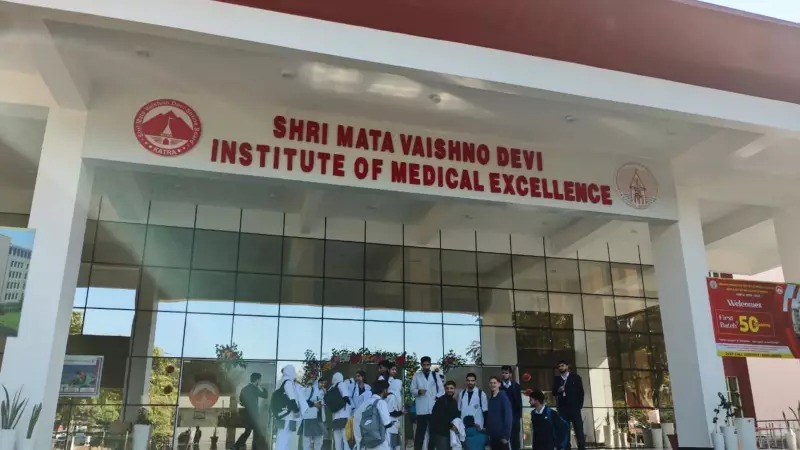
The National Medical Commission (NMC) has abruptly withdrawn permission for the Shri Mata Vaishno Devi Institute of Medical Excellence (SMVDIME) in Katra to run its MBBS course, a mere four months after granting the initial green signal. This sudden reversal has sparked allegations of bypassing due process and is seen by many within the institute as a direct response to sustained protests by right-wing groups opposing the admission of Muslim students.
A Decision Made in "Undue Haste"
Officials from the institute and central health bodies have expressed shock at the speed of the NMC's decision, calling it made in "undue haste" and without following "due process." The standard procedure involves a show-cause notice, a reply from the college, and potential appeals. However, regulatory officials confirmed that no appeal has been filed by SMVDIME so far, as the process was seemingly short-circuited.
The controversy is deeply intertwined with identity politics. The first MBBS batch for the 2025-26 academic year had 50 students, of which 44 were Muslim. This demographic became a flashpoint for the Shri Mata Vaishno Devi Sangarsh Samiti, a coalition of nearly 60 pro-RSS and pro-BJP organisations. They argued that the college was built using offerings from Hindu pilgrims at the Vaishno Devi shrine and demanded that students from Kashmir be moved to other colleges in the Union Territory.
The NMC's Stance vs. The College's Rebuttal
Late on Tuesday, January 7, 2026, the NMC formally withdrew the Letter of Permission (LoP). It cited severe deficiencies, including a 39% shortage of teaching faculty, a 65% deficit in tutors and senior residents, low OPD patient numbers, and inadequate bed occupancy in wards and ICU. A Union Health Ministry official stated that an inspection on January 2, 2026, confirmed complaints about infrastructure, and continuing would "jeopardise the quality of medical education."
College officials have vehemently rejected these findings, labeling the surprise inspection a "farce." They claim they received only a 15-minute notice before the NMC team's arrival, which occurred during the winter vacation when half the faculty was away. They presented a point-by-point counter: the NMC reported 75 library books against 2,713 actual books; cited two operation theatres when there are eight; and recorded 181 OPD patients on January 2 when 405 were actually examined.
"The team appeared predetermined to withdraw the LoP right from the moment they arrived," claimed an anonymous official. "We know they wanted to assuage the demonstrators outside the campus, but you should not defame us by saying we lacked infrastructure," said a doctor at the institute.
Fallout: Celebrations, Dismay, and an Uncertain Future
The NMC's decision led to immediate and contrasting reactions. Members of the Shri Mata Vaishno Devi Sangarsh Samiti distributed sweets and danced to drums outside the campus, hailing it as a victory for Sanatan Dharma. Their chairman, Colonel Sukhbir Singh Mankotia, addressed the media in Jammu on January 7.
Inside the campus, the mood was one of despair and uncertainty. Faculty members who left lucrative jobs to join the new institute were dismayed. The most direct impact was on the students, who were told on Wednesday, January 8, to head home and vacate hostels. The NMC has stated that the admitted students will be accommodated as supernumerary seats in other government institutions in the UT.
However, students are reluctant to leave. "We have the best infrastructure – from operation theatres to libraries – as compared to many government medical colleges across J&K," said one student, attributing the decision to "politics outside the campus." Another student lamented the personal care they received, which they fear won't be available elsewhere. Their academic future now hangs in the balance as the government decides their fate.