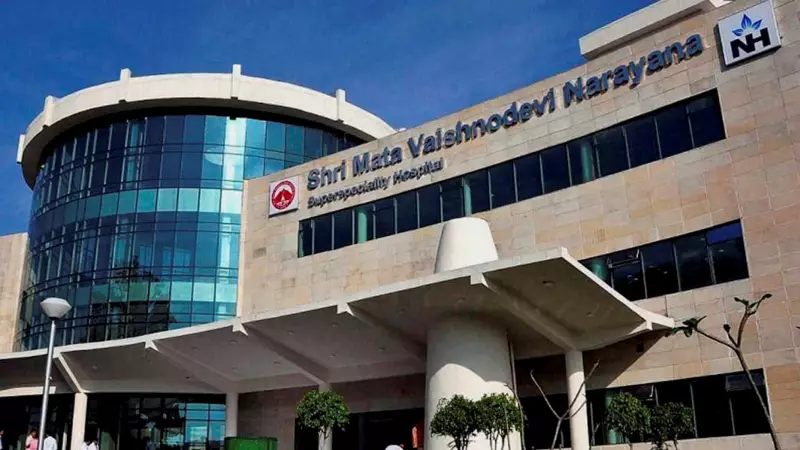
In a significant revelation, it has come to light that the Shri Mata Vaishno Devi Institute of Medical Excellence (SMVDIME) made three separate appeals to central authorities, seeking permission to place all its MBBS seats under the All India Quota. This move, officials indicated, was aimed at altering the demographic composition of its student intake. However, all three requests were turned down, setting the stage for the controversy that later engulfed the institution.
Triple Rejection from Central Authorities
The institute's appeals, made in the first half of 2025, were sequentially rejected by the National Medical Commission (NMC), the Union Health Ministry, and the Director General of Health Services. A senior official from the college, speaking anonymously, confirmed the sequence of events. The NMC reportedly declined the first request, stating it lacked the jurisdiction to consider such petitions. The subsequent appeals to the Health Ministry and DGHS met the same fate.
Central government officials clarified the policy stance, explaining that only certain central government hospitals and deemed universities are permitted to allocate 100% of their seats under the All India Quota. Typically, in medical colleges, 85% of seats are reserved for state-domiciled students based on NEET scores, with the remaining 15% filled through the national All India Quota merit list.
The Genesis of the Controversy
This background is crucial to understanding the protests that later erupted at the Katra-based institute. The first MBBS batch for the 2025-26 academic year, comprising 50 students, had 44 Muslim students. College authorities have consistently maintained that admissions are purely merit-based, with the institute having no control over the selection process, which is conducted through centralised counselling based on NEET ranks.
Officials pointed out that had their request for a full All India Quota been approved, it would have naturally diversified the student pool, potentially changing the classroom's demographic profile. The protests, led by the Shri Mata Vaishno Devi Sangarsh Samiti—a collective of nearly 60 pro-RSS and pro-BJP organisations—were rooted in the claim that the college was built using offerings from Hindu pilgrims at the Vaishno Devi shrine. The Samiti first demanded the removal of Muslim students, later escalating their demand to a complete shutdown of the MBBS course.
Abrupt Withdrawal of Permission and Aftermath
In a rapid turn of events, the National Medical Commission withdrew the Letter of Permission (LoP) for the MBBS course in January 2026, merely months after granting it in September 2025 and just days after an inspection. Experts familiar with NMC procedures noted the unusual speed of this action, as such decisions typically follow a lengthy process involving show-cause notices, replies, and multiple levels of appeal.
Sources confirmed that the college had not filed any appeal against the NMC's decision at the time of reporting. Regarding the displaced students, officials stated they would be relocated to other medical colleges within the Union Territory of Jammu and Kashmir, with most being accommodated in government institutions as per stipulations in the essentiality certificate. The affected students were paying an annual fee of Rs 5 lakh for the course.
The Union Health Ministry did not respond to specific queries on this development. The incident highlights the complex interplay between admission policies, demographic concerns, and regulatory frameworks in India's medical education landscape.