

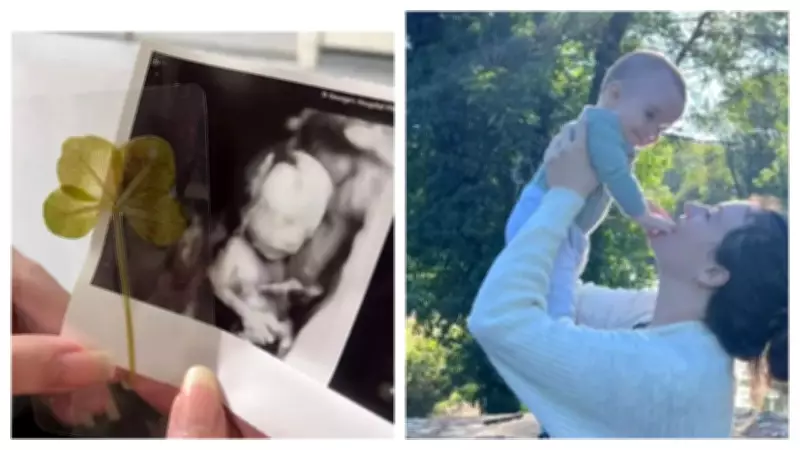
Medical History Made: Unborn Baby Saved by Womb Blood Transfusion
In what medical professionals are calling one of the rarest miracles in modern medicine, an unborn baby received a life-saving blood transfusion while still developing in the womb, becoming Britain's youngest blood donor recipient. This groundbreaking procedure occurred when baby Arthur Ransom was approximately the size of an apple, marking a significant advancement in fetal medicine.
The Critical Medical Emergency
According to detailed reports from leading medical publications, Arthur Ransom faced a life-threatening crisis when his developing organs began failing after he contracted Parvovirus while still in utero. This common childhood illness, often called "Slapped cheek syndrome," proved devastating to the unborn baby whose immune system had not yet developed sufficiently to combat the infection.
The virus caused severe anemia and a dangerous accumulation of fluid around Arthur's heart and organs, ultimately leading to heart failure. With his mother Maisie just 16 weeks into her pregnancy, medical experts faced an unprecedented challenge: how to save a life that hadn't yet entered the world.

The Groundbreaking Procedure
Doctors at St. George's Hospital in London performed what's known as an intrauterine transfusion (IUT), an exceptionally complex procedure that involves guiding a tiny needle through the womb using ultrasound technology. This intricate operation delivered oxygen-rich blood directly to Arthur's developing body, allowing the dangerous fluid buildup to be reabsorbed and normal organ function to gradually return.
"The doctor said it was 50/50 whether he would make it or not," recalled Arthur's mother Maisie. "He was so small the doctors were working within millimeters. Without that blood he would not have made it. His organs were failing, his heart was completely enveloped in fluid and it was struggling to pump. If nothing was done, he would not have made it much longer."
The Rarity of Intrauterine Transfusions
Medical experts emphasize that intrauterine transfusions represent some of the most complex and rare medical procedures performed today. These life-saving interventions require extremely specific blood types that can only be provided by a limited number of donors. The necessary blood must come from male donors with type O blood that is both "Kell negative" and negative for cytomegalovirus.
The National Health Service issues only about 180 IUT units annually, with each unit processed into small packs of highly concentrated red blood cells specifically designed for transfusion into anemic fetuses. This scarcity makes each successful procedure particularly remarkable.
A Mother's Gratitude and a Child's Recovery
Following the successful transfusion, Arthur continued developing normally in the womb and was born healthy in January 2025. His mother expressed profound gratitude toward both the medical team and the anonymous blood donor whose contribution made her son's survival possible.
"The doctor said to the best of her knowledge there was no-one younger to get an intrauterine transfusion," Maisie shared. "Arthur's doing great now, he's a really chirpy little boy, reaching all the milestones. He keeps us on our toes. I think every day about how lucky I am."
She added heartfelt appreciation for blood donors everywhere: "I don't think there are words to describe how thankful I am to blood donors. To have the life I am now living, with my family, there are no words to express the gratitude I feel and how fortunate I was to be able to access that care and blood promptly. I do often wonder who the person to donate was as I would love to tell them that their decision to give blood gave my boy the chance to be here."
Medical Implications and Future Hope
This successful case demonstrates the remarkable advances in fetal medicine and the critical importance of blood donation programs. The procedure not only saved Arthur Ransom's life but also provides hope for future cases where unborn babies face similar life-threatening conditions.

The medical team's ability to perform such delicate surgery on a fetus measuring mere centimeters represents a significant milestone in obstetric and hematological medicine, potentially paving the way for more frequent use of such interventions when medically necessary.





