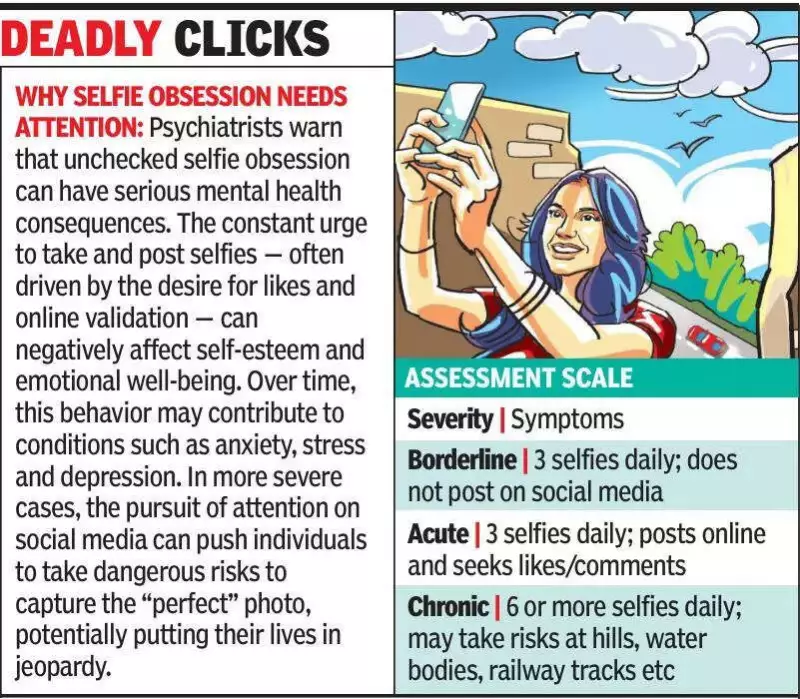
The quest for the perfect selfie, whether at a scenic spot, a trendy restaurant, or a family event, has become a universal sight. However, this drive for social media validation has a dark and deadly side, with research indicating that India is at the top of a grim global list for fatalities linked to taking self-portraits.
Gujarat's Answer to a Growing Mental Health Concern
Recognizing that the compulsion to constantly take and post selfies can spiral into a harmful obsession, psychologists at Saurashtra University have developed a first-of-its-kind assessment tool. The department has secured a copyright for this new scale designed to measure the severity of 'selfitis' among the youth in Gujarat.
Assistant professor Dhara Doshi, along with psychology students Arsita Kanani and Pooja Zapadiya, created a detailed questionnaire available in both English and Gujarati. The final 40-question survey, with three response options each, was shaped after extensive discussions with 800 individuals aged 15 to 30 in Rajkot.

Professor Yogesh Jogsan from the university's psychology department highlighted the urgency. "Concerns are growing about an obsession that can develop into selfitis. Many feel a constant urge to take and post selfies, seeking validation through likes and shares," he said. He also pointed to tragic incidents in Gujarat, where people have fallen from cliffs or into deep waters near dams while attempting risky selfies.
The Stark Statistics Behind the Selfie Craze
The development of this localized tool is backed by alarming data. According to a study by The Barber Law Firm, India accounts for a staggering 42.1% of all selfie-related incidents worldwide. The country alone recorded 271 casualties, including 214 deaths and 57 injuries, between March 2014 and March 2025.
Mental health professionals warn that dismissing selfie addiction as trivial can lead to more profound psychological issues. They emphasize that assessment tools created in Western societies often fail to capture India's unique social and cultural dynamics, making locally developed instruments more effective.
A Crucial Tool for Schools and Counselors
Psychiatrist Dr. Chetan Hasaliya endorsed the new scale, noting the rising tide of social media addiction among young Indians. "It often disrupts sleep patterns, work performance, and social relationships. This test is highly recommended for educational institutes," he stated.
Professor Jogsan explained that the questionnaire helps categorize the severity of selfitis based on individual responses. "This tool will be useful for researchers, counsellors, and psychiatrists. We will provide it free of cost to educational institutions so they can identify students who may need counselling and refer them to professionals," he affirmed. This proactive approach aims to curb a modern behavioral issue before it leads to irreversible consequences.