

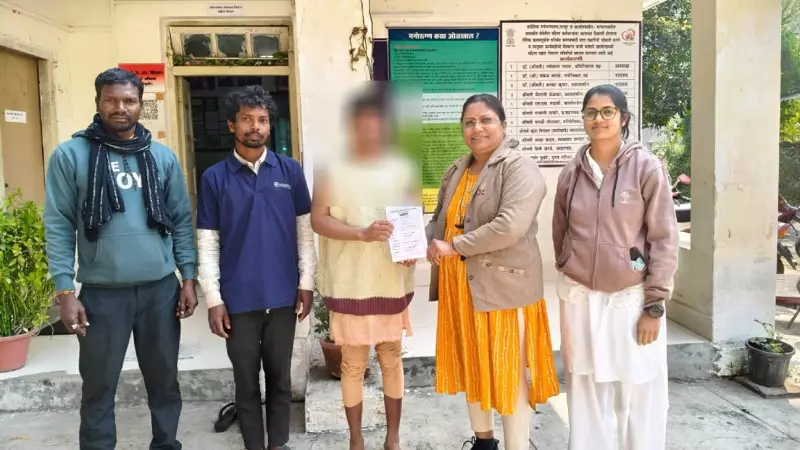
In a heartening tale of perseverance and compassion, a dedicated social worker in Nagpur successfully reunited an 18-year-old mentally ill woman with her family after a four-month ordeal, despite initial claims by police that no one was missing from her village in Madhya Pradesh.
A Silent Arrival at the Hospital
The story began in September 2025, when the MIDC police in Nagpur found the young woman in a distressed state. Following a court order, she was admitted to the Regional Mental Hospital in Nagpur. Upon admission, she gave her name as Kalpana. Hospital staff noted her poor condition. "When admitted, she hardly spoke, kept to herself and was not aware of her surroundings. She was wearing torn clothes, her hair was in a bad condition and she spoke nothing at all," recounted Kunda Bidkar Katekhaye, the social service superintendent at the hospital.
Psychiatric treatment and counselling began immediately. For days, the woman remained withdrawn, absorbed in her own thoughts and largely disconnected from human contact. The medical team, led by Medical Superintendent Dr. Satish Humane, Deputy Superintendent Dr. Mohabey, and senior psychiatrist Dr. Pankaj Bagde, worked patiently to stabilize her condition.

The Breakthrough and the Frustrating Search
As her health improved with continuous care, the woman slowly began to communicate. In a soft voice, she eventually disclosed her real name, which was different from 'Kalpana'. After several more days of building trust, she revealed the name of her village, though she couldn't specify the district or state.
Based on her dialect and the village name, Katekhaye deduced the location might be near Parasia in Madhya Pradesh. She promptly contacted the local police station there, sharing all available details. The response was disheartening: the police reported that no such person was missing from that village.
Unconvinced, Katekhaye renewed her efforts. "I sat with her again and patiently sought more details. She kept repeating the same name of the village. I was now convinced," she said. She contacted the same police station again, facing some irritation, but persisted until she obtained the contact details of the village sarpanch.
Persistent Efforts Lead to a Family Found
The conversation with the sarpanch proved pivotal. After much persuasion, the sarpanch agreed to visit a family in the village. Within three hours, Katekhaye received a confirming call: the woman was indeed from that family. The next day, she spoke to the woman's elder brother.
The brother revealed a tragic backstory. The woman had been suffering from mental illness for nearly five years. Misguided by superstition, acquaintances convinced the family she was possessed by an evil spirit. They took her to a famous temple, abandoning their livelihood for four months. When her condition worsened, she went missing.
For four months, the eldest brother had searched relentlessly. He had filed a missing complaint at the same police station Katekhaye had called and exhausted his savings, even handing over his farmland. He had searched in Chhindwara, Bhopal, and across Maharashtra, including Nagpur and Ramtek.
The Emotional Reunion and a Lesson in Mental Health
Upon hearing his sister was alive and safe in Nagpur, the brother immediately set out on his motorcycle. Disregarding advice to take a bus, he travelled for 26 hours straight, reaching the hospital at 12:30 PM on a Thursday.
"His moist eyes and seeing him in person left me emotional," Katekhaye recalled. In a gesture of profound gratitude, he tried to offer her two Rs 500 notes, which she gracefully declined, explaining her role as a government servant.
Hospital officials used the reunion as an opportunity to counsel the family, explaining that mental illness is like any physical illness and can be stabilized with proper treatment. Katekhaye advised them to have faith but also seek medical help. The brother promised to bring his sister for monthly treatment. Katekhaye also requested that the family arrange a phone call with their mother for further counselling.

This case highlights the critical role of persistent social work and the need to combat stigma around mental health in rural communities. It was the unwavering resolve of one social worker that bridged a gap of over 150 km and four months of despair, finally bringing a lost daughter home.





