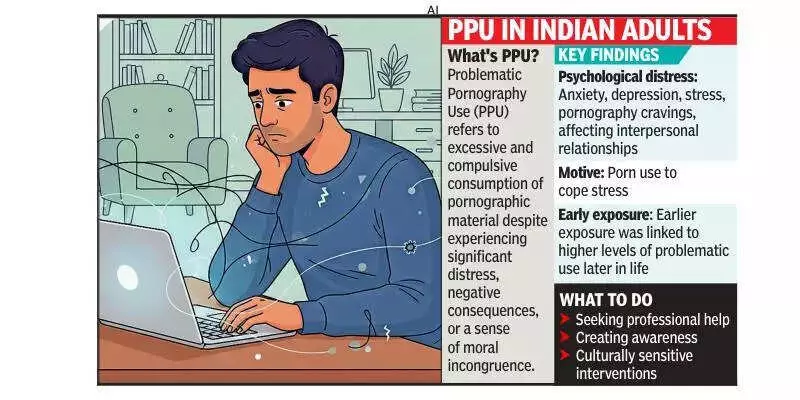
A young IT professional from Bengaluru found himself trapped in a cycle of distress and perceived loss of control due to his escalating pornography consumption, leading him to seek help from experts. His case, treated at the Service for Healthy Use of Technology (SHUT) Clinic at the National Institute of Mental Health and Neurosciences (NIMHANS), has become a pivotal part of a new study on a growing mental health concern in India.
The Bengaluru Case: From Stress Buster to Source of Distress
The 26-year-old married man reported that his pornography use began early, between the ages of 12 and 14, initially serving as a mechanism to cope with stress. For many years, his regular use did not cause significant issues. However, over the past year, his consumption became more frequent and intense, negatively impacting his personal relationships and his professional life as an IT worker.
Professor Manoj Kumar Sharma, who heads the SHUT Clinic, explained that the therapy involved a detailed exploration of the man's life. The clinicians identified multiple contributing factors: stressors from work and family, poor coping strategies, personal beliefs about pornography, and the secrecy of his habit from his partner. "These factors led him to the conclusion of an addiction to porn use, rather than the actual use of pornography itself being the sole problem," Sharma noted.

Following a few structured sessions employing a cognitive-behavioural approach, the individual began to regain control over his behaviour. He is now working towards having an open and honest conversation with his spouse about his struggles, marking a significant step in his recovery journey.
NIMHANS Research Exposes Psychological Correlates of Problematic Use
This professional's experience contributed to a research paper titled "Indian adults' problematic pornography use: Psychological correlates and predictors," published in the Geopsychiatry Journal. The study was authored by M Rajashekar, a PhD scholar, Professor Manoj Kumar Sharma, and Professor Senthil Amudhan, all from NIMHANS.
The research surveyed 112 Indian adults aged 18 and above who reported difficulties with problematic pornography use (PPU). Conducted online between March and June 2024, the study found that 81% of participants were male, with a median age of 25. Approximately half were students, and 48% held undergraduate degrees.
The core finding was clear: Indian adults experiencing higher levels of psychological distress—including anxiety, stress, depression, and specific cravings for pornography—were significantly more likely to engage in PPU. The study defines PPU as the excessive and compulsive consumption of pornographic material despite facing significant distress, negative life consequences, or a feeling of moral conflict.
Early Exposure and the Path Forward
The research uncovered another critical insight: there is a negative association between the age of first exposure to pornography and the severity of PPU. This indicates that individuals exposed to such content at a younger age, like the Bengaluru case who started at 12-14, are at a higher risk of developing problematic patterns later in life.
Over time, this early exposure can create a pattern where individuals require more intense stimulation, potentially leading them to seek out extreme or risky content. This cycle further heightens cravings and reinforces the compulsive behaviour, making it harder to break free.
The authors of the study emphasise the urgent need for culturally sensitive interventions in India. They recommend that future work should focus on understanding the unique challenges faced by Indians with PPU and developing treatment strategies that directly address the underlying psychological distress—particularly depression, anxiety, stress, and cravings—for more effective management.