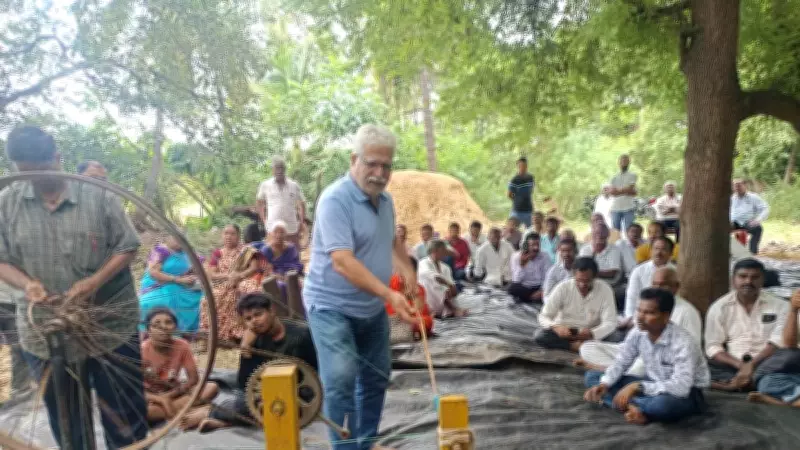
Banana fibre, derived from the pseudostems of banana plants, is emerging as a sustainable alternative to synthetic materials. At the 18th Green Talk event held on Sunday at farmer U S Prasanna's field in Anantashayanagudi, Karnataka, experts discussed its numerous advantages for agriculture and industry.
What is Banana Fibre?
Banana fibre is extracted from the stem of the banana plant after the fruit is harvested. Traditionally considered waste, the stems are now being processed to produce strong, biodegradable fibres. These fibres can be used for textiles, handicrafts, paper, and even composite materials.
Advantages for Farmers
Farmers like U S Prasanna are exploring banana fibre as an additional income source. Instead of discarding stems, they can sell them to processing units. This reduces agricultural waste and provides economic benefits. The fibre extraction process also leaves organic matter that can be used as compost.

Environmental Benefits
Banana fibre is biodegradable and requires less water and chemicals than synthetic fibres. It offers a low-carbon alternative for industries looking to reduce their environmental footprint. According to experts at the event, promoting banana fibre can contribute to sustainable development goals.
Industrial Applications
The fibre is versatile: it can be spun into yarn for clothing, used for making ropes, mats, and even reinforced plastics. Its strength and durability make it suitable for automotive and construction industries. As demand for eco-friendly materials grows, banana fibre presents a viable option.
Challenges and Future Outlook
Despite its potential, banana fibre faces challenges in scaling up production and processing technology. However, with government support and farmer awareness, it could become a key player in the natural fibre market. The Green Talk event emphasized the need for collaboration between farmers, researchers, and industry to unlock its full potential.