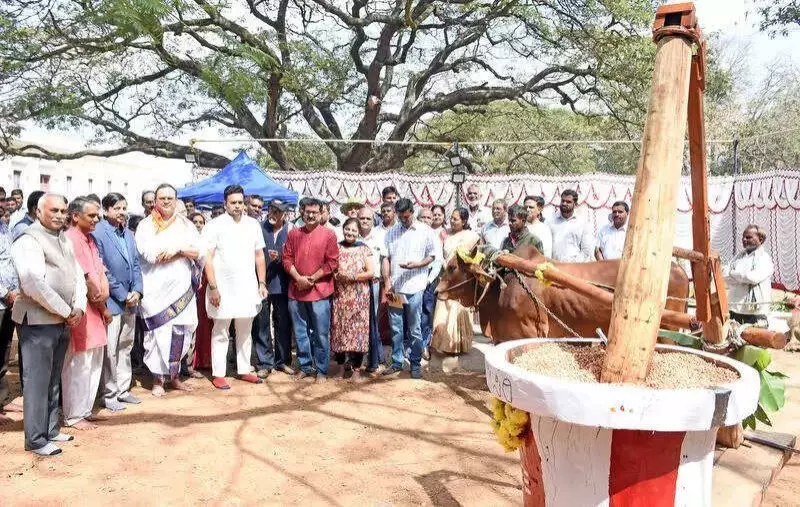
Mysuru's Member of Parliament, Yaduveer Krishnadatta Chamaraja Wadiyar, made a strong appeal for a return to traditional and nutritious dietary practices. The call came during his inauguration of a three-day Desi Oil Mela, organized by Sahaja Samrudha at the Nanjaraja Bahadur Choultry in the city on Friday.
The Case for Traditional Foods and Oils
Addressing the gathering, the MP highlighted a critical paradox in modern lifestyles. While food is widely available, truly nutritious options are becoming scarce. He expressed concern that the relentless pursuit of economic growth is coming at a significant cost to public health.
"We need to regain our health by adopting traditional foods," Wadiyar stated. He positioned the use of cold-pressed, or 'ghani', oils as the foundational step in this health revival. He reminisced about how these traditionally produced oils safeguarded the well-being of previous generations and urged for their renewed prominence in Indian kitchens.

Scientific Backing and Market Growth
To bolster public awareness and trust, the MP called upon the Central Food Technological Research Institute (CFTRI) to conduct detailed studies on the nutritional properties of ghani oils. He emphasized the need for CFTRI to disseminate these scientific findings to educate consumers about the tangible benefits.
CFTRI Director, Giridhar Parvatam, acknowledged a positive market shift. He noted that the demand for ghani and cold-pressed oils in India has improved significantly compared to a decade ago. However, he revealed that these healthier oils still constitute only 40-45% of the edible oils used in Indian households.
Parvatam pointed out the unique advantages of these oils:
- Authentic flavors and aromas that enhance cuisine.
- Versatile uses in cooking.
- The presence of important bioactive compounds beneficial for health.
He advised farmers to seize this opportunity by directly supplying cold-pressed oils to the market, which could lead to higher profits and better market capture.
International Demand and Regulatory Hurdles
Scientist Dr. Mamatha Shekhar shed light on the global appetite for cottage industry products like traditional oils. She reported that there is substantial international demand, particularly in markets like the United States.
However, a major barrier exists for small-scale entrepreneurs. Stringent export standards make it difficult for them to enter the international market as exporters. Dr. Shekhar appealed for government intervention, suggesting that cooperation to simplify these standards could unlock a world of opportunity for local producers and boost the 'Make in India' initiative in the food sector.
The Desi Oil Mela stands as a platform to bridge the gap between producers of these traditional, healthful oils and conscious consumers, promoting a sustainable and healthy food ecosystem rooted in India's rich culinary heritage.