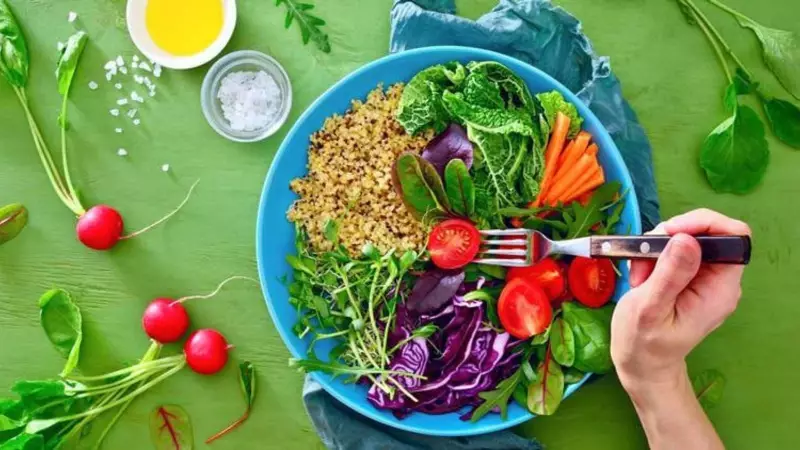
The United States has released a significant update to its official dietary recommendations, marking a notable shift in nutritional advice for the public. Unveiled on Wednesday, January 9, 2026, the new guidelines place a stronger emphasis on consuming adequate protein and full-fat dairy while issuing a clear warning against added sugars, salt, and highly processed foods. Nutrition experts highlight that this global benchmark now explicitly champions the cause of real, home-cooked meals sourced directly from farms.
Core Principles: Back to Basics, Away from Packets
The revised framework moves beyond macronutrient ratios to advocate for a fundamental change in food sourcing and preparation. A key takeaway is the strong recommendation to avoid anything that comes out of a packet, targeting the global addiction to convenience foods. For the first time in such prominent guidelines, there is a major focus on eliminating added sugars during infancy and early childhood entirely.
Notably, the guidelines recommend no amount of added sugar for children between the ages of five and ten. The overall advice promotes a balanced diet rich in vegetables, fruits, and healthy fats, aiming to pull consumers away from ultra-processed options.

Decoding the Protein Priority and the Red Meat Context
A central pillar of the new guidelines is the prioritisation of protein in every meal, suggesting a daily intake of 1.2 to 1.6 grams per kilogram of body weight. Nutritionist Ritika Samaddar, Regional Head of Nutrition and Dietetics at Max Super Speciality Hospital, Saket, Delhi, provides context. She notes that the Recommended Dietary Allowance (RDA) to prevent deficiency for an average sedentary adult is 0.8 grams per kg.
"So, a person weighing 75 kg should consume 60 grams of protein per day," Samaddar explains. "However, between ages 40 and 50, as muscle mass begins to decline, intake should increase to about 1-1.2 grams per kg, or 75-90 grams daily, distributed across three meals."
While the inclusion of red meat in the US guidelines has sparked discussion, Samaddar clarifies the Indian perspective. The guidelines equate red meat with other sources like eggs, poultry, seafood, and plant-based proteins such as beans, lentils, and nuts. For India, which is battling a high burden of heart disease, diabetes, and cancer, red meat is not advisable. Even occasional consumption should be in extremely moderate amounts, aligning with World Cancer Research Fund advice of no more than 350 grams per week.
Full-Fat Dairy and the Revised Alcohol Advice
In a reversal from previous advice promoting low-fat or fat-free options, the updated guidelines prioritise full-fat dairy products, provided they contain no added sugar. This shift is supported by research indicating that full-fat dairy enhances satiety. Recent studies have also challenged the old belief that it increases heart disease risk, with some finding no link or even protective effects.
Samaddar notes that the guidelines still limit saturated fat to 10% of total calories. "In the Indian context, this means 15 to 20 grams of saturated fat per day, which you can get from a teaspoon of ghee and a dollop of dairy like butter, cheese, or curd," she says. The guidelines also recommend replacing saturated fats with unsaturated fats from nuts and plant-based oils like olive and mustard for cooking.
Regarding alcohol, the new guidelines have moved away from specifying daily limits (previously one drink for women, two for men) to simply recommending limiting total consumption. Samaddar advises caution, referencing the World Health Organization's stance that no amount of alcohol is safe and that cancer risks can begin with the first drink.
The 2026 US dietary guidelines serve as a global reminder of timeless nutritional wisdom: prioritise whole, minimally processed foods cooked at home, be mindful of protein needs especially with age, and drastically cut back on added sugars and processed items. For Indian audiences, this reinforces the need to adapt global advice to local health challenges, particularly regarding red meat and saturated fats, while wholeheartedly embracing the move away from packet foods and towards traditional, home-cooked meals.