

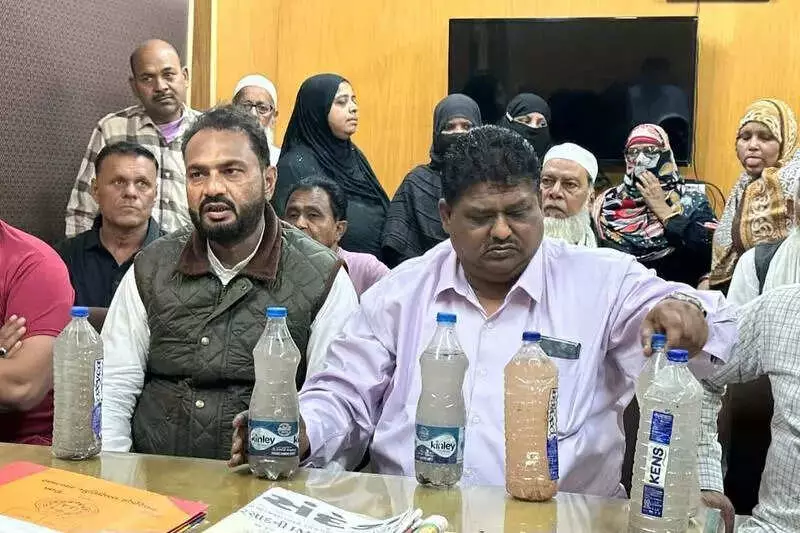
The city of Ahmedabad is staring down a severe public health emergency, with contaminated drinking water sickening thousands and prompting warnings of a potential epidemic. The opposition within the Ahmedabad Municipal Corporation (AMC) has raised a red flag, drawing parallels to recent outbreaks in Indore and Gandhinagar, and blaming the crisis on neglected infrastructure and administrative failure.
A Ticking Time Bomb of Complaints and Disease
AMC opposition leader Shehzad Khan Pathan presented a grim picture, citing official data that reveals the scale of the problem. Between 2021 and 2025, residents filed a staggering 3,17,167 online complaints about polluted drinking water. Despite this overwhelming public outcry, the issue persists across large swathes of the city. The human cost is even more alarming. Pathan claimed that 44,258 cases of water-borne diseases, including diarrhoea, vomiting, typhoid, jaundice, and cholera, have been recorded over the past three years directly linked to the contaminated supply.
Ageing Infrastructure and High-Risk Zones
The root cause, according to the opposition, lies in the city's crumbling water distribution network. Ageing pipelines, particularly in the historic Walled City and old village-settlement (gamtal) areas, are prone to leaks and cross-contamination with sewage, poisoning the water at its source. Pathan warned that Ahmedabad is on the same dangerous path as Indore—where 10 deaths were linked to contaminated water—and Gandhinagar, which saw over 100 suspected typhoid cases. AMC records identify 26 areas as high-risk zones, with persistent water pollution problems reported at more than 150 locations citywide.

"The city has crores of rupees in its budget, yet the problem of drinking water pollution is not being resolved," Pathan alleged, accusing the administration of negligence. The fear is that without urgent and massive intervention to replace and repair pipelines, a full-blown epidemic is inevitable.
Public Anger and Immediate Action
The crisis is triggering direct public and political action. On Monday, Gomtipur councillors Iqbal Sheikh and Zulfiqar Khan Pathan submitted a formal memorandum to the deputy municipal commissioner, highlighting severe drinking water contamination in several localities within their area. This local protest underscores the widespread and immediate nature of the threat facing residents daily.
The situation presents a critical challenge for the AMC administration. With a clear map of high-risk zones and an avalanche of data highlighting the crisis, the pressure is mounting to allocate resources and execute a swift, comprehensive plan to secure the city's water supply and prevent a larger health disaster.






