

A school picnic near Pune turned into a nightmare when a swarm of bees launched a sudden attack, leaving at least 35 children injured. The incident occurred on Sunday morning in the forested section of Madhe Ghat, located in Vehle taluka approximately 70 kilometres from Pune.
Panic and Rescue in Rocky Terrain
The children, aged between 10 and 15 years, were part of an excursion organised by a private Pune-based organisation. The group had halted briefly on the ghat road when the bees were accidentally disturbed, triggering an aggressive assault. Panic ensued as students ran for cover, many slipping and falling on the rocky landscape.
Several children sustained multiple bee stings on their faces, necks, and limbs. Others reported symptoms like dizziness, vomiting, and severe pain. Rescue teams, along with local residents, swiftly rushed the injured to nearby primary health centres for urgent medical treatment.

Timely Intervention Prevents Tragedy
A senior medical officer involved in the treatment confirmed that prompt medical intervention was crucial. "All the children are stable and were discharged after treatment. Multiple bee stings can be life-threatening due to toxic reactions," the officer stated, highlighting the severity of such incidents.
An organiser from a Pune mountaineering institute explained the likely cause. "The beehives were on a rocky cliff. We suspect monkeys disturbed the hives, which triggered the attack," he told reporters. He praised the efforts of volunteers who used first-aid kits and coordinated the rescue, and acknowledged the help from locals. "Our personnel put in all their efforts, putting aside their own safety, to help the students," he said, describing the operation as challenging.
Rising Concerns Over Trekking Safety
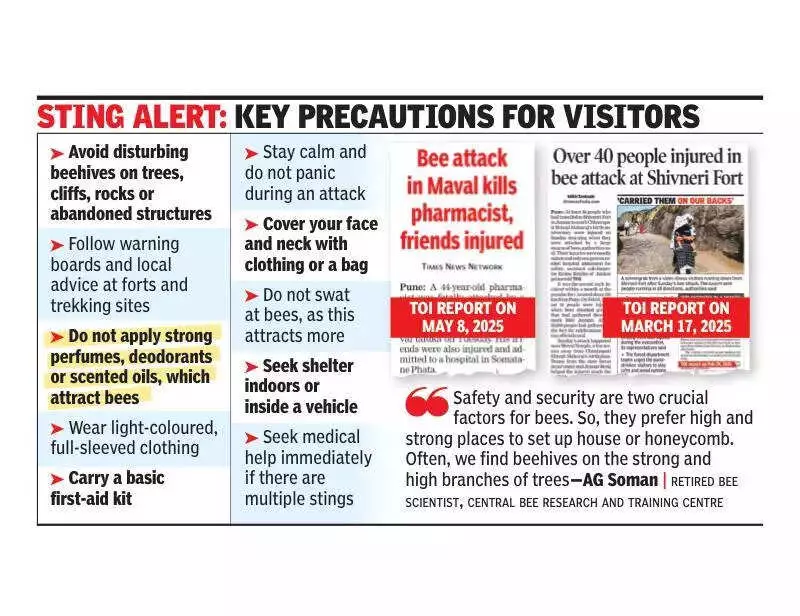
This alarming event has spotlighted the safety protocols for school excursions and treks in forested ghat areas. Officials note a worrying increase in bee attacks at popular forts like Shivneri and Rajgad, as well as other trekking spots and caves in the district.
Forest department officials attribute the rise to a lack of awareness among city visitors about local ecological conditions. Smita Rajhans, assistant conservator of forests for the Junnar division, advised, "Bee attack incidents have risen at forts and trekking sites. Visitors must take precautions. We have installed caution boards, but visitors must also ensure their own safety."
However, the incident also exposed gaps in emergency medical infrastructure. Some parents alleged delays at a rural health centre, while trek organisers pointed out the inherent difficulties. Santosh Dukare, a private trek organiser, said, "Primary health centres in these areas lack adequate facilities and regular doctors. Treating victims in such situations becomes extremely challenging."
The combined message from authorities and organisers is clear: while nature excursions are valuable, preparedness and awareness are non-negotiable for safety in these ecologically sensitive zones.






