

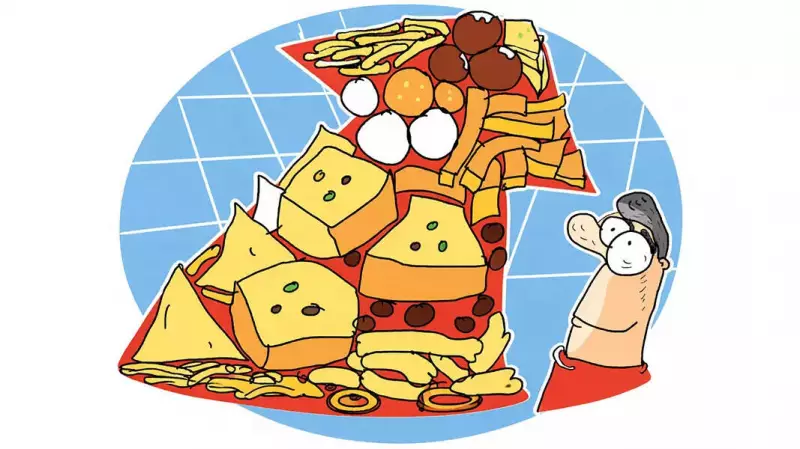
Have you ever wondered why certain snacks and drinks are everywhere you look, from local kirana stores to giant supermarkets? The answer often lies in the immense power and strategic influence of large multinational food and beverage corporations, collectively known as "Big Food." These companies don't just sell products; they actively shape what ends up on your plate, influencing everything from government policies to your own cravings.
The Engine of Ultra-Processed Foods
At the core of Big Food's strategy is the aggressive promotion of ultra-processed foods (UPFs). These are not simply cooked or prepared items. They are industrial formulations, often containing little to no whole foods. Instead, they are packed with additives, preservatives, artificial flavors, colors, and unhealthy levels of salt, sugar, and fat. Think of sugary breakfast cereals, instant noodles, packaged chips, carbonated soft drinks, and ready-to-eat meals.
The business model is highly profitable. These products have long shelf lives, are cheap to produce at scale, and are engineered to be hyper-palatable—meaning they are designed to override our natural fullness signals, encouraging overconsumption. The health costs, however, are staggering. Regular consumption of UPFs is strongly linked to a surge in non-communicable diseases (NCDs) like obesity, type 2 diabetes, heart disease, and certain cancers, which are now a major public health crisis in India.

Influencing Policy and Perception
Big Food corporations do not operate in a vacuum. They deploy sophisticated tactics to protect and expand their market, often at the potential expense of public health. One primary method is through lobbying and influencing food policy. This can involve opposing stricter front-of-pack warning labels, challenging taxes on sugary drinks, and promoting voluntary guidelines over mandatory regulations.
Another powerful tool is shaping scientific and public discourse. Companies often fund research that highlights the benefits of their products or downplays the risks, creating confusion. They also engage in strategic marketing, including:
- Targeted advertising to children, building brand loyalty from a young age.
- Sponsorships of sports events and celebrities to associate their products with health and vitality.
- Digital and social media campaigns that seamlessly integrate their brands into daily life.
Furthermore, they influence professional nutrition bodies and health organizations, sometimes through partnerships and funding, which can soften critical stances on their products.
The Indian Context and Consumer Choice
In a diverse and rapidly growing market like India, Big Food companies tailor their strategies carefully. They adapt global brands to local tastes, launching masala-flavored chips or mango-flavored drinks. They also acquire popular local brands, gaining instant market penetration and trust. The expansion of modern retail and e-commerce has made these products more accessible than ever.
While individual choice is important, it's crucial to recognize that our "choices" are shaped within an environment saturated with marketing for unhealthy options. The playing field is not level. Public health advocates argue for stronger systemic measures to rebalance this environment, such as:
- Clear, mandatory warning labels on unhealthy foods.
- Restrictions on marketing to children.
- Subsidies for healthy, whole foods like fruits and vegetables.
- Comprehensive public health campaigns on nutrition.
The battle for India's nutritional future is complex. It pits powerful economic interests against urgent public health needs. Understanding the mechanisms of Big Food is the first step toward making informed decisions—both as consumers and as a society demanding policies that prioritize long-term health over short-term profit. The food on your plate is more than just sustenance; it's the outcome of a large-scale industrial and political struggle.






