

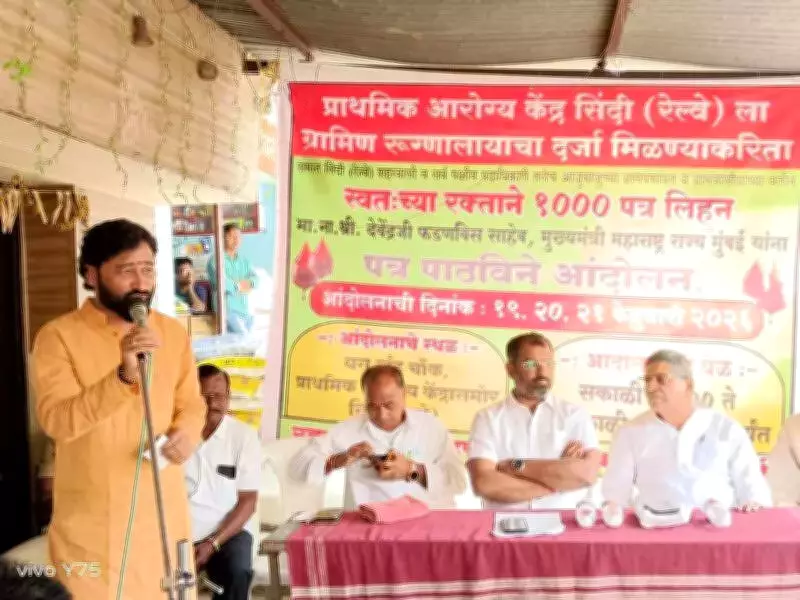
Wardha Residents Stage Dramatic Blood Letter Protest for Hospital Upgrade
In a powerful and unprecedented display of desperation, more than 1,400 residents of Sindi (Railway) in Wardha district staged a unique protest on Saturday by writing letters in their own blood. The demonstrators are demanding that the existing primary health centre (PHC) in their community be immediately granted the official status of a rural hospital to address critical healthcare deficiencies.
Desperate Measures for Healthcare Justice
The handwritten letters, composed using blood drawn from the protesters themselves, will be formally dispatched to Maharashtra Chief Minister Devendra Fadnavis. The correspondence urgently implores the state government to take an immediate and decisive action on this long-pending demand that has plagued the community for years.
Local residents articulated that the current inadequate health facilities at the PHC have created severe hardships, forcing patients to undertake arduous journeys to Wardha city and other distant urban centers for even basic medical treatment. In emergency situations, this geographical barrier poses life-threatening delays and exacerbates patient suffering.

Political Support and Escalation Threats
Wardha Member of Parliament Amar Kale has thrown his full support behind the agitation, demonstrating solidarity by personally writing his own letter in blood. Kale has joined the chorus demanding that the government take immediate action on this critical healthcare issue.
"If the government does not grant approval immediately, the agitation will be intensified," warned MP Amar Kale, signaling that the protest could escalate if their demands remain unmet. This statement underscores the growing frustration and determination within the community.
Broad-Based Community Participation
The protest witnessed massive participation from diverse segments of society, including:
- Representatives from various political parties across the spectrum
- Leaders and members of multiple social organizations
- A substantial gathering of local citizens directly affected by the healthcare crisis
This broad-based involvement highlights how the issue of inadequate healthcare infrastructure transcends political affiliations and has become a unifying concern for the entire community. The blood letter protest represents a dramatic escalation in their campaign to secure proper medical facilities closer to home.






