

Chronic Kidney Disease Surges in Andhra Pradesh's Markapuram Region, Creating New Hotspot
In a deeply concerning public health development, the Markapuram region of Prakasam district in Andhra Pradesh is witnessing an abnormal and rapid rise in Chronic Kidney Disease (CKD) cases. This alarming trend is transforming the upland belt into the state's newest CKD hotspot, following the established crisis zones of Uddanam in Srikakulam district and A Konduru in Krishna district.
Dramatic Increase in Dialysis Dependency
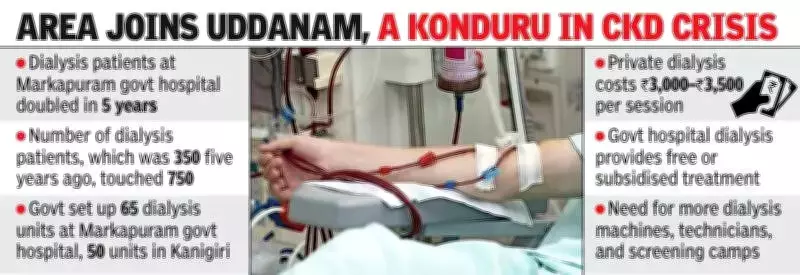
The severity of the situation is starkly evident at the Markapuram government hospital, where the number of patients undergoing dialysis has nearly doubled over the past five years. Medical professionals and health officials have identified this steady escalation in kidney ailments as a major public health concern that demands immediate attention and intervention.
Patients originating from Markapuram town and surrounding mandals are becoming increasingly dependent on regular dialysis treatments to sustain their lives. What was once a regional healthcare facility has now evolved into a critical lifeline, serving not only local residents but also individuals traveling from remote villages and adjacent districts.

Many patients who previously sought treatment in larger medical centers in Guntur, Kurnool, or Vijayawada now rely exclusively on the Markapuram dialysis facility, highlighting both its growing importance and the expanding geographic reach of this health crisis.
Healthcare Infrastructure Under Severe Strain
Hospital authorities report that numerous patients require dialysis two to three times weekly, resulting in a consistently heavy patient inflow throughout the entire week. Medical staff are working multiple shifts to ensure all registered patients receive necessary treatment, but limited dialysis machines are beginning to strain the existing infrastructure.
This equipment shortage forces patients to endure extended waiting periods for their life-sustaining treatments. Despite these operational challenges, the free dialysis services provided under government health schemes have offered substantial relief to economically disadvantaged families. This is particularly significant given that private hospitals typically charge between ₹3,000 and ₹3,500 per dialysis session.
Investigating Potential Causes and Solutions
Health experts have identified several potential contributing factors to this CKD epidemic:
- Contaminated drinking water sources
- Poorly managed diabetes cases
- Uncontrolled high blood pressure
- Lifestyle-related health issues
- Exposure to agricultural chemicals and pesticides
Medical professionals emphasize the urgent need for detailed scientific studies to pinpoint exact causes and implement effective prevention strategies. They also stress the importance of early diagnosis programs that could potentially reduce long-term dependence on dialysis treatments.
Local residents maintain hope that the completion of the Veligonda irrigation project will provide access to potable water from Srisailam, potentially addressing one suspected root cause. Experts theorize that dependence on high-fluoride groundwater in the region might be triggering kidney diseases among the population.
Statistical Overview of the Crisis
The scale of the CKD problem in Markapuram region is reflected in these key statistics:
- CKD cases are rising rapidly throughout the upland areas of Prakasam district
- Markapuram is emerging as a significant new CKD hotspot within Andhra Pradesh
- Dialysis patients at Markapuram government hospital have increased by approximately 100% over five years
- The number of dialysis patients has grown from around 350 five years ago to approximately 750 currently
The state government has established multiple dialysis units across the region, including:

- 65 units at Markapuram government hospital
- 50 units in Kanigiri
- 36 units in Giddalur
- 10 units in Yerragondapalem
All these facilities are consistently operating at full capacity, indicating the overwhelming demand for renal care services. The healthcare system faces pressing needs for additional dialysis machines, trained technicians, and comprehensive screening camps to identify at-risk individuals before they require dialysis.





