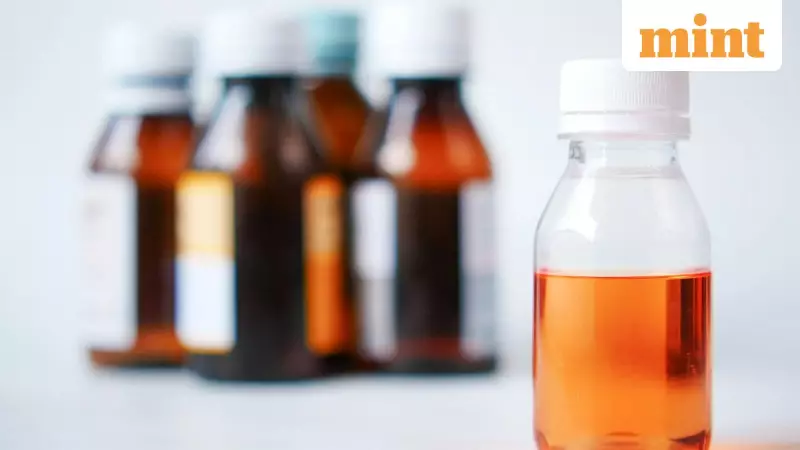
State drug authorities across India have initiated an urgent, large-scale crackdown on a specific batch of a children's cough syrup named Almont-Kid. This decisive action follows the discovery of life-threatening contaminants in the product, prompting immediate public health warnings to halt its use.
Laboratory Findings Reveal Grave Danger
The Central Drugs Laboratory (CDL) in Kolkata has officially declared the syrup "Not of Standard Quality" (NSQ). Tests conducted on batch AL-24002, manufactured by Bihar-based Tridus Remedies in January 2025, revealed a shocking level of contamination. The analysis detected the presence of toxic ethylene glycol at 1.4876% w/w, a concentration nearly fifteen times higher than the permissible safety limit of 0.1%.
Ethylene glycol is a poisonous industrial solvent. Ingestion, especially by children, can lead to acute kidney injury, severe organ failure, and death. The CDL's certificate of analysis was unequivocal, noting the sample failed to conform to its claimed assay of Montelukast Sodium. Inspectors also observed undissolved white crystalline particles settled at the bottle's bottom, which did not dissolve upon shaking.

States Swing Into Action With Bans and Alerts
Multiple state regulators have moved swiftly to contain the threat. Haryana's Food and Drugs Administration issued a strict order on 9 January, prohibiting the sale, distribution, or prescription of the implicated batch. It instructed officials to seize remaining stocks and maintain vigilant surveillance.
Similarly, Himachal Pradesh's State Drugs Controller, Dr. Manish Kapoor, ordered an immediate ban on the syrup's sale and distribution. Retailers and hospitals in the state have been directed to stop using the formulation and report any existing stock immediately. The Telangana Drugs Control Administration has also issued a "stop use" notice and advisory to freeze all available stocks of batch AL-24002.
The syrup, containing levocetirizine dihydrochloride and montelukast sodium, is prescribed for paediatric symptoms like congestion, runny nose, and sneezing. The crackdown comes in the grim shadow of a recent tragedy where 24 children died in Madhya Pradesh and Rajasthan in late 2025 after consuming another contaminated cough syrup, Coldrif.
Broader Systemic Issues in Focus
Public health experts point to deeper, systemic problems beyond failed laboratory tests. Dr. Chandrakant Lahariya, a noted physician and expert, highlighted three critical risk factors: over-prescription by doctors, rampant self-medication, and the unauthorized swapping of prescriptions by pharmacies in smaller cities.
He specifically warned against the common practice of administering cough syrups to children under four and the misuse of antibiotics due to confusion between viral and bacterial infections. This incident adds to a series of international scandals where Indian-manufactured cough syrups have been linked to over 140 deaths globally, including in Gambia, Uzbekistan, and Cameroon, all due to ethylene glycol or diethylene glycol poisoning.
Under pressure for lax oversight, the Union government is reportedly planning a major overhaul of the drug licensing regime. Proposals include a new system for wholesale trade of bulk drugs and stricter storage conditions to hold distributors accountable in India's massive pharmaceutical market. Queries sent to the Union health ministry, CDSCO, CDL Kolkata, and the manufacturer, Tridus Remedies, remained unanswered at the time of reporting.