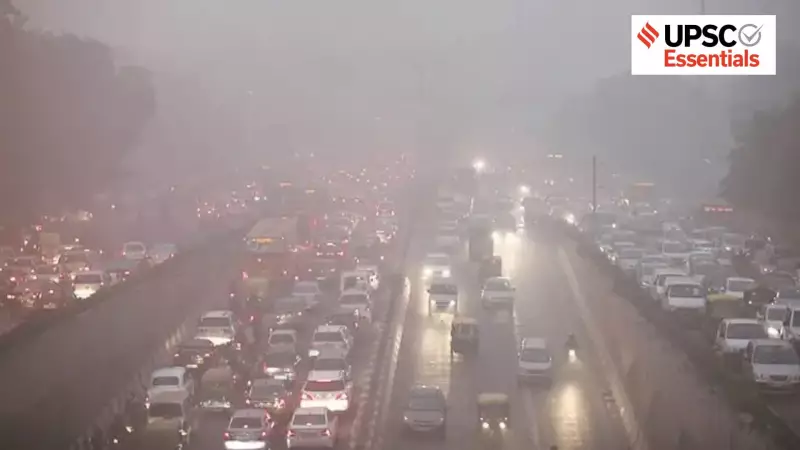
For years, the onset of winter in North India has become synonymous with a public health emergency, as toxic air blankets the National Capital Region (NCR). Delhi routinely records some of the worst Air Quality Index (AQI) levels in the world, with the problem demanding more than just seasonal, knee-jerk reactions.
The Anatomy of a Perennial Crisis
Air pollution in India, particularly in the Delhi-NCR belt, is a persistent, year-round issue that intensifies dangerously between October and February. The region's average annual AQI between 2015 and November 2025 stood at a hazardous 235, far exceeding the National Clean Air Programme (NCAP) target, the national standard of 60 µg/m³, and the WHO's stringent guideline of 15 µg/m³.
The sources of pollution are complex and seasonal. While winter's notorious stubble burning in the Indo-Gangetic Plains grabs headlines, summer brings construction dust and industrial emissions to the fore. Vehicular exhaust and biomass burning compound the winter woes. A combination of low temperatures, high humidity, and winter temperature inversion traps pollutants close to the ground, transforming a chronic problem into an acute crisis.
Limits of a Reactive Governance Framework
India possesses a legal and institutional framework for air quality management, primarily through the Central and State Pollution Control Boards (PCBs) established under the Air Act of 1981. In 2020, the Commission for Air Quality Management (CAQM) was created specifically for the NCR to ensure better coordination.
However, this architecture is plagued by systemic issues. PCBs are often hamstrung by financial constraints and inadequate staffing. A recent report highlighted poor fund utilisation and a mismatch between pollution sources and spending priorities. The CAQM, too, has been criticised for its predominantly reactive stance, imposing bans and punitive measures only when pollution peaks, rather than driving sustained, structural change.
Recent initiatives like the revised Graded Response Action Plan (GRAP), stricter emission checks at toll plazas, the 'No PUC, No Fuel' policy, and plans for a carpooling app show recognition of the problem. Yet, they remain emblematic of an emergency-driven, rather than a preventive, approach.
Global Lessons: Beijing and London Show the Way
The path to cleaner air is not uncharted. Global examples offer a blueprint for systemic change. China's approach to cleaning Beijing's air, once among the world's most polluted, is instructive. In 2013, it launched a five-year national action plan, treating pollution as a governance failure. It enforced stricter industrial standards, promoted clean energy for heating, implemented carbon trading, and imposed driving restrictions, with a special focus on reducing PM2.5.
Similarly, London's Great Smog of 1952, which killed thousands, led to transformative political action—the Clean Air Act of 1956. This landmark law banned high-sulphur coal, transitioned to cleaner fuels, relocated industries, and restructured the city's transport system.
Building a Foundation for Long-Term Prevention
Shifting from episodic control to long-term prevention requires multi-pronged structural reforms. Experts and the Supreme Court have emphasised the need for the CAQM to move beyond firefighting and quantify emissions from each source to plan effectively.
Key measures must include:
- Clear institutional accountability and revitalising PCBs with adequate funds and human resources.
- Channelising underutilised NCAP funds towards targeted, source-specific interventions.
- Investing in green, affordable public transport and relocating polluting industries outside the NCR.
- Exploring regulatory and economic tools like environmental taxes and congestion pricing.
Beyond regulation, protecting and expanding ecological buffers like the Aravalli range is critical. This ancient mountain range acts as a natural barrier against dust storms and aids in groundwater recharge. Urban green spaces, parks, and green corridors also play a vital role in absorbing pollutants and mitigating the urban heat island effect.
The annual air pollution crisis in Delhi-NCR is a stark reminder that reactive bans are a temporary fix. The solution lies in sustained political will, robust institutions, preventive regulation, and public participation. As global examples prove, clean air is an achievable goal, but it demands a decisive break from the cycle of seasonal panic and piecemeal action.