

Public Outcry Over Delhi's Toxic Air
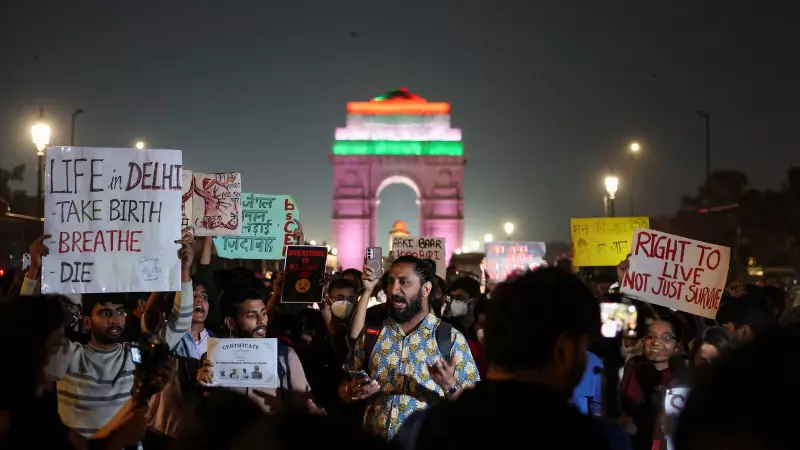
Hundreds of concerned citizens gathered at India Gate in the national capital on November 9 to voice their frustration over the deteriorating air quality in Delhi. The protestors, consisting mainly of parents with their children and environmental activists, demanded immediate government intervention to tackle the pollution crisis that has become an annual menace for the city.
Voices from the Protest: Children's Health at Stake
Environmental activist Bhavreen Khandari expressed the collective anxiety of parents, telling PTI, "We want to meet our elected officials. We had sought an appointment with the chief minister but were refused. So many parents are here because their children are suffering." She highlighted a grim reality, stating, "Every third child already has damaged lungs; they will live nearly 10 years less than those growing up in cleaner air."
Another protestor, Abhishek, criticized the government's failure to provide a basic right. "During (former chief minister) Sheila Dikshit's term, Delhi was known as a green capital. Today, it ranks among the most polluted cities in the world," he said, adding that politicians are more focused on blaming each other than taking responsibility.

Police Detain Protestors and CAQM's Decision
The demonstration was met with police action. A Delhi police officer confirmed that many protestors were detained for assembling without permission at India Gate. Devesh Kumar Mahla, DCP (New Delhi), clarified that the detentions were preventive and that Jantar Mantar is the only designated site for protests where permission can be sought through the proper procedure.
Meanwhile, on the same day, the Commission for Air Quality Management (CAQM) decided against implementing Stage 3 of the Graded Response Action Plan (GRAP). This decision came as Delhi's air quality showed a slight improvement, with the daily average AQI moving from 391 at 10 am to 365 by 5 pm. The sub-committee noted that the air quality is forecast to remain in the "very poor" category in the coming days, and the situation will be closely monitored.
What GRAP Stage 3 Would Have Meant
Had the CAQM invoked Stage 3 curbs, the following restrictions would have been enforced in the National Capital Region:
- A ban on non-essential construction work.
- Classes up to grade V shifting to a hybrid mode of learning.
- Restrictions on the use of BS-III petrol and BS-IV diesel four-wheelers in Delhi and nearby NCR districts.
The GRAP system categorizes AQI into four stages, with Stage III being triggered when the AQI enters the 'Severe' category (401-450).
The protest underscores the growing public anger and the urgent demand for effective, long-term solutions to Delhi's perennial air pollution problem, which poses a severe threat to public health, especially that of children.






