

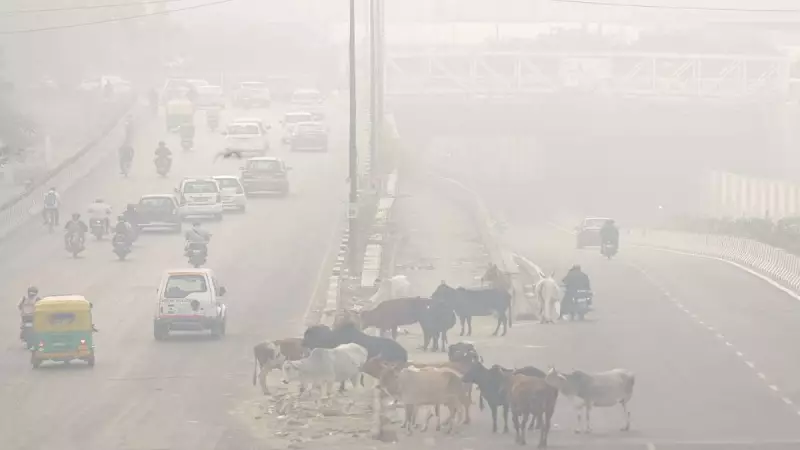
Delhi residents woke up to another day of hazardous air quality on November 9, 2025, with visibility dropping dramatically below 200 meters in several areas. The capital city continues to grapple with severe pollution levels, prompting authorities to implement strict measures under the Graded Response Action Plan.
Severe Pollution Grips the Capital
The air quality index (AQI) across Delhi remained in the 'severe' category, creating a thick blanket of smog that reduced visibility to alarming levels. Meteorological departments reported that the visibility had plummeted below 200 meters in many parts of the city, significantly affecting transportation and daily activities.
According to the latest measurements, the overall AQI in Delhi crossed the 400 mark, which falls under the severe classification. This hazardous air quality poses serious health risks to residents, particularly children, elderly citizens, and those with pre-existing respiratory conditions.

GRAP-3 Restrictions Activated
In response to the deteriorating air quality, the Commission for Air Quality Management has enforced Stage III of the Graded Response Action Plan (GRAP). These restrictions include a ban on construction and demolition activities across the entire National Capital Region, with exceptions only for essential government projects.
The implemented measures also target pollution from vehicles and industrial operations. Authorities have intensified checks to ensure compliance with environmental norms and have deployed additional teams to monitor pollution hotspots throughout the city.
Government Response and Public Health Advisory
Delhi Chief Minister Rekha Gupta addressed the situation, emphasizing the government's commitment to tackling the pollution crisis. She announced that the administration is working on multiple fronts to address both immediate concerns and long-term solutions to Delhi's air quality problems.
Simultaneously, the central government revealed plans to expand the Ujjwala Yojana scheme by 2025, aiming to provide cleaner cooking fuel to more households and reduce dependency on biomass burning, which contributes significantly to air pollution during winter months.
Health authorities have issued advisories recommending that people avoid outdoor activities, especially during morning and evening hours when pollution levels peak. Schools have been instructed to limit outdoor sports and activities, while hospitals have been put on alert to handle potential increases in respiratory-related emergencies.
The current situation underscores the urgent need for comprehensive and sustained efforts to combat air pollution in Delhi. As winter conditions continue to trap pollutants close to the ground, experts warn that the air quality might deteriorate further without immediate and effective intervention measures.






