

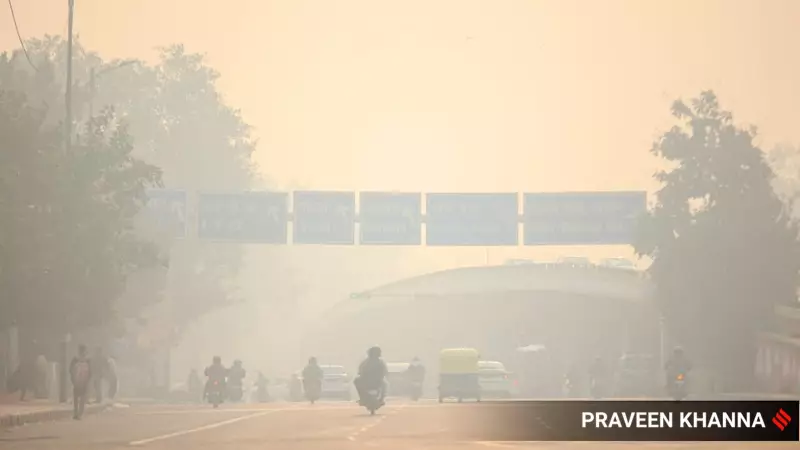
Residents of Delhi and the National Capital Region (NCR) were greeted by a thick, hazardous haze on the morning of Sunday, November 9, 2025, as the air quality plummeted to the 'severe' category across a significant part of the metropolis. Data released by the Central Pollution Control Board (CPCB) at 7 am painted a grim picture, revealing a widespread public health emergency.
Widespread Severe Air Quality Across Delhi
The CPCB's network of 39 monitoring stations in Delhi showed that a staggering 22 stations recorded an Air Quality Index (AQI) above the 400-mark, firmly placing them in the 'severe' zone. The situation was particularly dire in the northern and north-western parts of the city. The Bawana area recorded the highest AQI at 436, closely followed by Wazirpur and Rohini, both at 435.
Other areas that suffered from severely polluted air included Jahangirpuri (433), Burari Crossing (430), and Nehru Nagar (426). While the majority of stations were in the red, a few areas, including Jawaharlal Nehru Stadium (398) and Lodhi Road (377), registered AQI levels in the 'very poor' category, offering little respite from the toxic air.

Pollution Extends to NCR and Key Forecast
The air quality crisis was not confined to Delhi's boundaries. Neighboring cities in the NCR also grappled with dangerously high pollution levels. In Ghaziabad, the Vasundhara station recorded a 'severe' AQI of 421. Noida's Sector 62 also entered the severe zone with an AQI of 410. Gurugram and Greater Noida witnessed 'very poor' air quality, with readings of 308 and in the 360s, respectively.
According to a forecast from the Indian Institute of Tropical Meteorology (IITM) reported by The Indian Express, the air quality is very likely to remain in the 'Very Poor' category from November 9 to 11. Making matters worse, the IITM's Decision Support System (DSS) pinpointed a major culprit: stubble burning is expected to contribute 31.24% to Delhi's PM2.5 levels on Sunday, making it the single most significant source of pollution.
Health Implications and Looking Ahead
An AQI in the 'severe' category (401-500) affects healthy people and seriously impacts those with existing diseases. Health experts advise all residents to avoid outdoor physical activities, wear N95 or higher-grade masks when going outside, and use air purifiers indoors. The situation underscores the persistent and severe nature of North India's annual winter pollution crisis, driven by a combination of local emissions, vehicular pollution, and agricultural burning.






