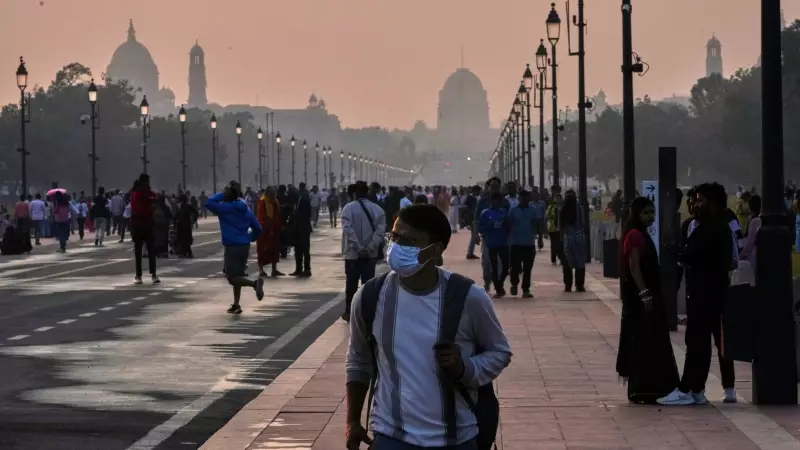
Hazardous Haze Grips Delhi-NCR on Monday Morning
Residents of Delhi-NCR woke up to a thick layer of haze covering the capital on Monday, November 10, 2025, with air quality deteriorating to dangerous levels across most monitoring stations. According to data released by the Central Pollution Control Board (CPCB), multiple areas recorded air quality index (AQI) readings in the 'severe' category, posing significant health risks to the population.
Critical AQI Readings Across Monitoring Stations
As of 7 am on Monday, the overall air quality in Delhi remained in the 'very poor' category with the Air Quality Early Warning System (EWS) showing an AQI reading of 372. However, the situation was considerably worse in several specific locations.
Bawana emerged as the most polluted area with an AQI of 412, making it the only station to cross the critical 400 mark into the 'severe' category. Other severely affected areas included Wazirpur recording 397 and Jahangirpuri at 394, both dangerously close to the severe threshold.

The CPCB data revealed numerous other areas continued to report 'very poor' air quality levels early Monday morning. These included Burari at 389, Mathura Road at 366, Pusa at 348, Lodhi Road at 314, R K Puram at 363, Shadipur at 328, and Dwarka Sector 8 at 355.
Comprehensive Station-wise AQI Breakdown
Data from 39 monitoring stations across Delhi showed alarming pollution patterns. Here are the top ten most affected areas according to CPCB recordings:
- Bawana: 412
- Wazirpur: 397
- Jahangirpuri: 394
- Rohini: 390
- Burari Crossing: 389
- Nehru Nagar: 386
- Anand Vihar: 379
- Mundka: 378
- ITO: 378
- Patparganj: 376
The AQI scale classifies air quality into six categories: Good (0–50), Satisfactory (51–100), Moderately Polluted (101–200), Poor (201–300), Very Poor (301–400), and Severe (401–500). Higher AQI readings indicate increasingly unhealthy air that can have serious health implications, particularly for children, elderly, and those with pre-existing respiratory conditions.
Health Implications and Necessary Precautions
The consistent 'severe' and 'very poor' air quality readings across Delhi-NCR highlight the ongoing public health crisis facing the capital region. Medical experts recommend that residents, especially vulnerable groups, limit outdoor activities and wear N95 or equivalent masks when venturing outside.
The hazardous conditions have forced many morning walkers and commuters to use protective face masks, with visibility reduced significantly due to the thick haze enveloping the city. Authorities continue to monitor the situation closely as Delhi enters its peak pollution season.