

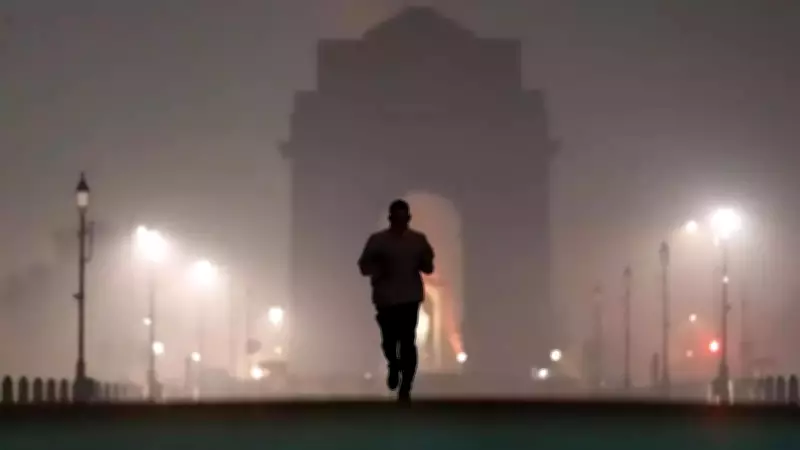
Delhi's Lingering 'Adaptation Fatigue' After Another Polluted Winter
As winter transitions to spring and the dense smog gradually dissipates, Delhi is left with more than just physical residue in its atmosphere. The capital city carries the psychological weight of yet another season defined by hazardous air quality, where daily life was quietly reorganized around survival rather than living. For over two months, residents navigated a persistent haze of PM2.5 and PM10 particles alongside the anxiety of dealing with intense pollution's effects.
The Quiet Reorganization of Daily Life
With history offering little reassurance and short-term solutions like cloud seeding providing limited relief, Delhi's citizens across all age groups settled into familiar precautionary patterns. These included minimizing outdoor exposure, sealing homes against external pollutants, stocking up on protective masks and remedies, and constantly monitoring air quality indices. What emerged was not widespread panic but what experts term 'adaptation fatigue'—a collective weariness from learning how to function when clean air feels temporarily out of reach.
Shaad Wahab, a 53-year-old resident living near the Delhi-Gurgaon border, recently moved to the city and was particularly concerned about pollution affecting his three-year-old daughter. "I arranged numerous indoor activity alternatives in advance since my daughter couldn't play outside during peak pollution days," he explains. "I installed pollution meters both inside and outside my house to monitor levels constantly. While bad air quality harms everyone, it's especially notorious for children whose bodies are still developing."

Wahab's home underwent thorough 'pollution checks,' including sealing any openings in windows or doors. "Air purifiers only improve indoor air quality when doors and windows remain tightly shut," he notes. "For myself, I kept face masks easily accessible and treated them as non-negotiable whenever stepping outside." His comprehensive approach represented a determined fight against smog and its damaging effects.
Elderly Residents: Caution and Compromise
Among Delhi's elderly population, responses varied regarding how much effort should be invested in managing the bad air menace. Saket resident Saroj Shukla, 64, became increasingly AQI-aware to schedule her outdoor walks accordingly. "Small adjustments helped me navigate winter's worst pollution weeks," she says. "I used air purifiers only at night because keeping homes too sanitized can be problematic when we cannot stay indoors all day."
Shukla's friend and walking partner, 56-year-old Ritu Gupta from the same vicinity, adopted more vigilant measures due to existing health concerns. "I have an auto-immune disorder, making pollution particularly dangerous for my vulnerable body," Gupta explains in an exhausted tone. "I took extra care by washing hands and face thoroughly after evening walks, taking steam inhalations, stocking saline-based nasal drops for irritation, and incorporating 'kadhas' into my weekly routine as part of my pollution-fighting regimen."
Promila Bhagat, 74, confronted winter air with a combination of technology and nature. She utilized air purifiers alongside snake plants, peace lilies, and other vegetation believed to help cleanse indoor air. "My home faces Ring Road, where fumes and smog infiltrate constantly, posing hazards to my ageing lungs," she reveals. "My two sons relocated to Goa years ago due to worsening air quality, but I couldn't follow. My entrepreneurial work and social life remain rooted in Delhi."
Bhagat does escape to Goa for approximately one month each December or January. "When air becomes suffocating, throats feel scratchy, and eyes burn, I take a break," she describes. "It's temporary respite, but permanent relocation isn't feasible for everyone. While it worked for my sons, it doesn't suit my circumstances." This sentiment resonates across generations, highlighting how flexibility varies significantly between retirees with time and office-goers or students bound by commitments.

Rising Demand for Preventive Measures
Delhi-based senior ENT specialist Dr. Nidhi Dhawan observed increased inquiries about flu shots during late 2025 and early 2026. "Individuals with respiratory ailments particularly opted for vaccinations," she notes. "Public awareness grew regarding these shots' potential benefits." Dr. Dhawan clarifies that while viruses in cool weather primarily cause flu rather than pollution, the connection lies in pollution elevating respiratory issue risks, making flu shots valuable for reducing illness duration if infection occurs.
This reasoning prompted 31-year-old Dwarka resident Vishal Sharma to consider flu shots to avoid workplace sick days. "Alongside researching advanced air purifier models capturing fine dust particles for my living room, I incorporated spider plants and peace lilies for natural air purification," he shares.
Conversely, 45-year-old Safdarjung Enclave resident Jhelum Biswas pursued alternative medicine routes. "I took crabapple and walnut Bach flower remedies alongside regular steam inhalations since I'm prone to colds and coughs exacerbated during bad air months," she explains.
The Psychological Toll of Constant Adaptation
As haze lifts and spring arrives literally in the air, signaling 'breathe easy' days ahead, the fatigue from constantly adjusting to polluted conditions lingers across homes and generations. For many Delhi residents, coping has evolved into a seasonal routine. Within this slow normalization of crisis lies a profound question: how long can survival mechanisms substitute for genuine solutions?
Psychologist Rachna Khanna Singh, founder of a south Delhi mental health clinic, emphasizes: "For individuals with asthma or respiratory conditions, poor air quality transcends environmental concern—it becomes personal, emotionally charged, and sometimes fear-evoking." This psychological dimension adds another layer to the physical adaptations, underscoring that Delhi's pollution challenge impacts both lungs and minds, leaving a residue that persists even as the smog clears.





